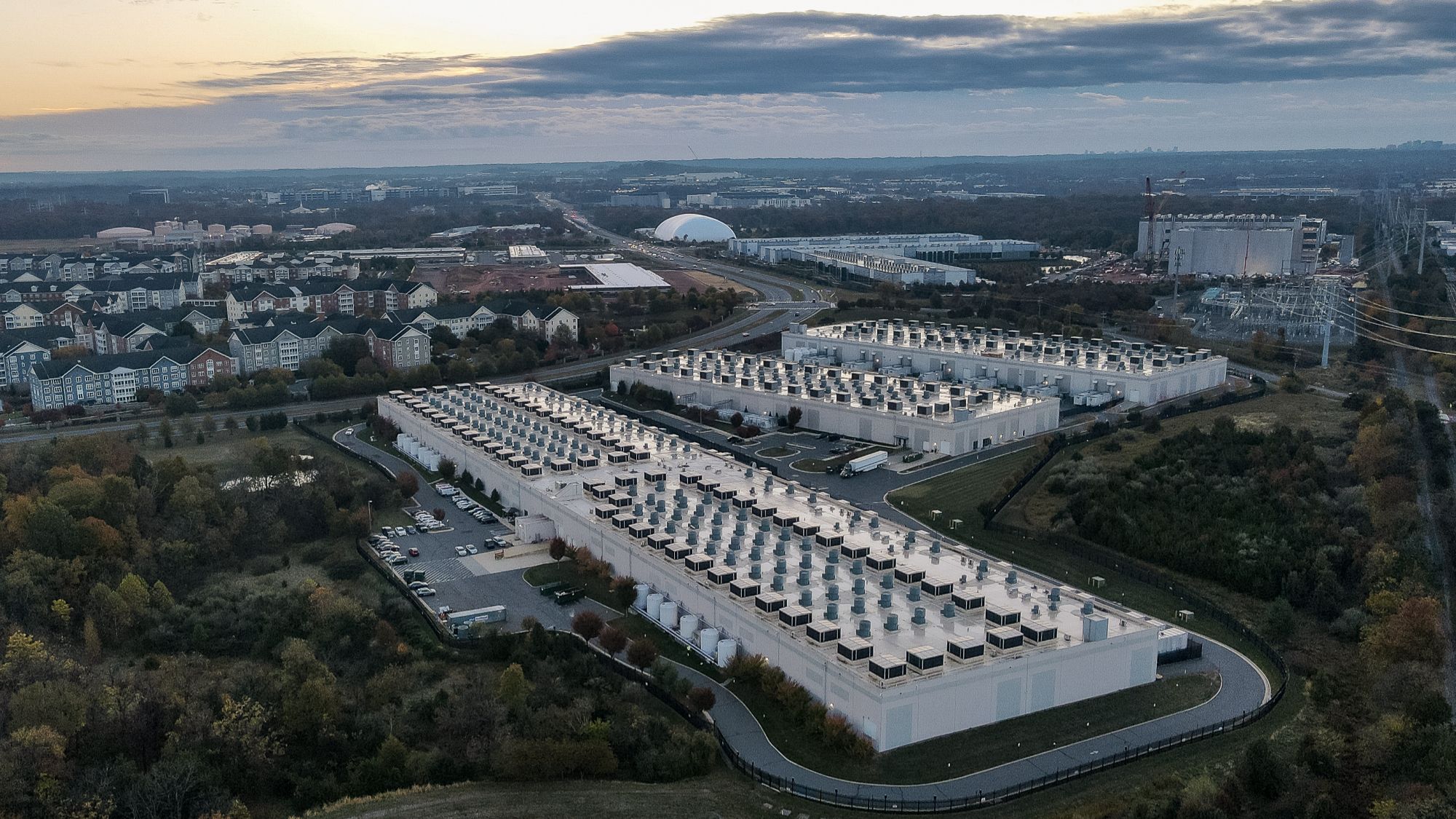
Utah approved a development agreement for Kevin O'Leary's Stratos AI data center campus, a 40,000-acre off-grid project that could reach 9 GW of capacity, including 3 GW in phase 1. The campus will be powered by on-site natural gas generation via the Ruby Pipeline, with MIDA reducing the energy use tax from 6% to 0.5% and rebating 80% of property tax revenue to attract hyperscale tenants. The project is projected to generate $30 million annually for Box Elder County in phase 1, over $100 million at full buildout, and roughly $250 million a year in state sales tax receipts, while creating 2,000 permanent jobs.
This is less a single data-center story than an early signal that hyperscale demand is now colliding with regulated utility lead times, and the market is improvising around that bottleneck. The first-order beneficiaries are gas-turbine OEMs, midstream gas infrastructure, and local land/entitlement holders; the second-order winners are the AI platforms that can secure power first, because power access is becoming a gating item for model training and inference capacity. The hidden loser is the traditional utility ecosystem: if large loads self-generate, utilities lose the most profitable industrial demand while still facing higher regional gas basis and emissions scrutiny.
The main catalyst path is not “will this campus be built” but “which hyperscaler signs a take-or-pay power deal first.” If a tenant is named, the rerating will likely flow to the most power-constrained cloud names with the strongest balance sheets, because they can replicate this model elsewhere and lock capacity before competitors do. The flip side is that this structure increases regulatory and political fragility: local tax concessions and emission intensity will become a campaign issue, and any methane/leakage or turbine permitting setback could add 6-18 months to timelines, which matters because the AI buildout is pricing in near-term capacity, not 2030 optionality.
The market is probably underestimating the strategic value of off-grid power as a competitive moat for the large cloud platforms. The consensus fixates on ESG optics, but the real economic question is whether owning generation compresses time-to-power enough to offset higher operating cost; if so, the model favors incumbents with scale and financing access, not startups. Longer term, this accelerates a bifurcation: high-margin, compute-dense workloads will cluster around privately powered campuses, while utilities and regions unable to fast-track generation will lose share of future AI capex.
AI-powered research, real-time alerts, and portfolio analytics for institutional investors.
Request DemoOverall Sentiment
mildly positive
Sentiment Score
0.15
Ticker Sentiment
