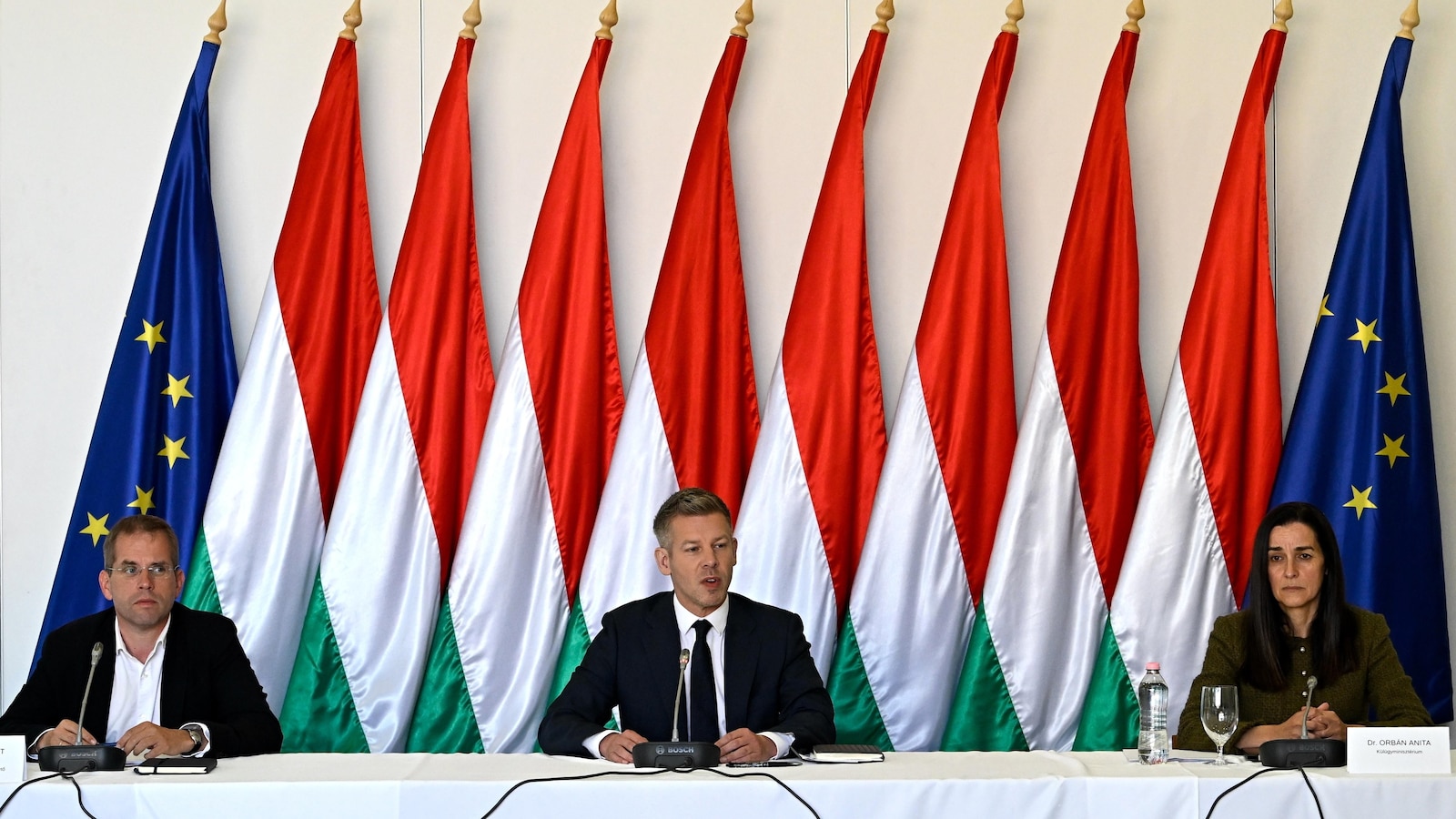
Hungary summoned the Russian ambassador after a massive drone attack near its border in Ukraine’s Transcarpathia region, where at least 800 drones struck about 20 regions of Ukraine and killed at least six people. The move signals a sharp tonal shift in Budapest’s Russia policy under new Prime Minister Péter Magyar and adds to regional geopolitical तनाव, but the direct market impact is likely limited.
This is less about the immediate military event than a regime-signal on Hungary’s external alignment. If Budapest is willing to publicly confront Moscow over a border-adjacent strike, the market should start pricing a lower probability of Hungary acting as the EU’s soft veto on Ukraine-related sanctions, funding, and energy policy. That matters because Hungary has historically functioned as a geopolitical transmission belt for Russian influence inside NATO/EU; any erosion of that role is a subtle tailwind for European defense, border security, and Eastern Europe infrastructure resilience.
The second-order effect is on cross-border risk premia in the Carpathian basin. Even if no direct spillover occurs, repeated drone activity near EU territory raises the odds of accelerated air-defense procurement, hardened logistics corridors, and faster approvals for dual-use infrastructure spending across Slovakia, Romania, and Poland. The economic winner is not Ukraine per se, but the ecosystem of contractors, sensors, EW, and mobility assets that benefit from every incremental move from “peace dividend” to “persistent frontier posture.”
The contrarian read is that this may be more political repositioning than durable policy realignment. A new government can harden rhetoric quickly, but the constraint set—energy dependence, domestic price sensitivity, and coalition fragility—usually forces moderation within weeks to months. If Budapest’s action is mostly symbolic, the market could overestimate the durability of the stance and overbid defense-exposed European names on a one-day headline impulse.
Catalyst path: in days, watch for follow-through from EU capitals and any language shift on sanctions extensions or air-defense coordination; over months, watch whether Hungary actually votes differently on Ukraine support or Russian energy measures. The key reversal signal would be a quick return to transactional pragmatism from Budapest, especially if Moscow offers incentives on gas or trade to dampen the political break.
AI-powered research, real-time alerts, and portfolio analytics for institutional investors.
Request DemoOverall Sentiment
mildly negative
Sentiment Score
-0.35
