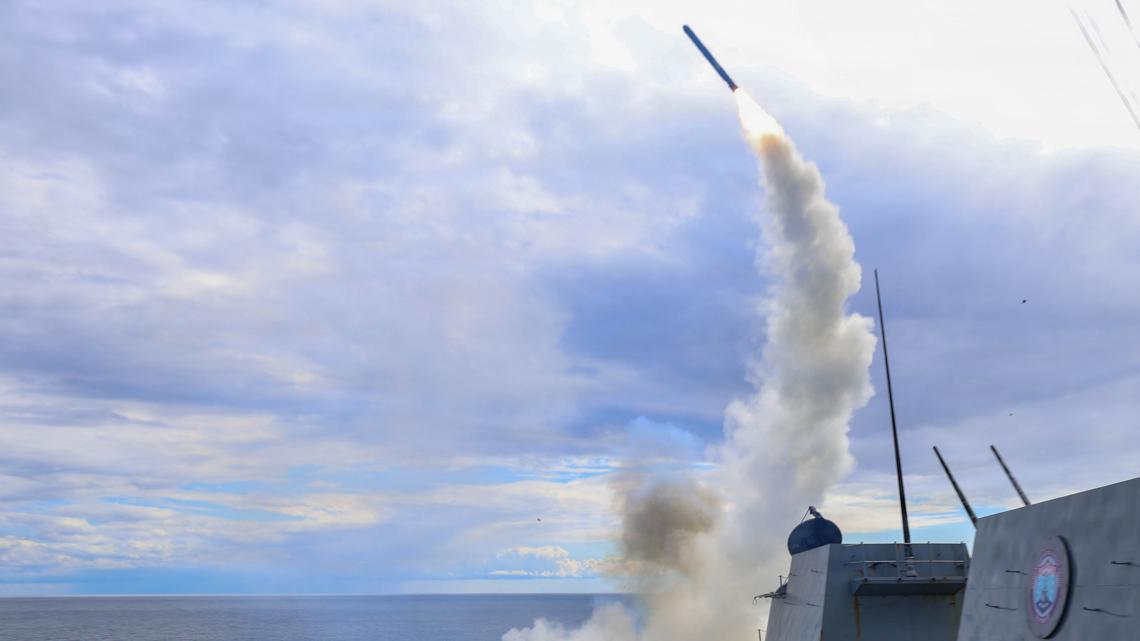
CSIS says it could take at least 3 years to rebuild inventories of Tomahawk missiles, Patriot interceptors and THAAD interceptors depleted by the Iran war, with some systems not fully replenished until late 2030. The report flags a window of vulnerability for a potential Western Pacific conflict with China, despite a proposed $1.5 trillion 2027 defense budget and increased contractor spending. The article is negative for defense-readiness sentiment and highlights extended supply-chain and production constraints across key munitions programs.
The key market implication is not simply higher defense spending, but a multi-year revaluation of the munitions supply chain from “recurring revenue” to “capacity-constrained strategic infrastructure.” That favors the prime contractors with the most mature guided-missile franchises, but the more interesting upside sits one layer down in electronics, propulsion, energetics, and test/industrial tooling suppliers that can monetize an extended build cycle without the same political headline risk. The bottleneck is execution, not budget authorization, so margin expansion may lag top-line growth while working capital and capex stay elevated for several quarters.
The second-order winner is the contractor best positioned to batch production across U.S. demand plus allied replenishment, because inventory replacement now competes with export obligations and creates pricing power around scarce components. That should keep order visibility unusually strong through 2027-2029, but it also raises the risk of delivery slippage, which can compress near-term sentiment even as long-duration backlogs improve. Any evidence of subcontractor bottlenecks, sole-source component shortages, or re-sequencing away from allied deliveries would be a near-term catalyst for estimate cuts on the weakest operational names in the chain.
The contrarian read is that the market may be overestimating how quickly incremental Pentagon dollars convert into units. In this segment, volume growth can take longer than the consensus expects because suppliers need labor, QA, and certification throughput, so the earnings inflection may arrive later than the narrative implies. That creates a window where the stocks can rerate on headline demand but underperform on quarterly print cadence, especially if management teams emphasize capacity-building spend over immediate margin capture.
The biggest tail risk is a policy reversal or de-escalation that softens the urgency premium before capacity has fully ramped, but that is a years-long risk rather than a weeks-long one. Near term, the most important catalyst is budget execution: procurement contract awards, plant expansions, and subcontractor add-ons should be the datapoints that confirm the thesis. If those lag by two to three quarters, the trade becomes a crowded-defensive growth story instead of a true reindustrialization cycle.
AI-powered research, real-time alerts, and portfolio analytics for institutional investors.
Request DemoOverall Sentiment
mildly negative
Sentiment Score
-0.25
Ticker Sentiment
