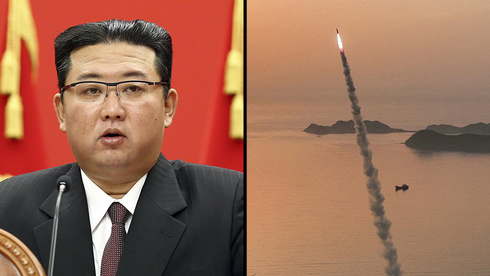
The article argues that North Korea has absorbed lessons from Iran's conflict and is expanding its missile and nuclear posture, including a reported seventh missile test on April 19, 2026 and five Hwasong-11 Ra ballistic missile launches. It claims Pyongyang now offers cluster warheads, MIRV capability, and a nuclear umbrella for proxies such as Hezbollah and the Houthis, with implications for Israeli defense saturation and regional escalation. The piece also cites IAEA and CSIS concerns about Yongbyon expansion and calls for sanctions, interdictions, and diplomacy to counter North Korea-Iran proliferation links.
The market implication is not the headline destruction of one axis of the Iran network; it is the migration of asymmetric strike capability to a more disciplined, state-backed supplier with a cleaner escalation ladder. That raises the probability of lower-volume, higher-lethality attacks that are harder to attribute and therefore harder to deter, which should keep regional defense demand bid for multiple quarters rather than just the next news cycle. The second-order effect is a premium on sensor fusion, missile-defense magazines, and counter-UAS systems, not on legacy platform counts.
The more important underappreciated channel is sanctions durability. If Pyongyang is now the enabling node, then enforcement shifts from episodic Iran-centric pressure to a broader export-control and shipping regime spanning Northeast Asia, Russian intermediaries, and Gulf transshipment points. That is structurally favorable for firms tied to maritime monitoring, customs analytics, and defense electronics, while increasing execution risk for emerging-market assets exposed to secondary sanctions, especially names with opaque commodity flows or dual-use inputs.
Catalyst timing likely splits into two windows: near-term rhetoric/retaliation risk over days to weeks, and a medium-term procurement cycle over 3-9 months as proxy actors replenish inventory and redesign payloads. The biggest reversal risk is diplomatic de-escalation driven by Beijing or Washington, but even then the supply-chain lesson has already been absorbed by adversaries, so the floor under regional defense spend remains higher. Consensus is likely overestimating the speed at which interdictions can choke the network; these channels are redundant, and redundancy is exactly what makes them investable for defense suppliers and uninvestable for frontier-credit proxies.
AI-powered research, real-time alerts, and portfolio analytics for institutional investors.
Request DemoOverall Sentiment
moderately negative
Sentiment Score
-0.45
The contrarian view is that the trade is less about an imminent Israel-Iran replay and more about a slow-burn proliferation regime that widens the addressable market for missile defense, ISR, and sanctions tech globally. If that is right, the best risk/reward is not chasing the first geopolitical spike, but using any relief rally in defense names to build exposure ahead of budget cycles and procurement guidance updates. In contrast, EM assets tied to Gulf logistics or shipping should be faded on strength because secondary-sanctions risk usually arrives with a lag, after the market has already normalized the headline.
