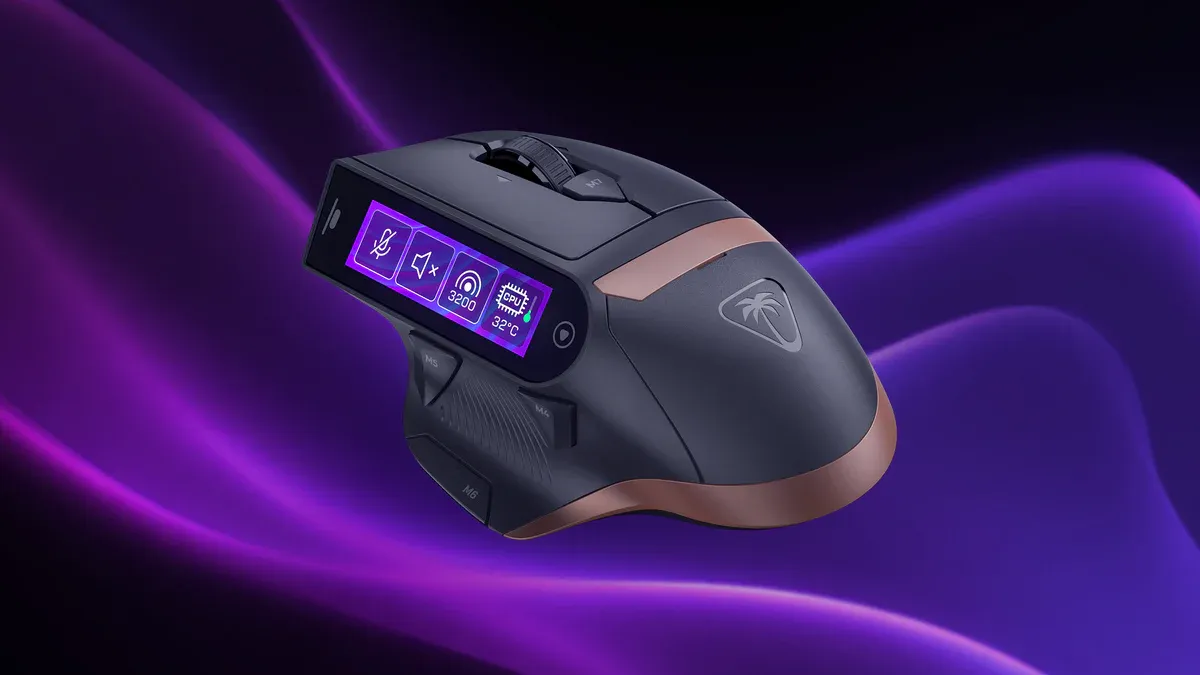
Turtle Beach launched its new Command Series peripherals, led by the MC7 mouse at $160 with a 2.25-inch touchscreen, 30,000 DPI sensor, 8K wireless polling, and hotswap batteries rated for up to 15 hours each. Lower-priced variants include the MC5 at $120 and MC3 at $80, while the KB7 keyboard costs $200 and the KP7 keypad $100. The news is product-focused and modestly positive for Turtle Beach, but unlikely to have a large near-term market impact.
This looks less like a single-product gimmick and more like Turtle Beach trying to reprice itself as a premium peripherals platform, where hardware margin can be supplemented by software-like feature density. The touchscreen/MOBA-gaming angle is a niche, but niche is enough if it expands average selling price and gives the company a defensible differentiation story versus commodity mice and keyboards. The immediate read-through is modestly positive for TBCH because the launch broadens the addressable enthusiast basket and can lift mix, but the bigger signal is that the company is willing to spend on design complexity to escape the low-margin accessory trap.
Competitive pressure is more interesting on the incumbent side than on Turtle Beach's own base. Logitech is the obvious comparison because it owns the premium wireless mouse mindshare; a successful launch here would force LOGI to defend on features, not just brand and distribution, and could compress some of its enthusiast pricing power over the next 2-3 quarters. Second-order, the added components increase BOM and assembly complexity, so any supply-chain hiccup or battery/firmware QA issue could quickly turn the story from innovation to returns and margin drag.
The contrarian miss is that consumers may like the idea more than the usage pattern: touchscreens on peripherals often demo well but become underutilized after the novelty period. That creates a near-term preorder pop but a longer-dated execution test around attach rate, return rates, and whether buyers trade up from the mid-tier SKUs or simply cherry-pick the cheapest variant. The setup is better viewed as a catalyst for sentiment and product-mix optionality over the next 1-2 quarters, not as proof of durable demand yet.
AI-powered research, real-time alerts, and portfolio analytics for institutional investors.
Request DemoOverall Sentiment
mildly positive
Sentiment Score
0.25
Ticker Sentiment
