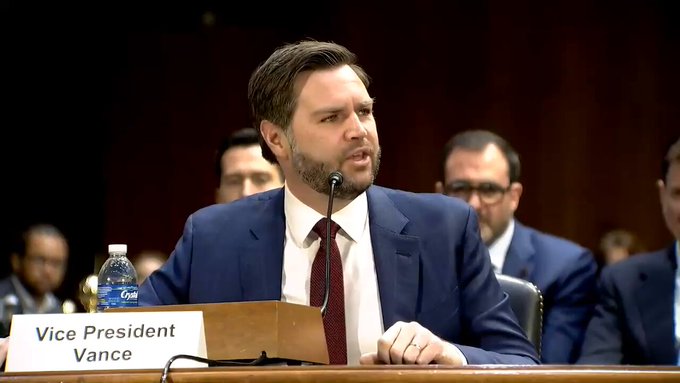
US-Iran peace talks in Islamabad are on hold after Tehran did not formally respond to Washington’s negotiating positions, with Vice President JD Vance’s trip delayed and Steve Witkoff and Jared Kushner rerouted back to Washington. Iran said there was 'no final decision' on attending, citing contradictory US messages and calling recent US actions 'maritime piracy and state terrorism' tied to two Iranian vessels. The ceasefire deadline is set to expire Wednesday, raising the risk of renewed regional escalation and oil-market volatility.
The immediate market read is not “war risk” so much as “policy paralysis risk,” which is usually more damaging for energy volatility than a clean escalation path. When diplomatic channels stall at the last minute, the market tends to price a wider distribution of outcomes: a temporary de-escalation in headline oil risk premia can flip back to a sharp spike if enforcement actions in maritime chokepoints intensify. That favors optionality over outright directional exposure because the next 48–72 hours are dominated by binary signaling rather than fundamentals.
The second-order effect is on shipping, insurance, and refined-product flows rather than crude alone. Even a short-lived interruption in tanker routing can tighten distillate and jet fuel markets faster than Brent, which means refiners with access to secure feedstock and non-disrupted logistics should outperform integrated producers. Conversely, any company with heavy exposure to spot maritime rates, Middle East cargoes, or trade-finance-sensitive counterparties faces a fast repricing of working-capital and counterparty risk.
A more interesting contrarian point is that the absence of a response may actually reduce the probability of an immediate military escalation, because both sides are preserving negotiating leverage. That means the market could be overpricing the near-term tail while underpricing a longer, grinding regime of sanctions, interdiction, and tit-for-tat maritime disruptions over weeks to months. In that scenario, volatility stays elevated even if spot crude mean-reverts, and the best expression is long volatility in energy-adjacent assets rather than chasing the first headline move.
For EM, the main loser is not broad Asia beta but import-dependent economies and current-account-sensitive sovereigns if fuel prices re-rate while dollar funding stays tight. If talks keep slipping, expect underperformance in airlines, chemicals, and consumer names with limited pricing power; those are the cleaner second-order shorts than an outright EM index hedge.
AI-powered research, real-time alerts, and portfolio analytics for institutional investors.
Request TrialOverall Sentiment
mildly negative
Sentiment Score
-0.35
Ticker Sentiment
