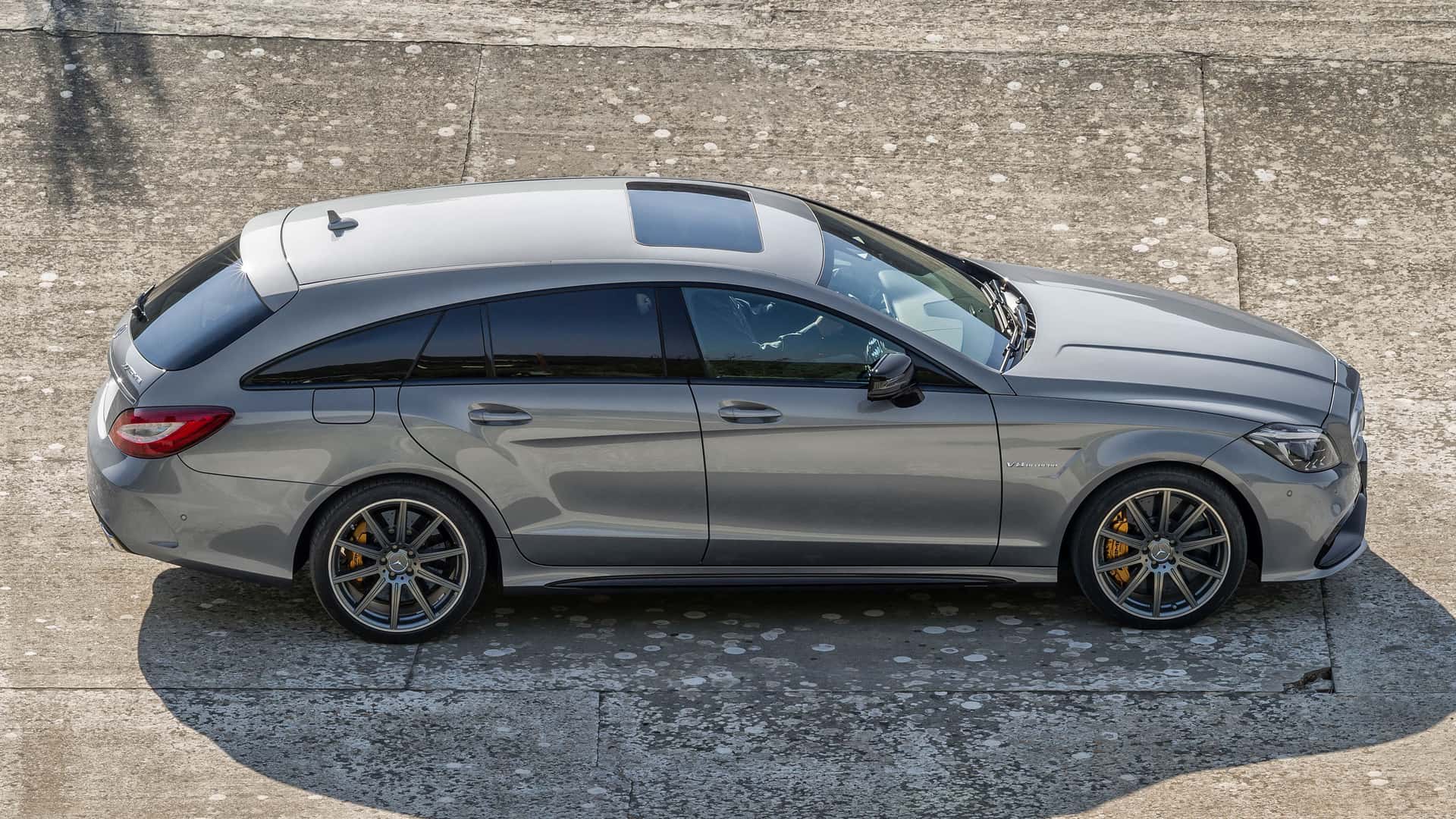
Mercedes says it does not see enough demand to justify a C-Class EV wagon, with Head of Exterior Design Robert Lešnik stating that "nobody is buying" wagons in key markets like the U.S. and China. The company is therefore hesitant to greenlight a long-roof version of the electric C-Class, even as the gas-powered C-Class Estate remains in production and the CLA Shooting Brake continues with ICE and EV options. The article highlights a structural demand shift away from wagons toward SUVs, but the likely market impact is limited.
This is less about one niche body style and more about Mercedes quietly validating a broader portfolio-pruning thesis: the market is still rewarding premium EVs, but only where the product fits the global volume curve. A wagon EV would likely need to be a low-volume halo with materially worse incremental margins than a crossover, because it adds homologation, tooling, and battery-pack packaging complexity without expanding the addressable base beyond a few Europe-heavy pockets. That makes the opportunity cost meaningful: every euro spent on a wagon is a euro not spent on GLC-class electrification, where Mercedes can defend share against BMW and Tesla with far better scale economics.
The second-order read-through is negative for suppliers exposed to niche body-in-white content and more positive for platform and battery suppliers tied to SUVs/crossovers, where the mix shift increases take rates on larger packs and higher ASP trims. If Mercedes and peers continue collapsing wagons into fewer nameplates, the losers are not just estate-body suppliers but also dealers in Europe who rely on wagons to protect residual values and keep premium customer traffic in the brand funnel. Over 12-24 months, this can accelerate share migration toward BMW and Audi in Europe only if they keep wagons alive as a differentiator; otherwise the category becomes a shrinking prestige niche with weak inventory support.
The near-term catalyst set is limited, so this is more of a strategic positioning call than a trading event. The key risk to the bearish read is that the market already assumes wagons are a rounding error, in which case the real equity impact is muted unless Mercedes explicitly confirms further rationalization across model lines. The opposite tail risk is that a clean product consolidation framework emerges — essentially reusing one architecture across sedan/estate/crossover — which would partially offset development spend and reduce the earnings drag from niche variants.
From a relative-value perspective, the most actionable expression is to lean long the companies with larger-crossover exposure and short names where Europe premium mix is more estate-dependent. The setup also modestly favors BMW over Mercedes on product optionality if Munich can keep both Touring and SUV franchises alive without overextending capex.
AI-powered research, real-time alerts, and portfolio analytics for institutional investors.
Request DemoOverall Sentiment
moderately negative
Sentiment Score
-0.35
Ticker Sentiment
