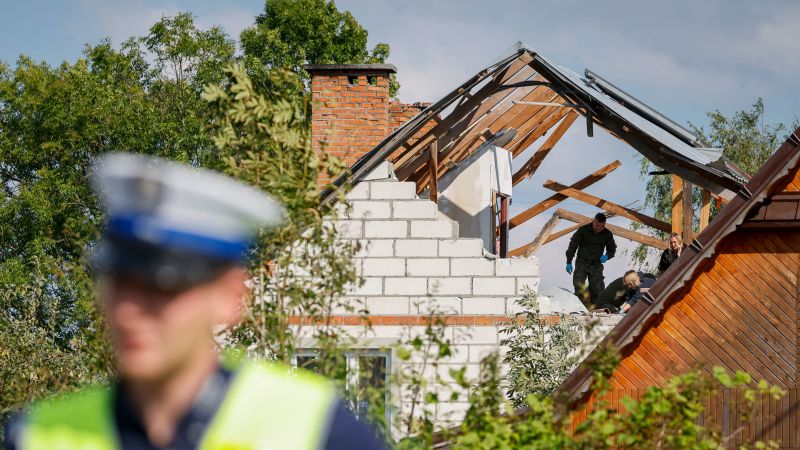
Multiple Russian drone incursions into NATO airspace, particularly in Poland, have created significant uncertainty among Western intelligence officials regarding Moscow's intent, with no consensus on whether they were accidental or deliberate probes. Regardless of intent, the incidents are seen as a worrying signal of the Kremlin's increased risk tolerance, heightening the potential for miscalculation and escalation between NATO and Russia. This ambiguity also raises concerns in Ukraine about the potential diversion of critical military aid to bolster allied defenses, underscoring a complex and elevated geopolitical risk environment.
Recent incursions of Russian drones into NATO airspace over Poland have created significant ambiguity within Western intelligence, with no consensus on whether the event was a deliberate probe of air defenses or an accidental deviation. A senior US military official assessed the probability of intentionality at '50-50', highlighting the difficulty in adjudicating Russia's intent. Regardless of the motive, the incident is widely interpreted as a signal of the Kremlin's increased risk tolerance, elevating the potential for a dangerous miscalculation that could lead to a direct NATO-Russia conflict. If intentional, the probe may have been designed to gauge NATO's reaction time, map weapons supply routes, and create political fissures in Western public support for Ukraine. Conversely, evidence suggesting an accident includes the use of unarmed 'dummy' drones with cheaper sensors susceptible to Ukrainian electronic warfare. The event has also sparked concern in Kyiv that critical military aid, such as Patriot air defense systems, may be redirected to bolster NATO's eastern flank, potentially impacting Ukraine's defensive capabilities.
AI-powered research, real-time alerts, and portfolio analytics for institutional investors.
Request DemoOverall Sentiment
strongly negative
Sentiment Score
-0.65
