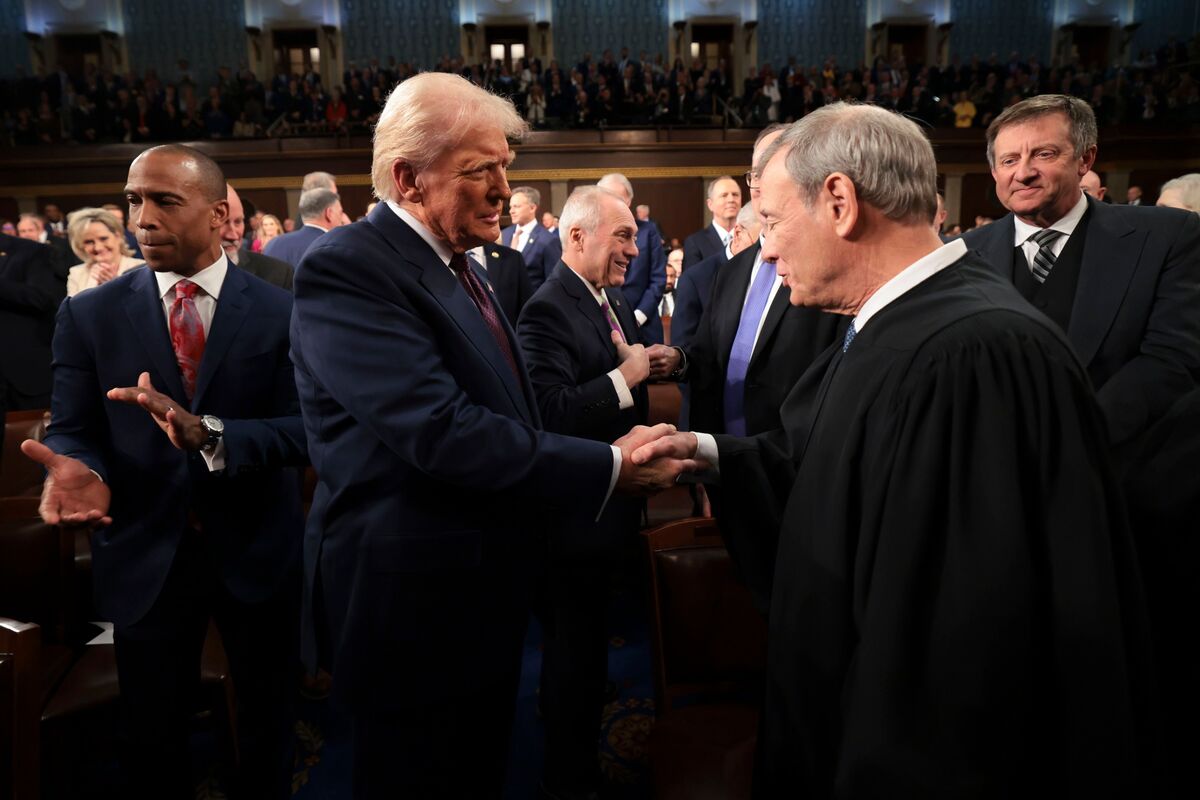
The Supreme Court’s ruling allows Alabama to eliminate a majority-Black congressional district, likely shifting one US House seat toward Republicans ahead of the November midterms. The decision adds to Republican advantage in a closely contested Congress and highlights the court’s continued influence on election outcomes. Market impact is limited, but the case is politically significant for governance and policy expectations.
This is less a one-off judicial headline than a reminder that the Court has become a slow-moving institutional catalyst for a structural redrawing of political power. The immediate market read is not about a single seat; it is about whether election-law volatility increases into November, which raises the probability of contested outcomes, delayed certification, and elevated event-driven hedging demand across the board. That tends to benefit litigation lawyers, political consultancies, and media exposure, while hurting sectors that rely on clean post-election policy visibility, especially rate-sensitive and regulation-sensitive names.
The second-order effect is that a narrower House margin increases the odds of legislative gridlock on taxes, antitrust, industrial policy, and fiscal negotiations. That is mildly bullish for large-cap incumbents with strong balance sheets because it reduces the near-term risk of incremental regulatory burden, but it also raises tail risk around debt-ceiling-style brinkmanship and shutdown dynamics over the next 3-6 months. If investors price in a more durable Republican advantage, the market should modestly reward defense, fossil fuels, border/security, and domestic-capex names tied to permissive regulation.
The main contrarian point is that the consensus may be overestimating how much a few seats matter versus broader macro forces. Even a House flip does not guarantee unified policy control, and judicial intervention can also mobilize opposition turnout, making the net political effect smaller than the headline suggests. The real tradeable edge is not directional election betting; it is owning volatility and using any post-ruling complacency to buy convexity ahead of a historically fragile midterm window.
Near term, the catalyst path is days-to-weeks for volatility repricing, but the policy implications extend into 2023-24 and beyond if redistricting precedents weaken minority-district protections. A reversal would require either a Democratic overperformance in turnout, a narrower-than-expected GOP legislative win, or a broader macro shock overwhelming politics. Until then, the bias is toward higher legal/political uncertainty premiums rather than a clean fundamentals story.
AI-powered research, real-time alerts, and portfolio analytics for institutional investors.
Request TrialOverall Sentiment
mildly negative
Sentiment Score
-0.15
