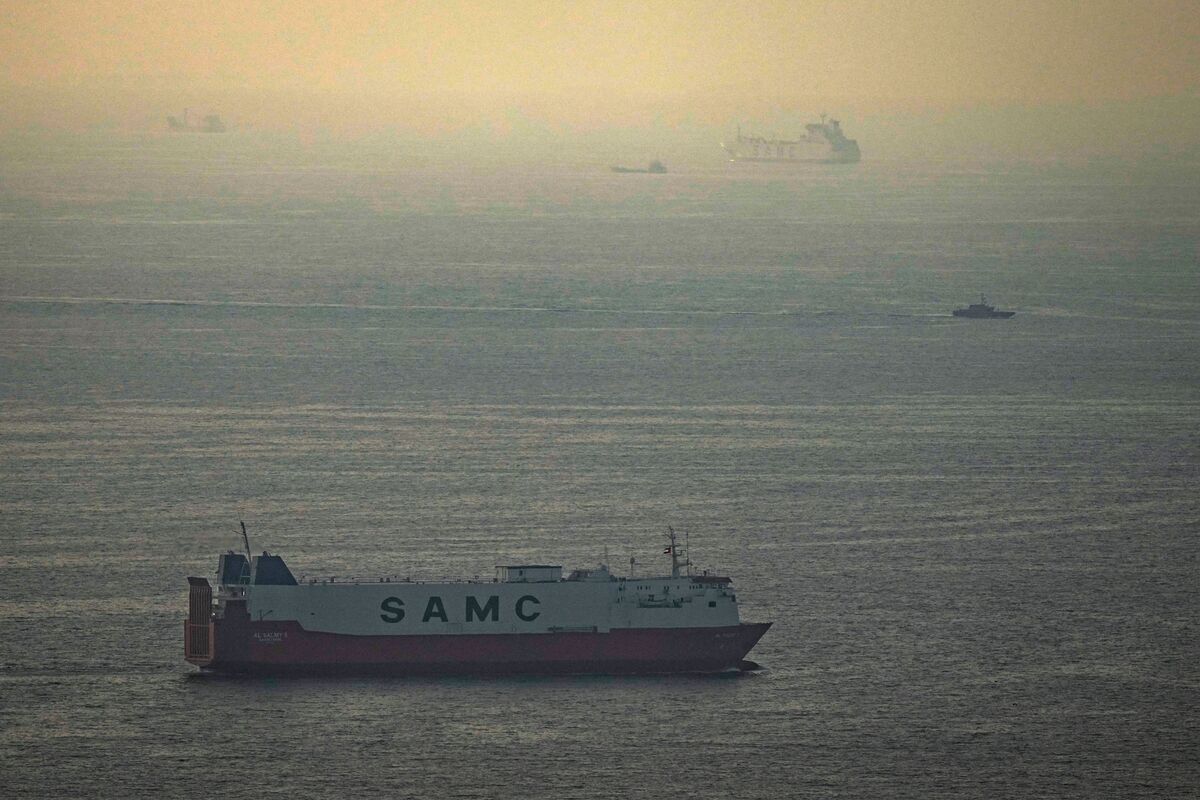
Key event: possible mining of the Strait of Hormuz by Iran could prevent rapid reopening of tanker traffic and prolong global oil supply disruptions even if shooting stops. That uncertainty is already pushing energy prices higher, raising volatility and downside risk to energy-exposed portfolios, shipping routes, insurers and global supply chains.
Shipping-cost shock is the immediate transmission mechanism: detours and higher insurance/freight can increase voyage times and bunker burn by an incremental 10–25%, which mechanically lifts freight rates and narrows delivered crude arbitrage for refiners dependent on Gulf grades. Owners of long-haul tonnage (VLCC/Suezmax) capture most of the near-term cashflow upside because each roundtrip takes longer and captains prioritize fewer high-fee transits; conversely, short-haul product feeder vessels and time-sensitive container lines face demand destruction as chokepoints raise effective transit costs.
Mines create a tail-risk that is qualitatively different from kinetic strikes — seabed contamination requires specialized clearance and multi-month verification before insurers restore full coverage, so even after hostilities stop, throughput can remain impaired for 2–6 months. Key catalysts that would materially reverse price and logistic dislocations are coordinated de-mining (weeks–months), large SPR releases or alternative supply redirections (30–90 days), and rapid insurance-market normalization; absent those, expect persistent freight and insurance premia.
Second-order winners include US coastal refiners and terminalling operators with optionality to handle US crude (they gain relative margin as Middle East crude faces higher delivered cost), bunker suppliers, and listed tanker owners whose days-charter-equivalent revenues rise. Losers are just-in-time global manufacturing nodes and container carriers that cannot easily pass through a 10–30% rise in voyage cost; re-routing also amplifies counterparty credit risk in trade finance and can shift crude grade flows, pressuring refiner complexity mismatches.
The consensus is skewed toward a short-lived ‘‘blip’’ priced into crude; that underestimates the asymmetric persistence of mine remediation. However, the inventory buffer (commercial + SPR) caps ultimate upside, so the efficient play is a time-limited exposure to freight/insurance dislocations rather than long-duration oil equity exposure.
AI-powered research, real-time alerts, and portfolio analytics for institutional investors.
Request DemoOverall Sentiment
moderately negative
Sentiment Score
-0.50
