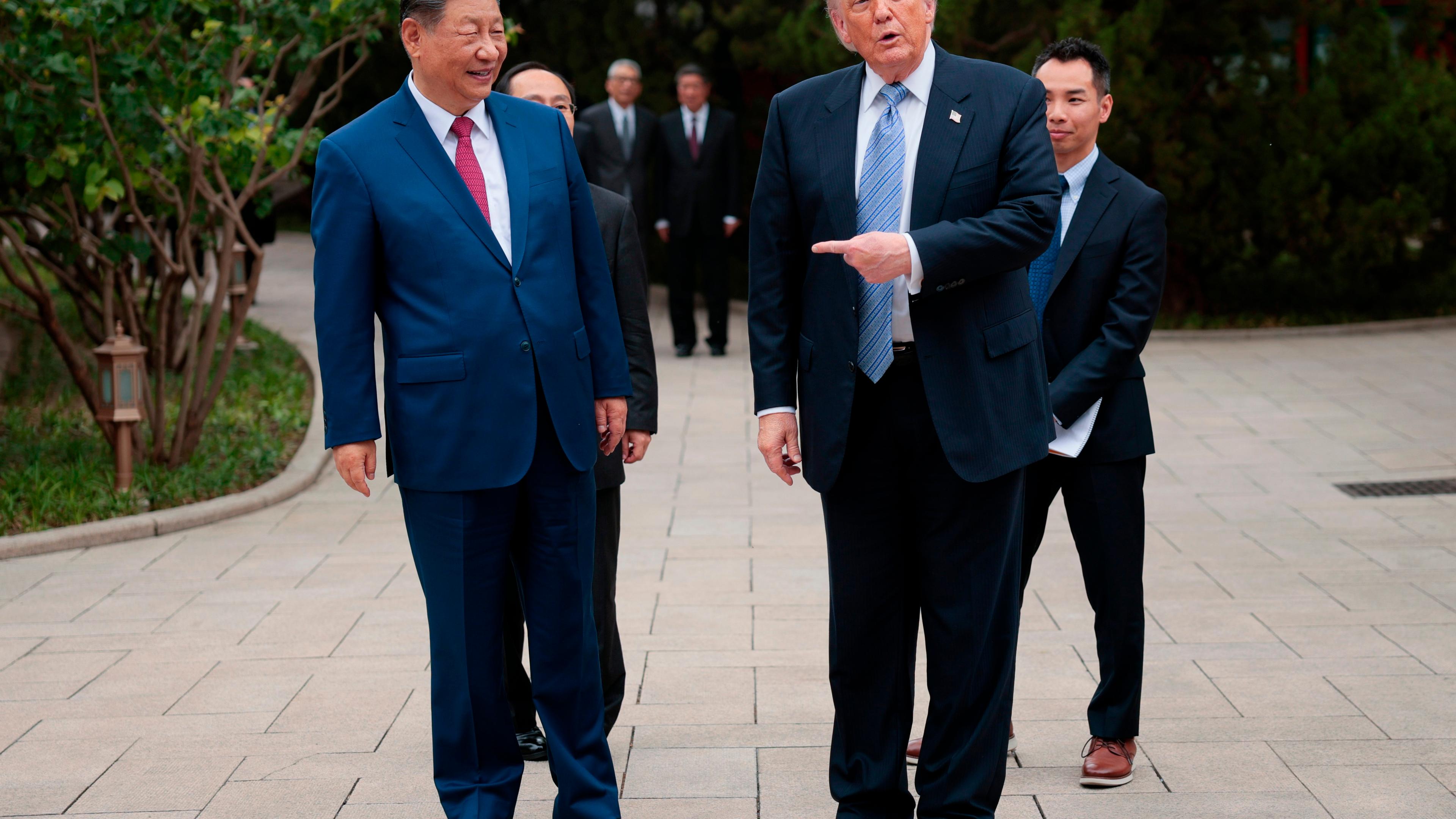
Trump said he is undecided on a planned $14 billion U.S. arms sale to Taiwan, including air-defense systems and missiles, creating uncertainty around Washington’s defense commitment to the island. The remarks come after a China visit and suggest Taiwan support may be used as a negotiating chip in broader U.S.-China talks. Markets could see heightened geopolitical risk around Taiwan and defense procurement, with potential implications for U.S.-China relations and regional security.
The market should read this less as a one-off rhetorical wobble and more as a signal that Taiwan security assistance is becoming a bargaining chip inside a broader U.S.-China détente trade. That matters because arms approvals are not just a defense issue; they are a barometer for how much geopolitical risk premium should be embedded in Asian semis, shipping, and regional FX. If Washington is seen monetizing support for Taipei, Beijing’s response is likelier to shift from symbolic drills to targeted coercion: trade friction, export control retaliation, and pressure on suppliers with China exposure.
Second-order beneficiaries are U.S. and allied defense primes with existing Indo-Pacific missile and air-defense franchises, because even a delayed package increases the odds of a larger future order set and replenishment demand after U.S. inventory drawdowns. The more interesting setup is in the munitions supply chain: propellant, seekers, guidance electronics, and solid-rocket motor bottlenecks become the gating factor, so the upside accrues to suppliers with pricing power and long-cycle backlog rather than platform names. Conversely, Taiwanese equities tied to capital spending and cross-strait trade are vulnerable to a higher risk premium even if the package is eventually approved.
The key timing issue is that the next 1-3 months may look calmer if rhetoric is used to support negotiations, but the 6-12 month risk is that ambiguity invites a harder Chinese test of the status quo. The contrarian view is that the headline may be over-interpreted on the downside: congressional support and treaty-like statutory constraints make a full abandonment of Taiwan unlikely, so the real risk is not cancellation but delay and dilution. That still hurts Taiwan in the interim because deterrence is a function of credibility, not just eventual delivery.
AI-powered research, real-time alerts, and portfolio analytics for institutional investors.
Request DemoOverall Sentiment
mildly negative
Sentiment Score
-0.35
