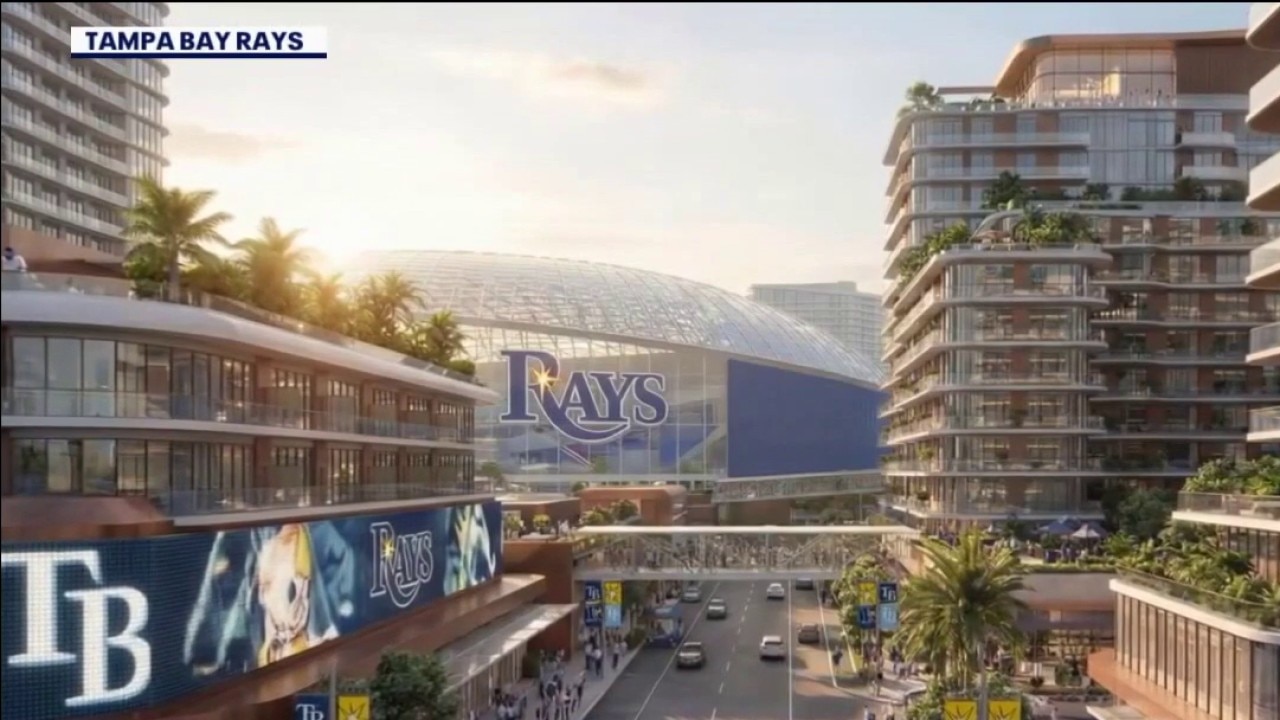
The Rays, Tampa, and Hillsborough County reached a nonbinding MOU for a $2.3 billion stadium and redevelopment plan, with the public share now around $976 million versus the original $1 billion ask. The Rays would contribute about $1.27 billion plus cost overruns, while no new taxes will be created and public safety funding is explicitly protected. The project also includes more than 100 acres of redevelopment, a target opening for the 2029 season, and an estimated 7,500 jobs.
The real market signal is not the stadium itself but the public-private financing template: a large share of the burden is being pushed into asset-backed, quasi-recoverable local revenue streams rather than straight general fund dollars. That lowers headline political backlash and materially improves approval odds, but it also means the deal’s durability depends on optimistic assumptions about incremental tax receipts, which are late-cycle and highly sensitive to construction timing, tourism flow, and rent growth.
The second-order beneficiary is the Tampa metro real estate stack, not the team. If this advances, nearby landowners, multifamily developers, hospitality operators, and infrastructure contractors should see a repricing of underutilized parcels within a 2- to 5-mile radius; the market typically capitalizes these projects long before any stadium cash flow exists. The flip side is displacement risk for lower-quality parking- and surface-lot operators, while construction labor and materials inflation could squeeze the very public budget that is being sold as mostly self-funding.
The key catalyst window is the next 1-3 weeks: local votes and the state budget session are the gating items, so the setup is binary rather than gradual. The biggest tail risk is not political rejection alone, but a delay that pushes the project beyond the stated budget window, forcing renegotiation and exposing cost overruns onto the public side; that would likely compress expected return-on-incremental-tax assumptions and weaken the redevelopment thesis. Over a 12-24 month horizon, the real test is whether this becomes a catalyst for adjacent mixed-use absorption or simply a politically endorsed master plan that takes years to monetize.
Consensus is likely overestimating the immediate economic lift and underestimating how much of the value accrues to landowners and developers rather than municipal coffers. If the market treats this as a generic civic-infrastructure win, it misses that the scarce asset is entitled, transit-adjacent urban land in a supply-constrained downtown market; that is where the economic rent will be captured first.
AI-powered research, real-time alerts, and portfolio analytics for institutional investors.
Request DemoOverall Sentiment
mildly positive
Sentiment Score
0.25
