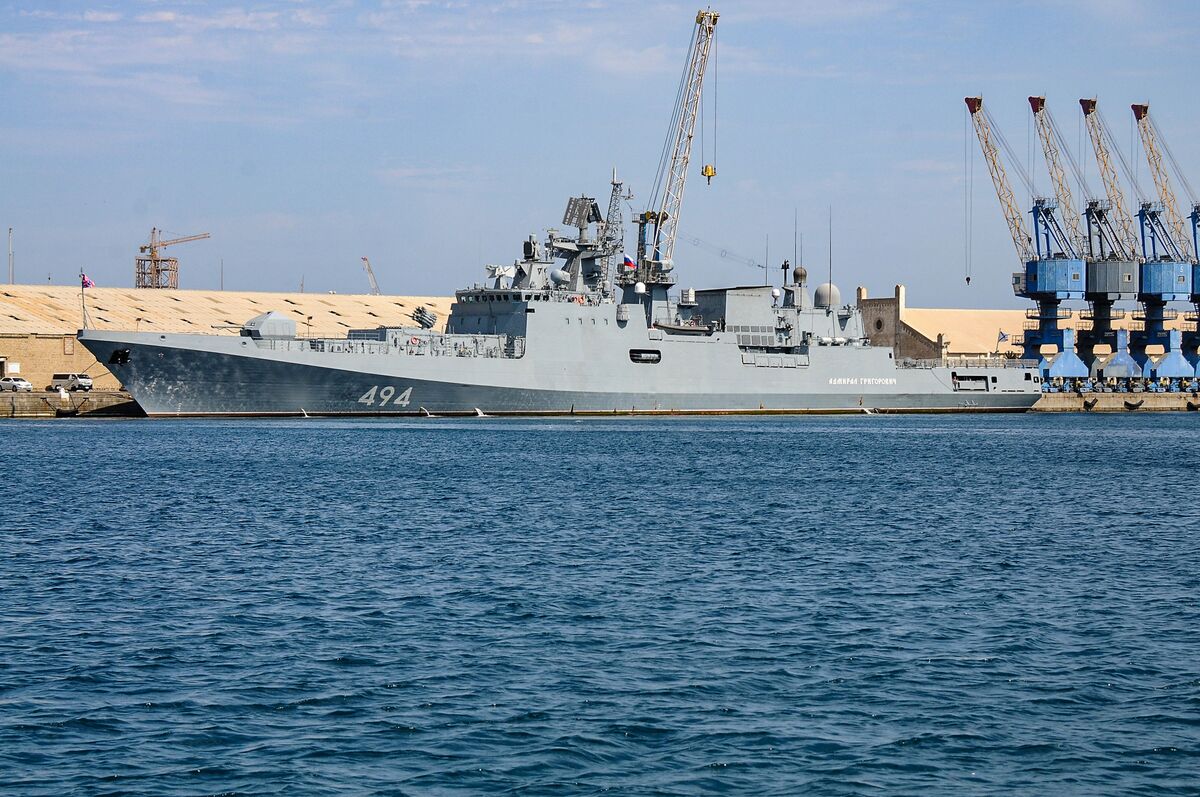
The UK is investigating reports that a Russian Navy vessel fired warning shots at a UK-registered yacht around 500 yards away, near 20 nautical miles south of the Isle of Wight. The incident underscores elevated geopolitical tension and potential maritime security risk, though the immediate market impact is likely limited absent escalation or confirmation of a broader confrontation.
This is less a direct market event than a signal that the UK-Russia maritime risk premium is creeping from the Black Sea into NATO-adjacent commercial waters. The immediate second-order effect is not on shipping rates, but on defense procurement urgency: incidents that test territorial boundaries tend to accelerate demand for maritime ISR, coastal surveillance, and counter-drone / counter-surface systems, which benefits the same defense primes already gaining from higher European readiness budgets.
The more important market issue is duration. One-off investigations usually fade within days, but if London frames this as escalation rather than harassment, expect a broader UK and allied response over weeks to months: more patrol assets, tighter rules of engagement, and additional spend on maritime domain awareness. That would modestly support European defense names and specialized sensors, while pressuring any remaining UK-Russia sensitive exposures through sanctions risk and insurance premia.
The contrarian read is that the market may underprice the signaling value of a ‘warning shot’ narrative. Even if no kinetic follow-through occurs, the reputational damage can force policy action disproportionate to the incident itself, especially ahead of any election cycle where sovereignty messaging matters. Tail risk is a miscalculation at sea: the base case is contained, but the left tail is an accidental escalation that would re-rate defense volatility and widen risk premia in adjacent European assets.
From a competitive-dynamics angle, the beneficiaries are not general defense contractors alone but vendors with deployable maritime sensing, communications hardening, and unmanned patrol capabilities. The loser set is broader: yacht/charter insurance, niche coastal tourism, and any logistics operator exposed to heightened security protocols near the Channel approaches could see incremental cost friction if incidents become recurring.
AI-powered research, real-time alerts, and portfolio analytics for institutional investors.
Request DemoOverall Sentiment
mildly negative
Sentiment Score
-0.20
