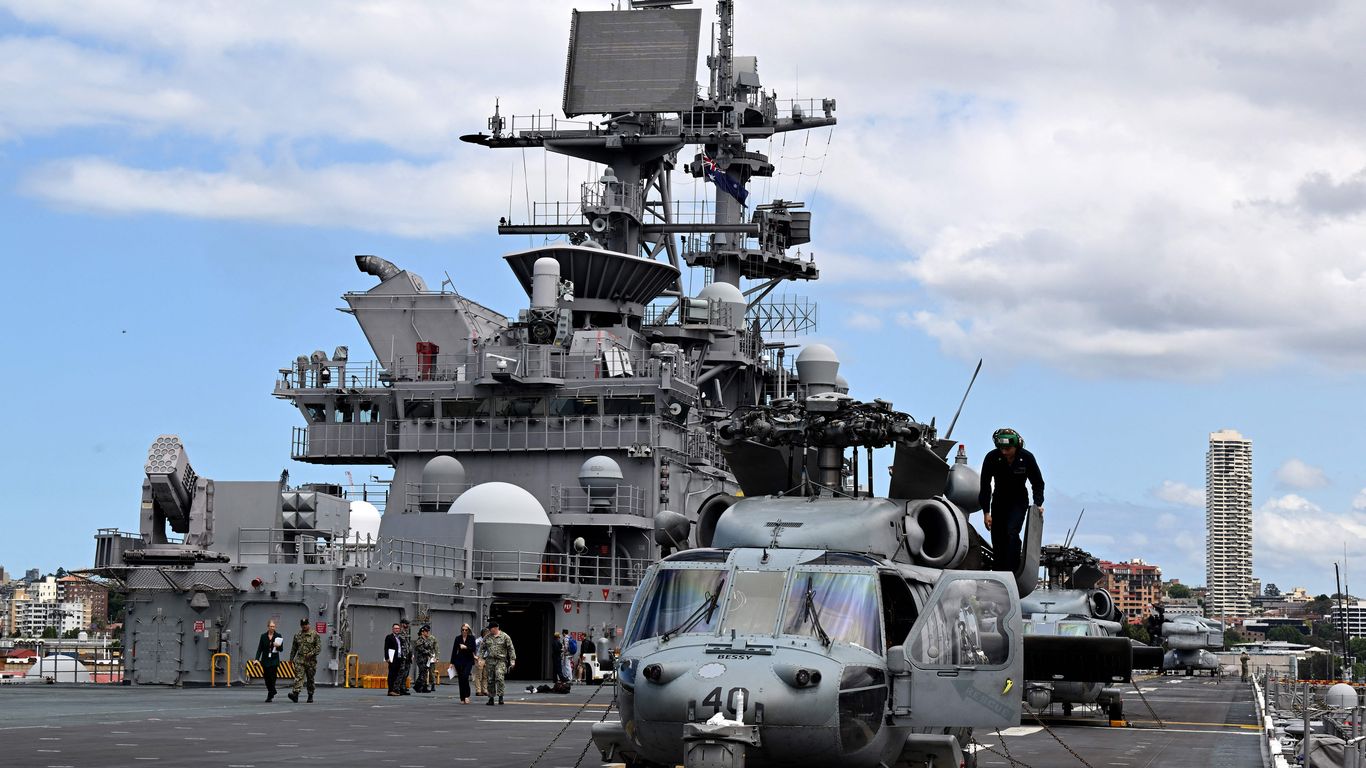
Deployment of the USS Tripoli and the 31st Marine Expeditionary Unit to the Middle East adds thousands of Marines, multiple warships and F-35s to the region. Disruptions in the Strait of Hormuz have already cost the U.S. $11 billion and are driving up global oil, shipping and insurance prices; 13 U.S. military members have died. U.S. Central Command is planning options including strikes on Iranian land-based anti-ship missiles and possible Navy escorts for commercial vessels, increasing regional risk premia and likely near-term energy and shipping volatility.
Disruptions through the Strait translate into outsized tonne-mile demand: rerouting via the Cape adds ~8–10 days to VLCC voyages, effectively increasing tanker tonne-miles by ~15–20% per voyage and magnifying freight rate sensitivity to small supply blips. Empirically, markets treat a sustained ~0.5 mbpd effective constraint as a $3–6/bbl shock to Brent over 2–4 weeks because of both physical rebalancing and elevated forward risk premia.
Insurance and logistics repricing is an early, persistent channel. War-risk and P&I premia can double within days for exposed routes, prompting surcharges from carriers and accelerating detours that grind down just-in-time inventories — expect visible inventory drags in industrial supply chains within 3–8 weeks and margin compression for import-dependent manufacturers.
A longer-duration scenario materially favors defense primes and maritime services: sustained kinetic risk drives demand for mine-countermeasure vessels, ISR sorties, and coastal anti-ship suppression, concentrating revenue upside into 3–12 month procurement cycles but with funding and delivery lags that mute near-term earnings for some suppliers. Conversely, a decisive, limited tactical campaign that neutralizes shore batteries could normalize freight and oil premia within 2–6 weeks, producing rapid mean reversion.
Key tail risks are asymmetric: inadvertent escalation (attacks on coalition assets or oil infrastructure) would extend shocks into quarters and materially widen EM and shipping credit spreads; failure to see operational follow-through (no strikes on land sites, no coalition escorts) within ~30 days would likely expose overpricing in insurance and energy, making a short-duration mean-reversion trade attractive.
AI-powered research, real-time alerts, and portfolio analytics for institutional investors.
Request DemoOverall Sentiment
mildly negative
Sentiment Score
-0.25
