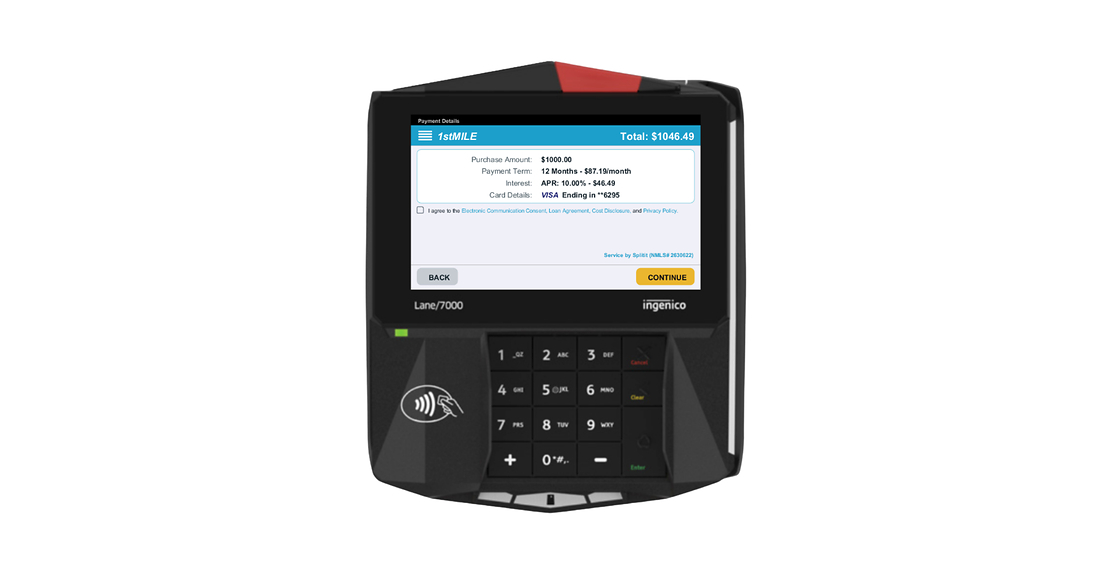
1stMILE and Splitit announced a partnership to roll out “1stMILE Buy Now, Pay Later” powered by Splitit, enabling auto repair and maintenance purchases to be split into monthly installments using customers’ existing credit cards starting July 2026. The model presents installment plans at the payment terminal and is designed to avoid separate loan applications/credit checks, citing an average approval rate of 85%+ and full merchant payment upfront. The rollout begins across thousands of service markets and is expected to expand through 1stMILE’s 17,000+ partnered shops, aiming to reduce repair postponement and improve shop conversion.
This is more a distribution validation for embedded payments than a meaningful revenue event. For card networks, the economics are favorable but second-order: higher authorization rates, larger ticket sizes, and more revolving spend can lift network volume without taking credit risk on balance sheet. The bigger takeaway is competitive positioning—this kind of UX reduces friction versus standalone BNPL, which should be marginally negative for pure-play installers whose only moat is checkout simplicity.
The auto-repair vertical matters because it is necessity-driven and price-inelastic in the short run: when a repair is required, payment friction is often the final conversion blocker. If adoption is real, merchant-level conversion and average ticket should improve first, then retention and repeat visits follow over 1-3 quarters. But the market should not extrapolate a platform-wide earnings step-up until we see attach rates and live transaction volume; otherwise this stays a feature, not a business line.
Contrarian risk: the market may overestimate how disruptive this is to existing financing channels. Because it uses existing credit lines, approval will ultimately depend on issuer willingness to extend more revolving capacity; in a tightening credit environment, issuers can quietly suppress usage by lowering limits or declining marginal transactions. That makes the upside to MA structurally modest, while the downside to specialty installment lenders is more about incremental share loss than an outright demand collapse.
AI-powered research, real-time alerts, and portfolio analytics for institutional investors.
Overall Sentiment
mildly positive
Sentiment Score
0.20
Ticker Sentiment
