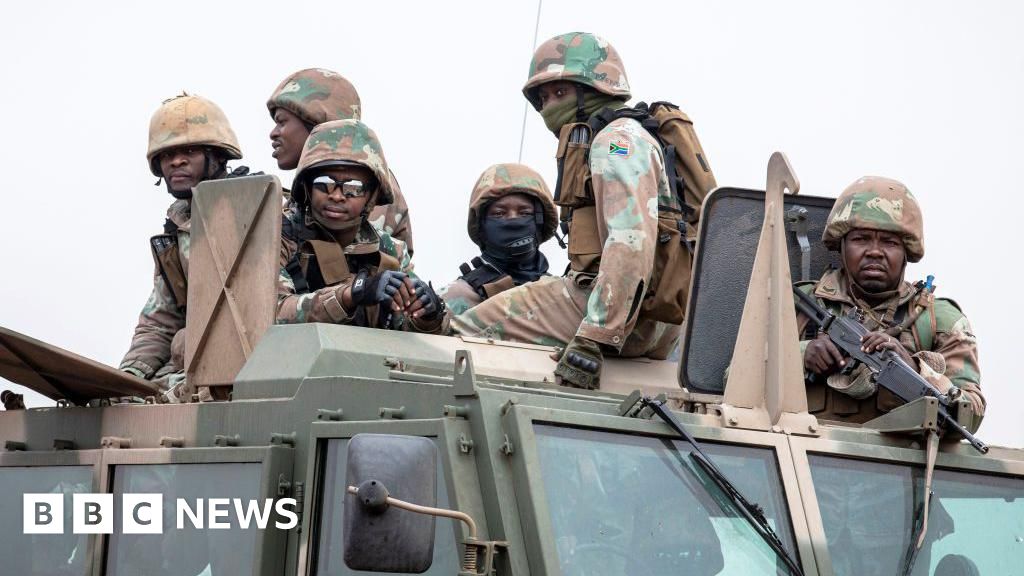
President Cyril Ramaphosa announced deployment of the South African National Defence Force to support police operations against organised criminal gangs and illegal mining, directing police and army chiefs to submit deployment plans within days and initially focusing on the Western Cape and Gauteng. He also pledged to recruit 5,500 police officers, strengthen intelligence and target crime syndicates amid police figures showing an average of 63 killings per day between April and September; the measures underscore rising security risks that could raise investor-country risk premia and entail additional fiscal and operational costs.
Market structure: Short-term winners include hard-commodity miners (PGM/gold) and FX safe-haven (USD), while domestic consumer, retail property, tourism and local banks face earnings pressure from crime-driven disruption. Expect upward pressure on sovereign and corporate credit spreads in the near term (10y ZAR sovereign yield +50–200bp vs UST if confidence erodes), and weaker ZAR (5–10% downside scenario). Military deployment raises government security spending modestly but will not immediately restore business sentiment.
Risk assessment: Immediate (days) risks are volatility spikes in ZAR and EZA (South Africa ETF); short-term (weeks–3 months) risks include capital flight and rating agency action if crime worsens; long-term (6–24 months) risks are structural: persistent illegal mining and governance failures that depress GDP growth 0.5–2% pa. Tail risks: large-scale unrest or a sovereign downgrade (one-notch) could widen 10y spreads by 150–300bp; hidden dependency: mining supply chains (PGMs) can benefit if illegal miners disrupt output.
Trade implications: Direct trade: short ZAR vs USD (spot or 3m forward) and long gold/miners (GDX, NEM, SBSW) as a hedge; pair trade idea: long GDX (2–3% portfolio) vs short EZA (2%) with stop-losses of 6–8% and 3–6 month horizons. Options: buy 3–6 month put spreads on EZA (strike ~7–10% OTM) to limit cost, and buy 3–6 month call spreads on GDX to lever upside if risk-off accelerates.
Contrarian angles: Consensus assumes persistent deterioration; this may be overdone if deployment meaningfully reduces urban gang activity in 3–6 months — opening a recovery trade. Historical parallels (Colombia, post-2000s) show security improvements can lift domestic equities by 20–40% over 12–24 months; set triggers to add risk: ZAR recovery >5% or 10y spread tightening >75bp from peak for phased re-entry. Unintended risk: heavy militarization could deter FDI and civil liberties, delaying recovery.
AI-powered research, real-time alerts, and portfolio analytics for institutional investors.
Request DemoOverall Sentiment
moderately negative
Sentiment Score
-0.40
