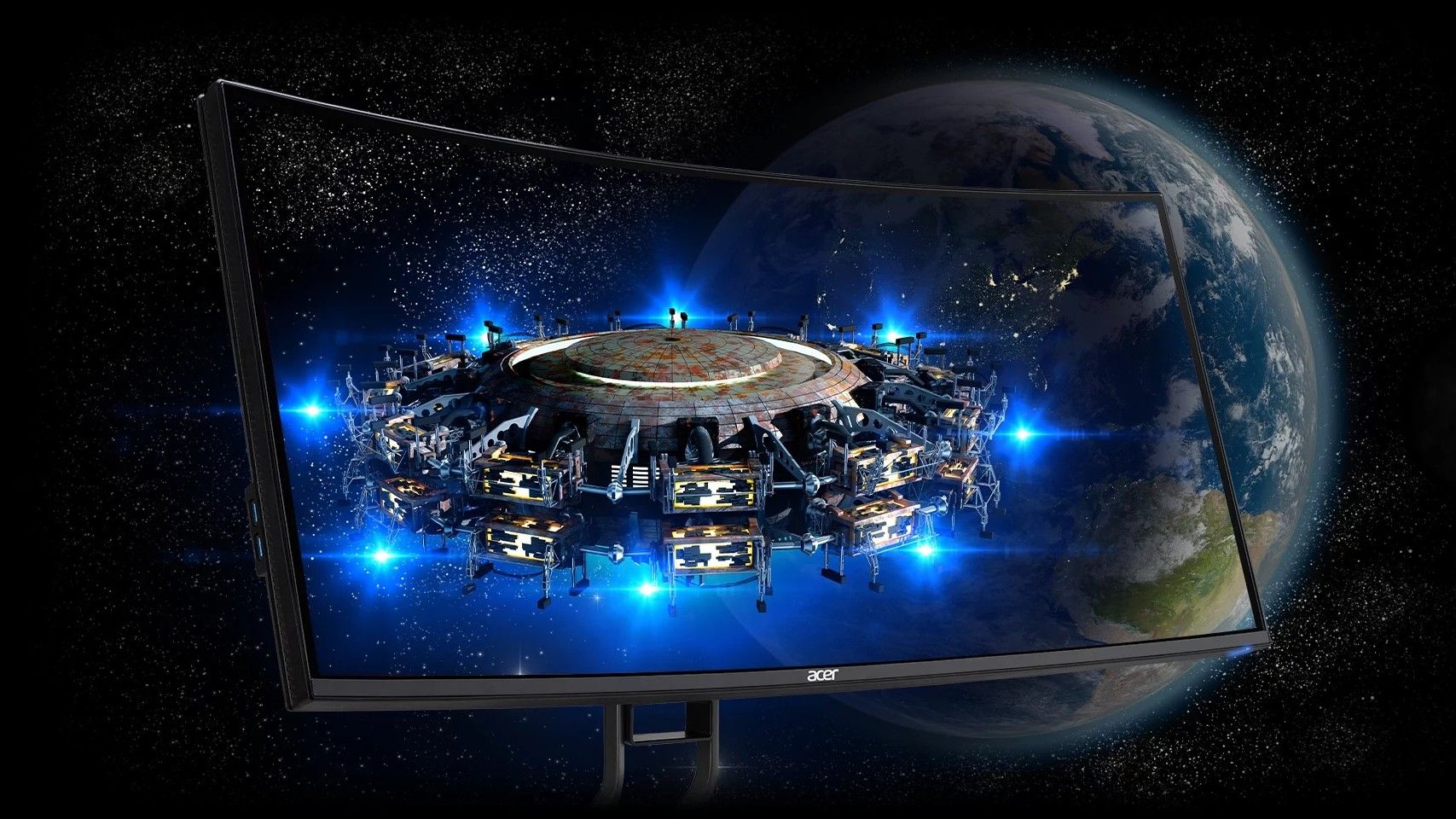
Acer is launching five new gaming monitors in Q2 2026, highlighted by the Nitro XV273U F5 with a 27-inch QHD IPS panel, 540 Hz native refresh rate, and up to 1,000 Hz at 720p. The lineup also includes a 34-inch QD-OLED Predator X34 F1 at 330 Hz and a glasses-free 3D Predator XB273K with 4K resolution and 180 Hz refresh. The announcement underscores Acer’s push into high-refresh-rate, OLED, Mini LED, and 3D display technologies, but it is primarily product news with limited near-term market impact.
This reads less like a consumer demand inflection and more like a spec-sheet escalation war that benefits the component stack upstream while compressing differentiation downstream. The practical winners are likely panel makers and the ecosystem that can monetize extreme-refresh marketing: high-end GPU vendors, display controller suppliers, and camera/AI software that can credibly attach to 3D or upscaling narratives. The loser is mid-tier monitor OEMs, because Acer is teaching buyers to anchor on headline refresh rates and local-dimming counts, which pushes the market toward either very low-end value or very high-end feature stacks.
The second-order effect is that these products validate two separate upgrade paths: competitive esports at absurdly low resolution, and premium creator/gaming hybrid displays with OLED/QD-OLED and DP 2.1-class connectivity. That is bullish for NVIDIA/AMD at the margin because ultra-high refresh at any meaningful resolution is a GPU marketing tailwind, but the attach rate risk is real: most shipped monitors will not be paired with hardware capable of saturating them, so the monetization gap could show up in slower adoption than launch-day hype suggests. The 3D push is the clearest contrarian tell — it may be less about near-term unit volume and more about signaling IP reuse and software-led differentiation, which can keep ASPs elevated even if volumes stay niche.
Risk is primarily timing and novelty decay. In the next 1-2 quarters, this can boost sentiment and channel chatter, but over 12-18 months the market will likely discount whether 720p/1000Hz or glasses-free 3D actually converts into sustained sell-through. If consumers decide the incremental gains are imperceptible or too hardware-intensive, OEM inventory risk rises and the marketing premium collapses back into promotion-driven pricing. The key watch item is whether competitors respond with similar spec spikes; if they do, this becomes an industry margin compression event rather than a share gain event for Acer.
AI-powered research, real-time alerts, and portfolio analytics for institutional investors.
Request DemoOverall Sentiment
mildly positive
Sentiment Score
0.25
