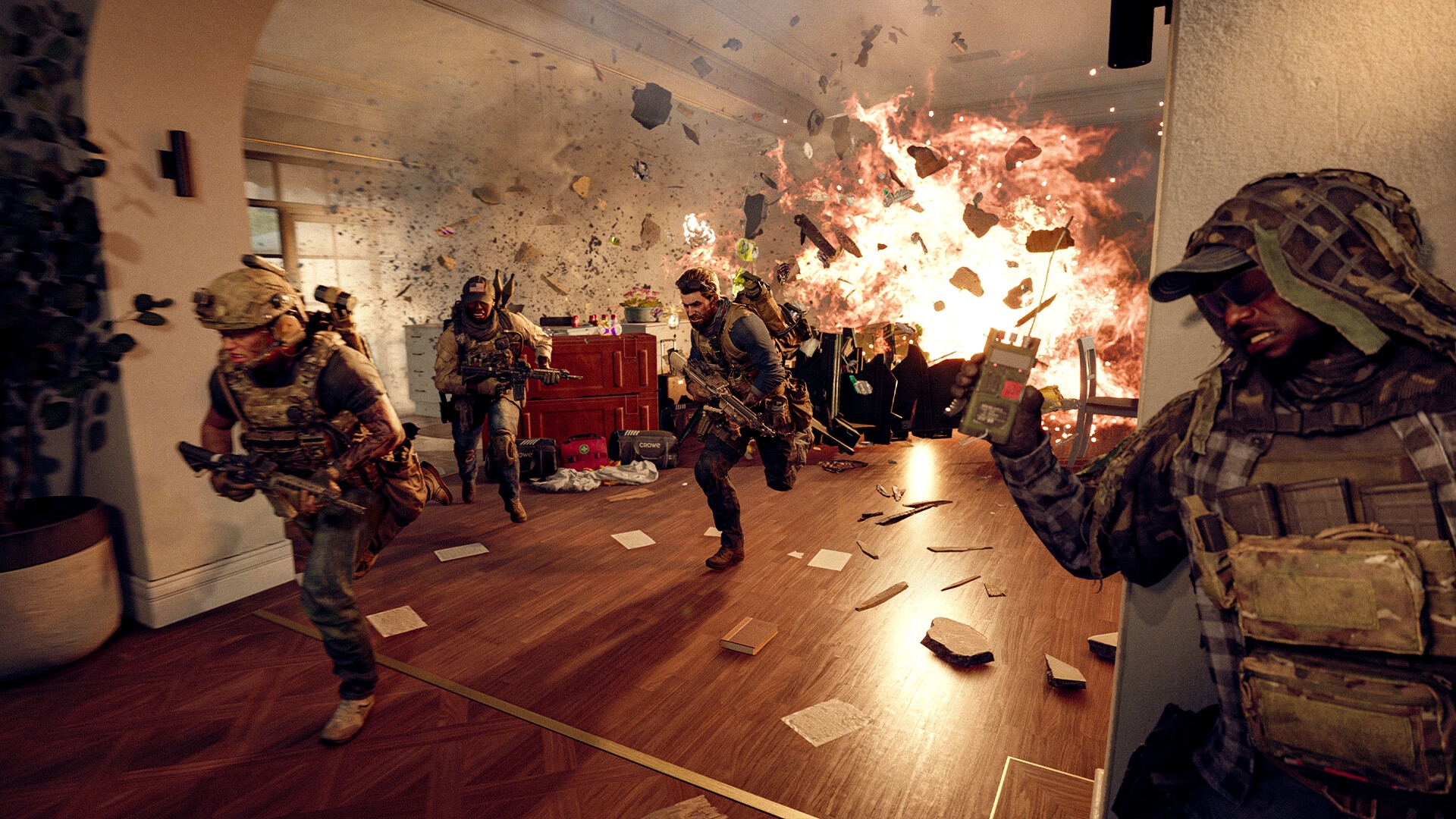
Battlefield 6 is available free-to-play on Xbox Game Pass through February 22 in a limited-time promotion, increasing short-term access and playtime for the title. The move is likely intended to drive engagement, potential in-game spending and reinforce Game Pass subscriber value rather than to generate immediate direct revenue, so any upside to Microsoft or the game's publisher is expected to be modest and temporary with limited market-moving significance.
Market structure: Microsoft (MSFT) is the clear winner — short-term Game Pass inclusion drives MAU and retention with an expected 5–15% engagement bump over the two-week window to Feb 22 and a recurring lift to subscriber value if conversions to DLC/microtransactions exceed 2–3%. EA (EA) sees mixed effects: trialing Battlefield may cannibalize upfront box sales but increase live-service receipts; traditional premium sellers (TTWO, SNE) face incremental pressure to strike similar platform deals. Pricing power shifts toward platforms (MSFT) and away from one-off retail pricing; digital distribution further lowers marginal supply constraints for big launches. Risk assessment: Tail risks include a major backlash to in-game monetization (social/regulatory) or server failures that dent lifetime value, each capable of shaving 10–30% off projected incremental revenue. Immediate (days) effects are engagement spikes and short-term sentiment; short-term (weeks/months) depends on conversion-to-spend rates and DLC timing; long-term (6–18 months) could rebase AAA release economics if consumer expectation for same-day subscription access becomes standard. Hidden dependency: conversion rate from free players to paying users — a 1% vs 4% conversion makes the difference between a loss and a multi-million-dollar win. Trade implications: Bias toward MSFT exposure and cautious, data-contingent exposure to EA. Implement 1–2% portfolio long in MSFT targeting +12% in 6–12 months (stop -7%). If EA reports post-trial conversion >3% or digital revenue beat next quarter, add 0.5–1%; otherwise trim. Relative trade: long MSFT / short TTWO (equal notional 0.5% each) to express platform value over premium-only sellers. Options: buy a 3–6 month MSFT 10–15% OTM call spread sized at 0.5–1% of NAV to cap cost. Contrarian angles: Consensus underweights the strategic moat of Game Pass as a recurring-revenue bundler — market may underprice long-term ARPU lift from increased engagement. Conversely, the market may not be pricing in downside: normalization post-Feb 22 could produce a 5–10% sentiment correction for publishers if conversion is weak. Historical parallels: music/streaming free trials initially compressed per-unit revenue but later expanded ARPU via subscriptions; gaming could mirror this over 12–24 months. Unintended consequence: accelerated expectation of same-day subscription availability may force margin-reducing licensing deals across the industry, compressing gross margins by several hundred basis points for AAA publishers over multiple years.
AI-powered research, real-time alerts, and portfolio analytics for institutional investors.
Request DemoOverall Sentiment
mildly positive
Sentiment Score
0.25
