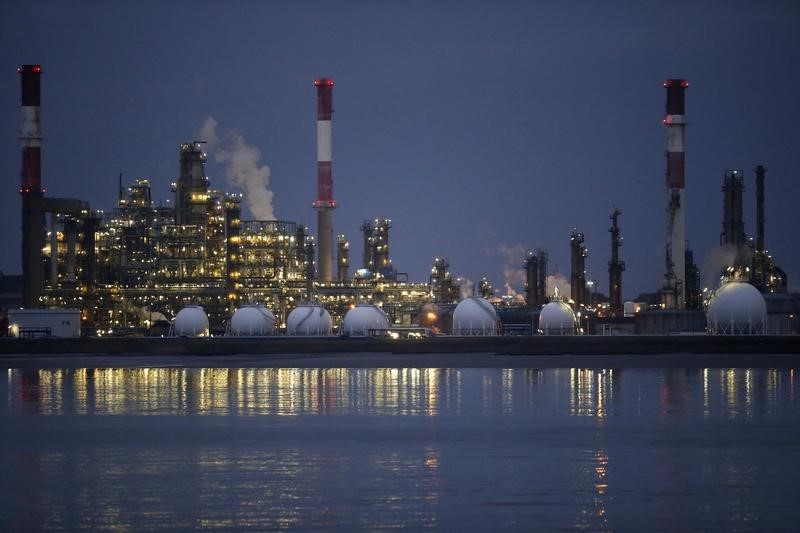
Pemex is delaying changes to its crude export strategy pending mid-term oil price developments after recent price rises tied to the Middle East conflict, which the government views as relatively temporary. The company has prioritized refining over exports to cut import dependence but may reconsider exports if the conflict and price effects persist, while balancing supply needs for domestic refineries. Finance Minister Edgar Amador said Mexico expects the fiscal impact from higher oil prices to be relatively neutral.
The operational decision cycle at a large state refiner creates an asymmetry in regional crude and product flows: when domestic feedstock is prioritized, marginal export barrels that historically cleared into the Gulf Coast/Atlantic markets become less available, forcing buyers to re-source heavier/sour barrels or pay up for remaining Mexican barrels. That reallocation manifests first in basis moves (Maya/USGC heavy differentials), then in refinery crack spreads — complex refiners with crude flexibility capture a disproportionate share of incremental product margin while simpler or export-oriented plants face throughput risk. Expect these effects to play out over 1–6 months as cargo scheduling and tanker bookings reprice; the initial price impulse will be in crude differentials and freight rather than immediate changes to headline Brent/WTI.
Winners are market participants with sourcing optionality and balance-sheet flexibility: traders who can re-route cargoes, heavy-crude exporters able to redirect flows, and complex refiners that convert tighter heavy supply into wider product cracks. Losers are export-dependent refineries and fuel traders who supply North America–Mexico product flows — they suffer both volume and margin pressure while freight patterns adjust. Second-order beneficiaries include tanker owners on re-routed long-haul routes and E&P names whose realized prices lift with a tighter Atlantic basin; sovereign/fiscal sensitivity for Mexico and Pemex remains a monitorable macro tail, not an immediate market driver.
Key catalysts that will confirm a sustained regime are persistent conflict-driven price support lasting >3 months, observable declines in Mexican export loadings (cargo counts) and sustained widening of Maya differentials by >$3–5/bbl. Reversals can be swift if diplomatic progress, emergency releases, or alternative heavy crude swaps materialize — expect mean reversion windows of 4–12 weeks once logistics arbitrage solves. For risk management, prioritize trades that monetize basis and local crack dislocations rather than outright directional oil beta, and size for conditional scenarios where impacts are in the low hundreds of kb/d over several months rather than multi-Mb shocks.
AI-powered research, real-time alerts, and portfolio analytics for institutional investors.
Request DemoOverall Sentiment
neutral
Sentiment Score
0.00
Ticker Sentiment
