


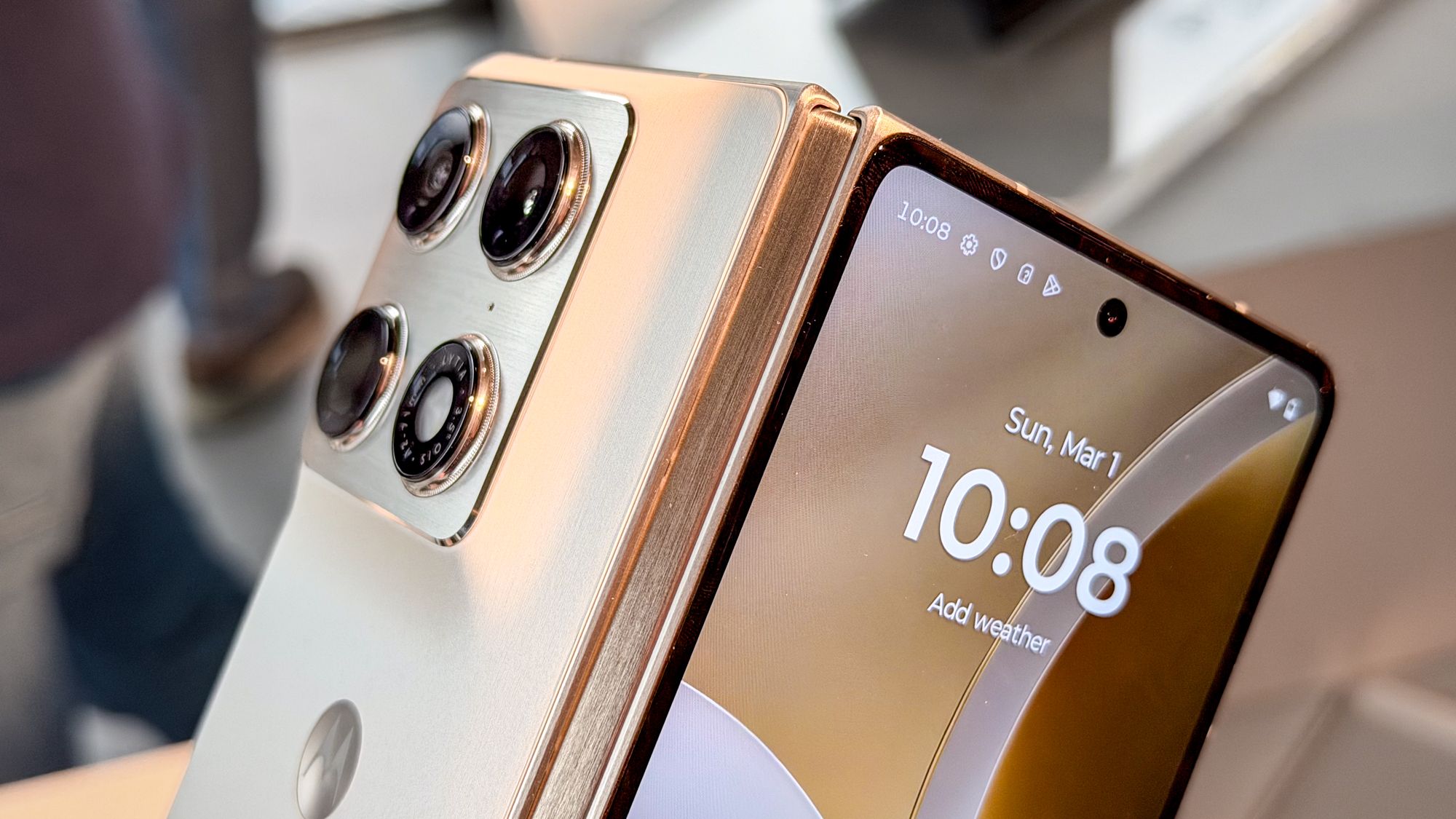
Motorola unveiled the Razr Fold at MWC 2026 with a European launch on April 13 and pricing of £1,799 / €1,999 (U.S. price TBC); key specs include an 8.09-inch inner pOLED (2484×2232) and 6.6-inch outer pOLED (2520×1080), Snapdragon 8 Gen 5, 12/16GB RAM, 256/512GB/1TB storage, a 6,000 mAh battery with 80W wired and 50W wireless charging, triple 50MP rear cameras, and stylus support. Motorola is positioning the Razr Fold as a serious competitor to Samsung’s Galaxy Z Fold 7 — offering similar or slightly lower European pricing and strong durability and AI features (Google Gemini/Perplexity/Copilot plus Moto AI tools) — which could increase competitive pressure in the high-end foldable segment and modestly influence market share dynamics among premium Android OEMs.
Market structure: Motorola’s Razr Fold (Lenovo-owned Motorola) is a credible entrant that can shave 5–10 percentage points of premium foldable share in Europe within 12–18 months by undercutting Samsung on price (~€200) while matching many specs. Direct winners: Lenovo (LNVGY), Qualcomm (QCOM) for chipset demand, and AI/cloud providers (GOOGL/MSFT) via software bundling; losers: Samsung (SSNLF / 005930.KS) and smaller OEMs whose pricing power/ASP will be pressured. Expect modest margin compression across the high-end foldable segment and a small uptick in component demand (OLED, hinges) tightening supply in next 2–6 quarters.
Risk assessment: Tail risks include a supply-chain hiccup (hinges/display yields) that delays shipments >3 months, patent/licensing suits vs Samsung or hinge suppliers, or failure to deliver 7-year OS updates causing brand backlash; each could erode revenue 10–30% for Motorola foldables. Immediate effects (days): limited to market talk; short-term (weeks–months): pre-order momentum and component orders; long-term (quarters): share shifts and margin impacts across handset OEMs and suppliers. Hidden dependency: Motorola’s success hinges on carrier/retailer placement in U.S. and global software integration with Gemini/Copilot; weak channel deals mute upside.
Trade implications: Tactical longs: establish 2–3% portfolio long in LNVGY ahead of European launch (April 13) to capture share gains, and 1–2% long in QCOM to play incremental Snapdragon orders—trim on 15–25% rallies. Play GOOGL (1–2% long) and MSFT (1% long) as option-embedded exposures to AI services in devices; consider buying QCOM 3‑month calls ~15% OTM and GOOGL 6‑month 10% OTM calls to leverage positive hardware-led AI adoption while capping downside. Pair trade: long LNVGY / short SSNLF sized 1–1 to capture ASP/margin compression in Samsung if Motorola takes share.
Contrarian angles: Consensus underestimates the stickiness of software/cloud revenue; device wins may modestly accelerate Google/Microsoft conversational AI usage but not immediately monetize via hardware—benefit accrues to cloud/ads over 2–4 quarters. Market may overreact to chip choice (Snapdragon 8 Gen 5) — older chip lowers capex and may boost units sold, improving component supplier margins; downside that’s underpriced is potential warranty/repair costs if durability claims fail, which could flip sentiment quickly. Historical parallel: mid‑2010s Nexus/Pixel hardware pushes increased Android differentiation but limited OEM share gains—expect gradual, not instant, reordering of market share.
AI-powered research, real-time alerts, and portfolio analytics for institutional investors.
Request TrialOverall Sentiment
mildly positive
Sentiment Score
0.35
Ticker Sentiment
