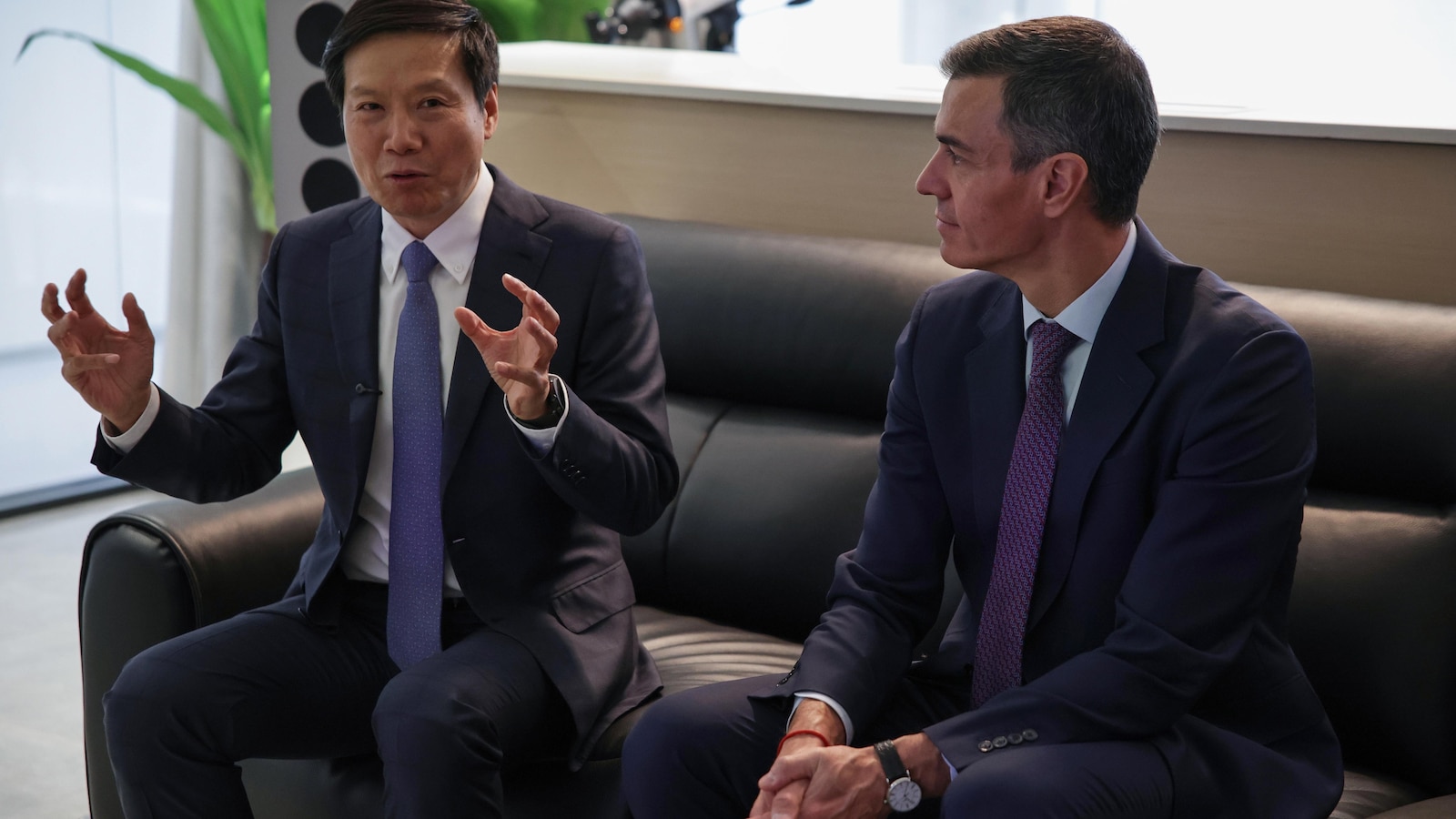
Spanish Prime Minister Pedro Sánchez is in China for April 13-15 talks with Xi Jinping, Li Qiang and Zhao Leji as Spain seeks deeper political and commercial ties amid heightened U.S.-Europe tensions over the Iran war. Spain wants more Chinese investment, exports and access to critical raw materials, solar panels and green technologies, while also pressing Beijing on trade imbalances and global issues including climate, health, AI and nuclear risk. The visit is diplomatically notable but not an immediate market catalyst.
Spain’s outreach to China is less a bilateral story than a signal that parts of Europe are still willing to trade strategic ambiguity for near-term industrial and energy-security gains. The second-order implication is that Beijing gets another EU foothold that can dilute pressure for tougher industrial policy on Chinese EVs, solar, and battery inputs, even if formal trade policy remains Brussels-led. That matters most for European sectors that are already margin-thin and input-dependent: the more Spain pushes for accommodation, the harder it becomes for the EU to sustain a unified de-risking narrative. The biggest practical beneficiary is the Chinese supply chain around renewables and critical minerals, not because of immediate deal flow, but because a friendlier political channel increases the odds of incremental procurement, permitting, and financing. European solar, grid equipment, and battery names remain vulnerable to another round of price competition if Chinese capital and inventory are redirected into EU demand pockets. In defense, however, this posture increases the probability of a split-screen: broader EU rhetoric on rearmament alongside pockets of domestic resistance to U.S.-aligned security policy, which can delay procurement cycles and favor diversified prime contractors with larger non-EU exposure. The contrarian point is that markets may be overestimating how much Spain can move the EU-China relationship. Spain is a marginal vote in a bloc that still sets trade policy collectively, so the real tradeable effect is slower and more political than economic. The near-term catalyst is not a bilateral breakthrough, but headlines around Chinese investment promises or EU retaliation; the risk is that any visible concession from Madrid triggers Washington friction and narrows Spain’s access to U.S.-linked defense and tech cooperation over the next 1-3 quarters.
AI-powered research, real-time alerts, and portfolio analytics for institutional investors.
Request DemoOverall Sentiment
neutral
Sentiment Score
-0.05
