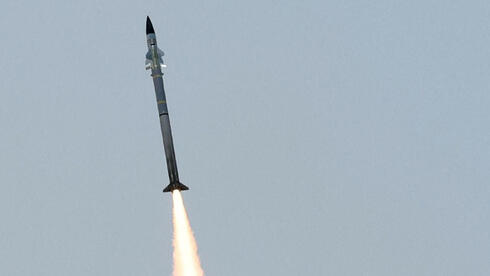
Israel reportedly deployed an Iron Dome battery to the UAE, including interceptors and dozens of personnel, after Iran launched 550 ballistic and cruise missiles plus 2,200 drones at the Gulf state. The report says the UAE became the first country after Israel and the United States to use the system, with the battery intercepting dozens of Iranian missiles. The episode highlights escalating regional conflict and the strengthening of defense cooperation among the UAE, Israel, the U.S., and other allies.
The first-order market implication is not the defense hardware transfer itself, but the signaling value: Gulf states are now treating layered missile defense as a sovereign balance-sheet item, not a discretionary procurement category. That should extend the replacement cycle for interceptors, radar, command-and-control software, and point-defense systems across the region, with the biggest second-order beneficiary being the integrated air-defense stack rather than any single platform. The public normalization of Israeli support also reduces political friction around future procurement and maintenance contracts, which matters because the real bottleneck in air defense is sustainment, not launchers.
This is bullish for prime defense names with exposed missile-defense franchises and for suppliers of high-end sensors, seekers, and battle-management software. It is also a quiet positive for U.S. systems integrators that can package interoperability across Israeli, American, and European equipment, because Gulf customers will now pay for redundancy and multi-vendor resilience after seeing how saturated attacks can overwhelm single-layer defenses. On the negative side, cheap drone and cruise-missile producers have effectively validated a cost-imposition strategy: even when defenses work tactically, they force adversaries into expensive interceptor consumption, which supports a multi-year demand runway for interceptors and replenishment munitions.
The key risk is political rather than operational: if regional de-escalation happens quickly, emergency procurement can fade into delayed budget cycles within 1-2 quarters. A second risk is inventory optics — if interceptors are drawn down faster than replenishment capacity, investors may overestimate near-term revenue while underestimating margin pressure from surge manufacturing and expedited logistics. Over 6-18 months, the most important catalyst is whether Gulf states convert this into standing bilateral defense architecture; if they do, this becomes a durable capex theme, not a one-off wartime spike.
The contrarian view is that the market may underprice the breadth of beneficiaries. Most investors will focus on headline missile-defense contractors, but the better risk/reward may sit in electronics, comms, and software vendors that get embedded in interoperability upgrades and have lower political headline risk than weapons primes. Another underappreciated angle is that enhanced Gulf confidence in U.S./Israeli protection could modestly reduce sovereign tail risk premia across the UAE and adjacent regional credits over time, which is supportive for local USD bond spreads if the security umbrella looks credible.
AI-powered research, real-time alerts, and portfolio analytics for institutional investors.
Request DemoOverall Sentiment
neutral
Sentiment Score
-0.05
