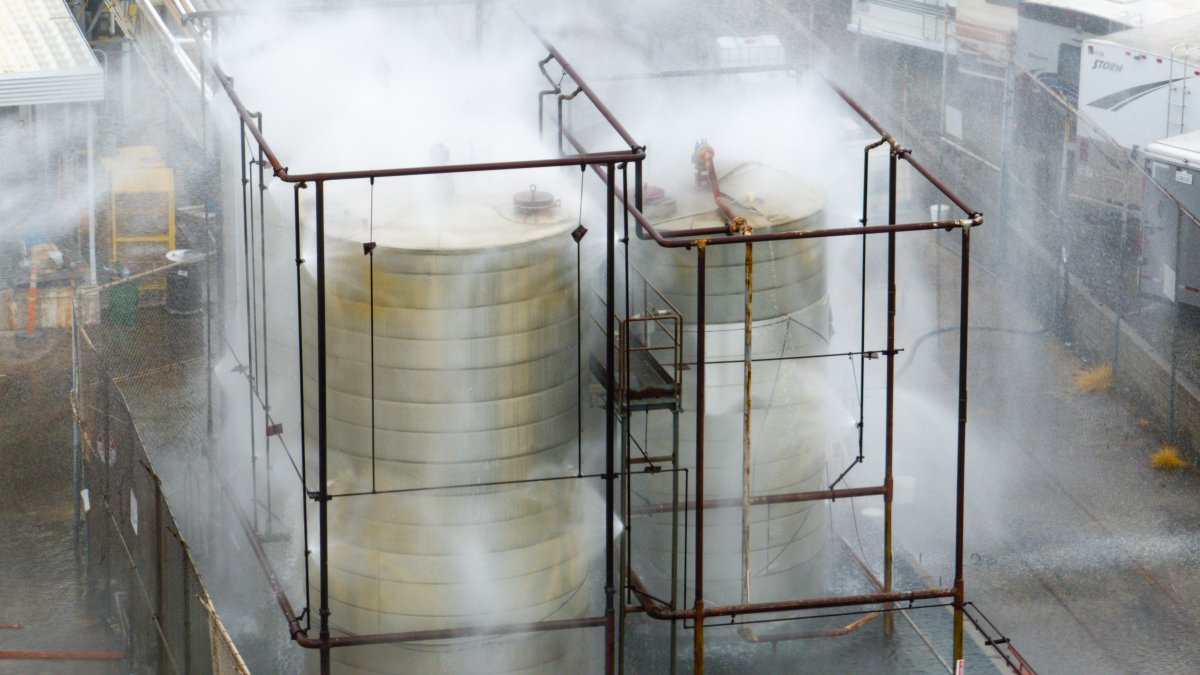
Orange County's DA has expanded a criminal investigation into GKN Aerospace over the Garden Grove chemical tank crisis to include alleged price gouging and predatory attorney practices. The office also ordered the company to preserve documents and said evacuees should not face hotel or business price increases above 10%. The probe raises legal and reputational risk for GKN, though no criminal charges have been filed yet.
The immediate market read-through is not the operating company itself but the broader insurance, legal, and industrial-risk complex. Once a prosecutor widens from an incident response into price-gouging and attorney conduct, the event stops being a one-off safety failure and becomes a multi-layer claims overhang: higher defense costs, more plaintiff aggregation, and a longer tail on ultimate liability. That is negative for any contractor or industrial name with similar third-party handling risk, because counterparties and municipalities will now pressure for tougher indemnities, tighter safety audits, and richer insurance coverage terms.
The second-order effect is on procurement behavior. Large industrial buyers and public-sector entities are likely to reprice vendor selection toward “operational redundancy” and documented contingency systems, which favors incumbents with stronger compliance records and penalizes lower-tier suppliers that compete mainly on cost. Over the next 3-12 months, this can widen the gap between premium aerospace/defense vendors and commoditized service providers, since the former can absorb compliance capex while the latter face margin compression from insurance and legal expense inflation.
The contrarian piece is that the headline may be over-discounting the probability of severe criminal exposure for the core company, while underpricing the probability of settlement-driven cash outflows and reputational drag across its peer set. In these situations, markets often punish the nearest listed comp set only after the litigation theory clarifies; that lag can create a better entry point for relative-value shorts than for outright event-driven puts. The key catalyst is whether whistleblower evidence turns this from negligence into willful disregard, which would extend the timeline from months to years and materially increase reserve needs.
For public-market positioning, the cleaner expression is to short the most legally levered industrial names with thin balance sheets and heavy third-party exposure, while favoring defense primes and high-quality aerospace suppliers with stronger redundancy and insurance discipline. If the case broadens into a model for municipal litigation, expect a wider re-rating in insurance and professional-liability pricing, which can persist into next renewal season rather than fading in days.
AI-powered research, real-time alerts, and portfolio analytics for institutional investors.
Request DemoOverall Sentiment
moderately negative
Sentiment Score
-0.35
Ticker Sentiment
