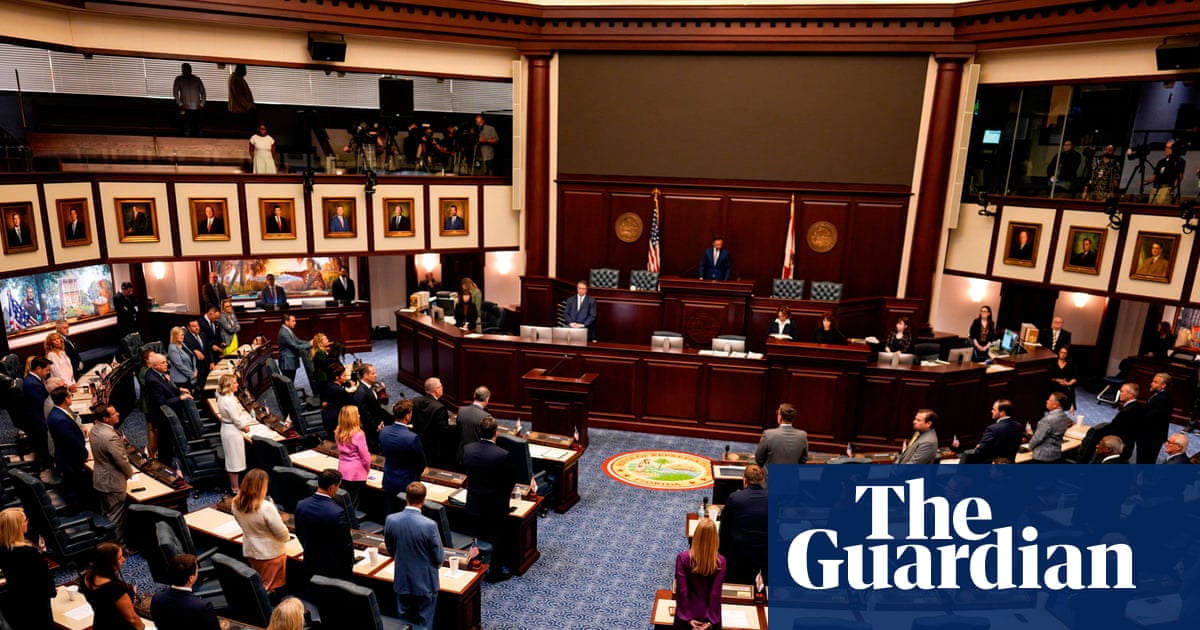
Florida approved a new congressional map that could expand Republicans’ House delegation from 20-8 to as much as 24-4, reshaping several Democratic-held districts in Orlando, Tampa-St. Petersburg, and south Florida. The plan is likely to trigger lawsuits because Florida’s constitution bans explicitly partisan redistricting, while the US Supreme Court’s recent Voting Rights Act ruling may make such challenges harder. The move could threaten seats held by Jared Moskowitz and Debbie Wasserman Schultz and adds to the broader national redistricting fight.
Florida’s redistricting move is less a one-state politics story than a margin-engineering exercise that can alter the House math by a few seats in an election already expected to be close. The first-order beneficiary is the national Republican Party, but the second-order effect is more important: it forces Democrats to spend money defending otherwise safe incumbencies, which raises the cost of holding the chamber and reduces flexibility in a handful of swing media markets. That creates a knock-on advantage for consultants, ad sellers, and large-cap political data/ground-game vendors that monetize campaign intensity rather than ideology.
The legal path is the key timing variable. In the next 30-90 days, the trade is not about the final district lines but about whether courts grant stays, which would preserve uncertainty and delay candidate positioning, fundraising, and media buys. If litigation drags into filing deadlines, even a partial map change can force incumbents into costly intraparty decisions, depress local fundraising efficiency, and increase primary risk in districts that were previously stable.
The contrarian view is that the market is likely overstating the durability of engineered partisan maps in a high-volatility national environment. If anti-incumbent sentiment intensifies, narrower Republican districts could actually become more fragile than the status quo, especially in exurban and Latino-leaning areas where small vote shifts matter more than the mapmakers assume. That makes this less a clean seat-gain story than a convexity trade: Republicans gain optionality, but they also inherit more at-risk seats if the national vote moves against them by even 2-3 points.
AI-powered research, real-time alerts, and portfolio analytics for institutional investors.
Request DemoOverall Sentiment
neutral
Sentiment Score
-0.10
