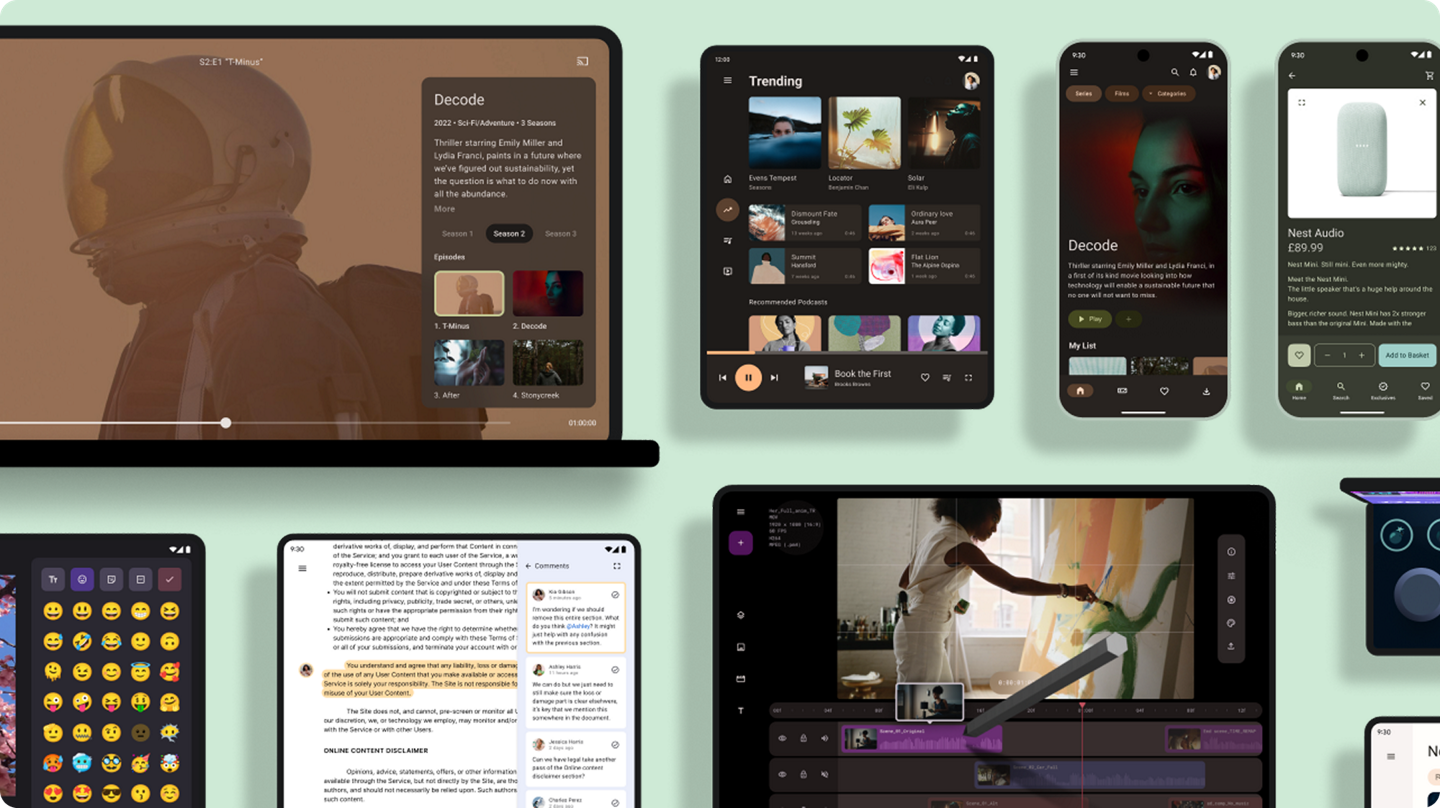
Google has launched a dedicated Googlebook developer hub and updated Android Studio Canary with a desktop emulator, signaling a push to make Android apps ready for laptop-style use this fall. The documentation emphasizes multi-pane layouts, keyboard/mouse/trackpad support, contextual cursors, multi-instance windows, drag-and-drop, and native file/print handling, with AI tools aimed at automating desktop optimization. The article is broadly constructive on the ecosystem, but it is mostly a product and developer update rather than a price-moving corporate event.
This reads less like a product launch and more like a software monetization playbook: Google is trying to pull the installed base of Android developers into a desktop-first roadmap before hardware demand is even visible. The second-order effect is that GOOGL can potentially widen the moat around its future laptop category not by winning on specs, but by lowering app-friction enough that software parity arrives faster than any rival can match. That matters because desktop OS adoption is usually gated by app availability and workflow inertia, not industrial design.
The biggest beneficiary is GOOGL’s ecosystem leverage, but the more interesting read-through is to adjacent platform owners and dev-tool vendors. If Google’s tooling materially reduces the cost of adapting mobile apps to desktop workflows, it compresses the window for Windows-on-ARM, Chromebook Plus, and thin-client PCs to differentiate on app compatibility; the battleground shifts toward UX quality and AI-assisted productivity rather than raw hardware. Conversely, companies exposed to premium laptop share without a software moat could see share churn if Googlebook lands with enough native-feeling multitasking and file handling to satisfy knowledge workers.
The market may still be underpricing execution risk. The critical variable is not the announcement cadence, but whether top-100 productivity apps update within the next 2-3 quarters; if they do not, the product risks being perceived as a demo device rather than a workflow device. A softer risk is that AI-assisted code conversion creates a long tail of mediocre ported experiences, which would generate usage friction and limit repeat engagement even if initial unit sales are solid.
Contrarian view: consensus will likely treat this as another ChromeOS iteration, but the strategic shift is that Google is explicitly attacking the desktop productivity layer instead of the education/low-cost segment. If app adaptation really becomes nearly automatic, the adoption curve can be faster than expected, and the upside is less about immediate device volume than about raising switching costs across Search, Workspace, and AI subscriptions. The trade is therefore a medium-horizon ecosystem option, not a near-term hardware thesis.
AI-powered research, real-time alerts, and portfolio analytics for institutional investors.
Request DemoOverall Sentiment
mildly positive
Sentiment Score
0.40
Ticker Sentiment
