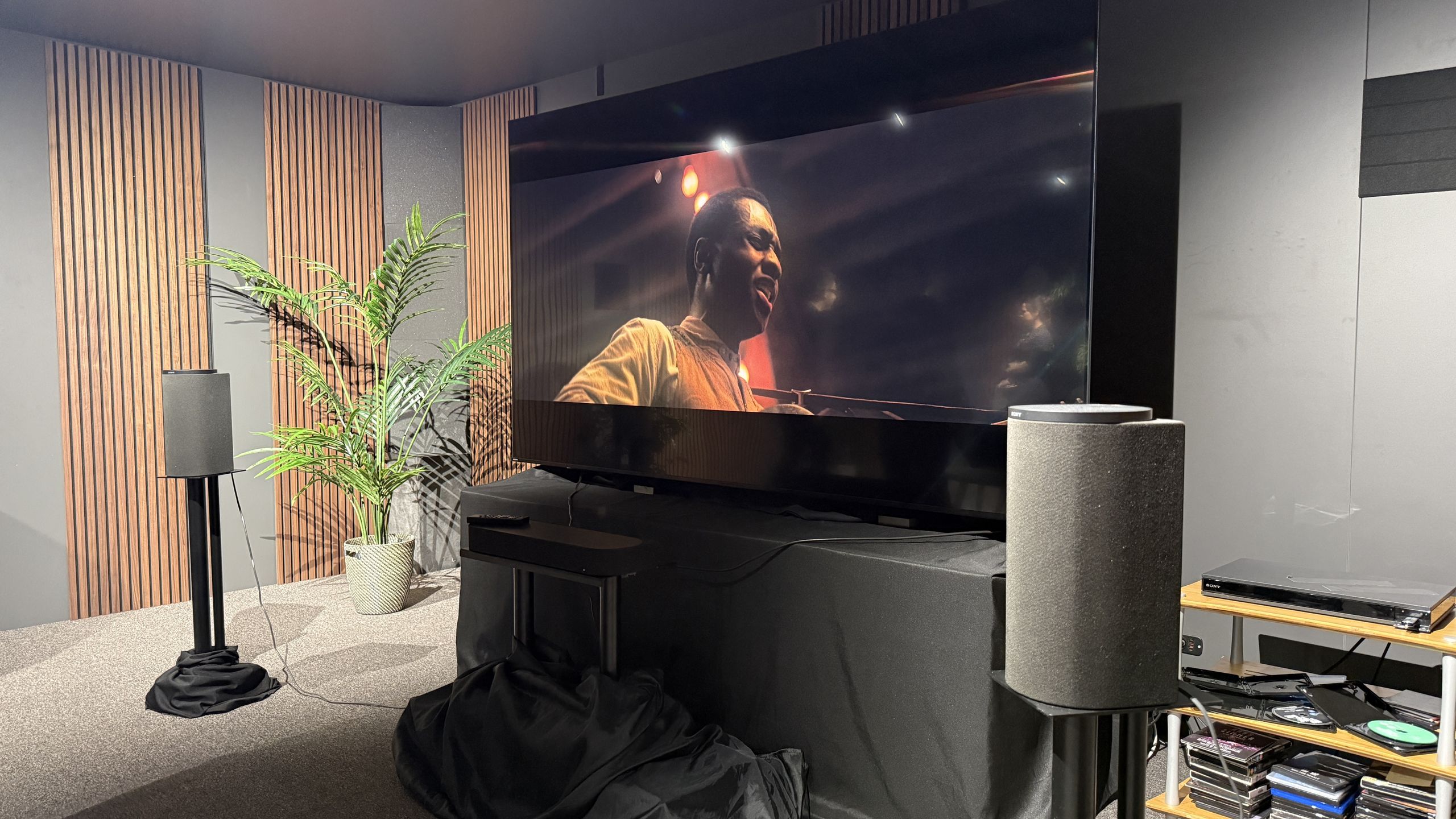
Sony announced the Bravia Theatre Trio, a new wireless Dolby Atmos LCR home theater system priced at £2,000 (about $2,700 / AU$3,800), with expansion options including Rear 9 speakers at £700 a pair and Sub 9 at £900. The article highlights strong bass and surround effects but mixed performance on dialogue clarity, detail separation, and AV sync, leaving the reviewer cautiously torn despite the compelling concept. The launch may pressure premium soundbar rivals, but the near-term market impact appears limited.
This reads as an attempt by Sony to move the home-theater upgrade path one step upmarket: not a commodity soundbar, but a modular system that can justify a materially higher ASP by selling “good enough now, better later” expansion. The second-order effect is that Sony is implicitly attacking the most profitable part of Sonos’ ecosystem—multi-piece wireless audio—before Sonos has normalized a front-stage separation product in consumers’ minds. If Sony can convert a subset of premium TV buyers, it raises the ceiling on audio attach rates around Bravia, with the real monetization coming from sub and rear-speaker add-ons over 12–24 months. For SONO, the risk is not a near-term unit miss from one product launch; it is narrative erosion in the premium living-room category. Sonos’ historical moat has been simplicity plus ecosystem lock-in, but Sony is showing that a competing stack can bundle HDMI passthrough, Atmos/DTS:X breadth, and TV-centric integration in a way that maps better to “one room, one purchase” behavior. The uncomfortable part is that price-sensitive enthusiasts already see a lower-cost quasi-equivalent using Sonos components, so Sony’s premium positioning only works if perceived performance is clearly better—otherwise it may reset expectations without fully expanding category demand. The key catalyst is not the announcement itself but the review cycle over the next 4–10 weeks: if broader testing confirms weak dialogue intelligibility or inconsistent lip-sync, this becomes a halo product that generates attention but limited sell-through. That would matter because high-ticket audio launches need low-friction evangelism; any technical inconsistency increases return risk and pushes buyers back to simpler soundbars. Conversely, if firmware or calibration refinement fixes the softness, SONY has an opportunity to re-rate audio as a credible high-margin adjacency to its TV business. The contrarian view is that the market may be underestimating how much this can pressure Sonos even if Sony never becomes a volume leader. A premium niche product can still reshape feature expectations, forcing SONO to defend against a spec-complete alternative at the exact moment consumers are increasingly willing to trade brand purity for better TV integration. The biggest long-term risk for SONO is not Sony stealing the core customer tomorrow, but Sony changing the definition of what “premium wireless home theater” should include.
AI-powered research, real-time alerts, and portfolio analytics for institutional investors.
Request DemoOverall Sentiment
neutral
Sentiment Score
0.05
Ticker Sentiment
