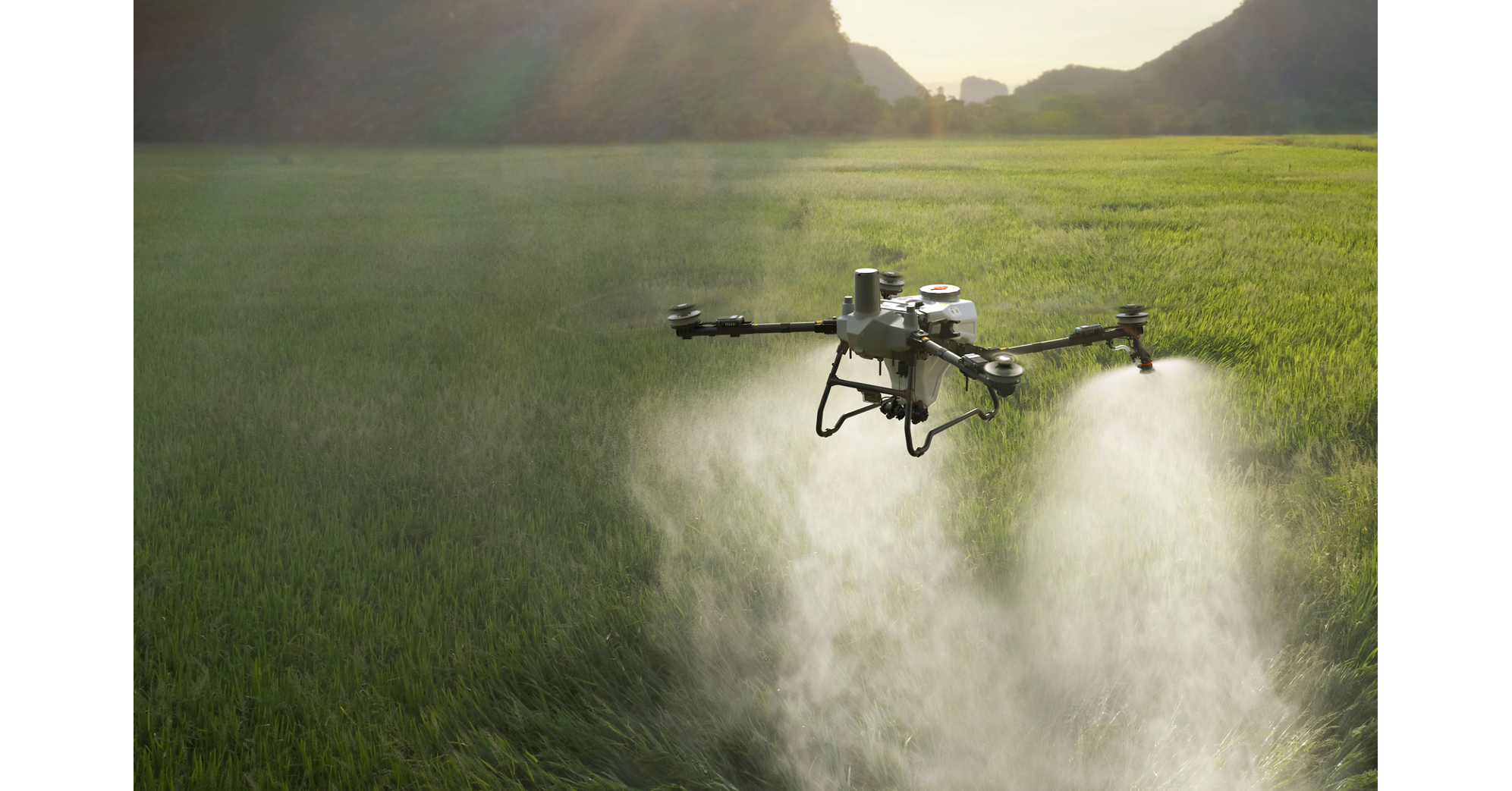
DJI Agriculture startet weltweit die Einführung der Dual-Battery-Sprühsysteme Agras T55 und Agras T100 für die Präzisionslandwirtschaft. Der Agras T100 soll bei gleicher Nutzlast die Schwebezeit um 50% verbessern (dual intelligente Batterien) und das 90-Liter-Tanksystem ermöglicht Nonstop-Betrieb auf großen Flächen; bei Obstgärten wird u.a. ein optionales Nebelsprinklerset genannt. Der Agras T55 bringt u.a. 50 L Sprüh-/55 kg Streu-Nutzlast und Millimeterwellenradar für präzisere Hinderniserkennung; die Nachricht ist vor allem produkt-/technologiegetrieben und dürfte eher begrenzt marktbewegend sein.
This is more a validation of precision-spray economics than a direct earnings event. The incremental value is highest in orchards and specialty crops where labor, chemical waste, and downtime are the binding constraints; in broad acre, it mostly substitutes for ground rigs at the margin. The nearest public-market losers are small drone OEMs and regional custom applicators, where scale in distribution, training, and service is the real moat rather than the hardware spec.
For public equities, the cleanest relative winner is Deere versus other ag machinery names because it can monetize autonomy and workflow software inside a broader platform and financing stack; standalone drone players do not have that buffer. If adoption broadens, the second-order effects are slower sell-through of conventional spray equipment and a mild long-dated reduction in chemical over-application, but that is a 6-18 month story, not a near-term EPS driver.
Contrarian view: the market may overestimate how quickly farms convert capex into usage. Regulatory permissions, battery logistics, weather, and operator training still limit utilization, especially outside the most valuable crops. The thesis is falsified if field data show poor uptime or if major jurisdictions tighten spray/BVLOS approvals; absent that, this is an incremental product refresh with modest competitive pressure on smaller players, not a sector-wide rerating catalyst.
AI-powered research, real-time alerts, and portfolio analytics for institutional investors.
Overall Sentiment
mildly positive
Sentiment Score
0.20
Ticker Sentiment
