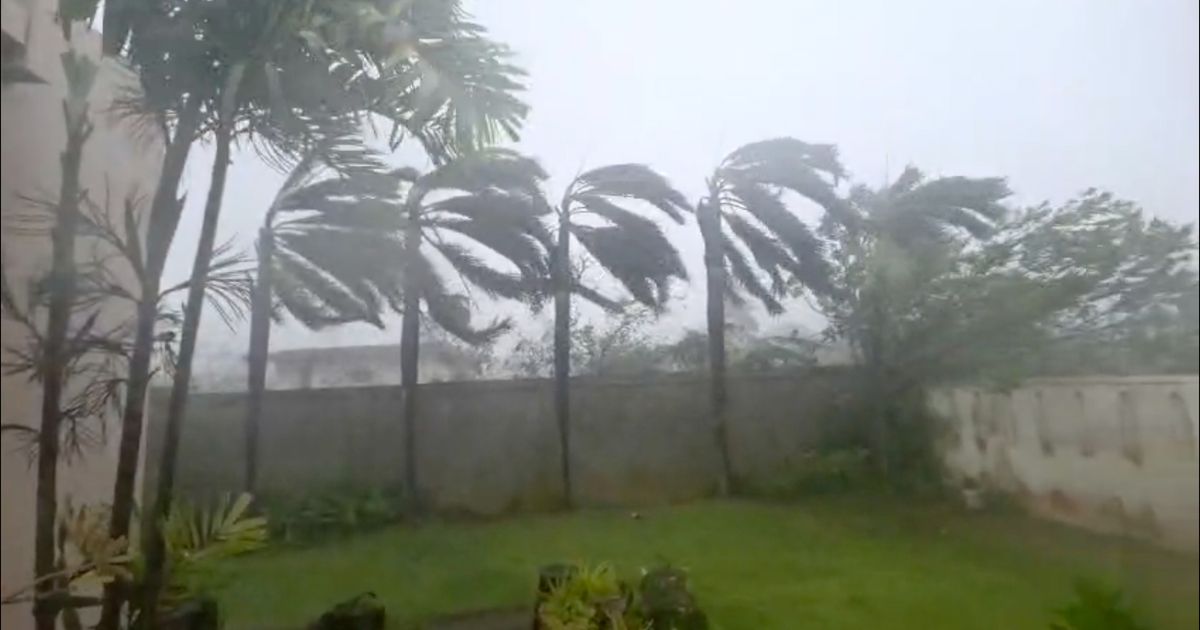
Super Typhoon Sinlaku is nearing Saipan and Tinian with sustained winds of 150 mph and imminent landfall, bringing torrential rain, flash flooding, and destructive winds likely to persist into Wednesday. Emergency declarations have been approved for Guam and the Northern Mariana Islands, while FEMA is dispatching nearly 100 staff plus other federal personnel to support response efforts. The storm has already damaged outer islands in Chuuk and threatens infrastructure, residents, and Guam's military installations.
The near-term equity impact is less about the storm itself and more about the duration of infrastructure interruption. In small, import-dependent island economies, a multi-day loss of power, port throughput, telecoms, and road access can create a compounding reset to revenue recognition for hotels, retailers, utilities, and government contractors; the second-order effect is a sharp airlift/supply-chain bottleneck rather than a simple demand dip. The market should also think beyond the islands: disruption at a strategic Pacific hub can tighten logistics resilience assumptions for defense-linked supply chains and raise the probability of emergency procurement and temporary contract acceleration. Travel and leisure exposure is asymmetric. Because occupancy, excursions, and on-island consumption are highly perishable, revenue is typically deferred rather than destroyed if damage is modest; the real risk is a prolonged recovery curve if asset repairs, insurance claims, and traveler perception linger for multiple booking seasons. The contrarian angle is that the worst of the economic damage may be felt after the storm passes, when a weak tourism base, limited construction capacity, and insurance repricing suppress margins for months, not days. On the defense side, this is a readiness and hardening event more than a direct conflict catalyst. Expect incremental spending on resilience, repairs, fuel logistics, and communications systems; the incremental winners are firms with portable power, temporary housing, debris clearance, and network restoration capabilities. The risk is that much of this spending is already pre-authorized under disaster and military support mechanisms, so the investable alpha is in contractors with exposure to rapid deployment and in utilities/equipment suppliers that can monetize repeated climate shocks across the Pacific basin. Consensus may be overestimating the immediate macro spillover while underestimating the persistence of balance-sheet damage for local operators. The storm can be a net positive for some industrial/defense names if it reinforces capex cycles around resiliency, but it is structurally negative for destination-driven leisure assets with limited pricing power and high fixed costs. The key trading window is the first 1-3 weeks after landfall, when headlines fade before insurance-loss estimates, repair timelines, and booking cancellations become visible.
AI-powered research, real-time alerts, and portfolio analytics for institutional investors.
Request DemoOverall Sentiment
strongly negative
Sentiment Score
-0.75
