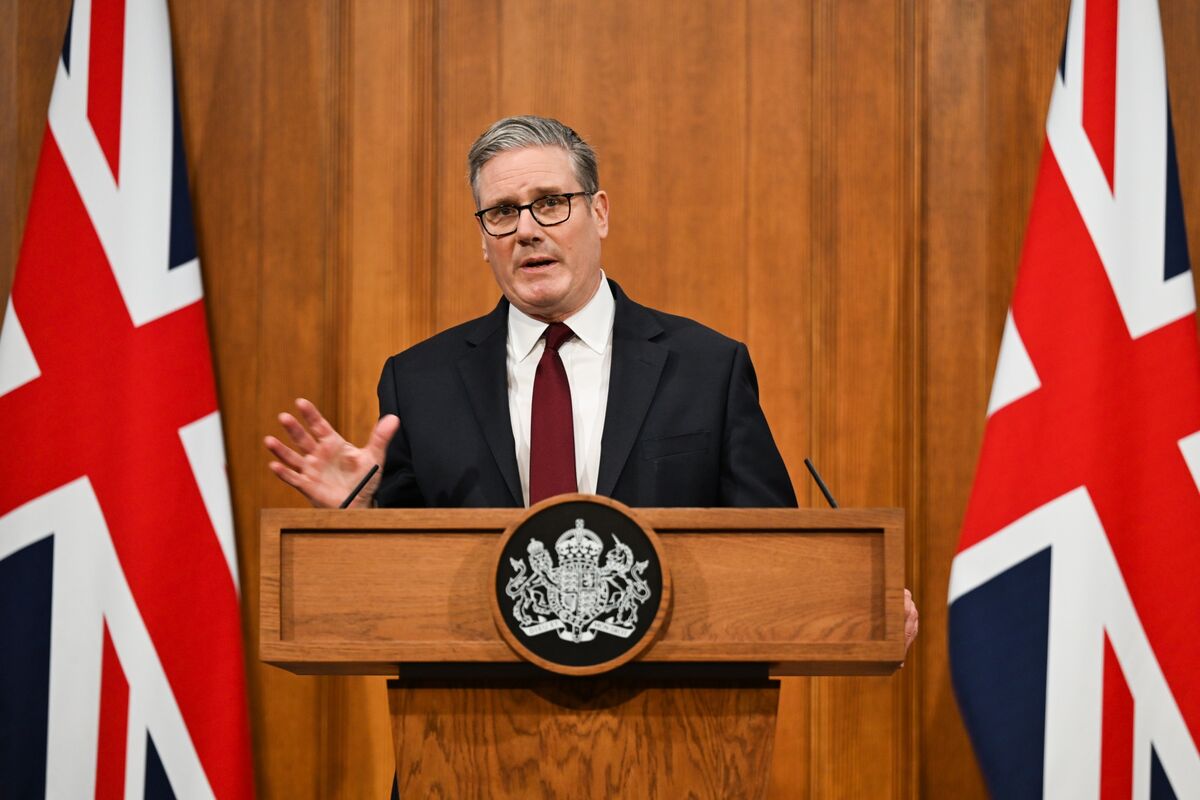
UK Prime Minister Keir Starmer said the UK will not join a US-Israeli war on Iran but will work with partners to reopen the Strait of Hormuz after President Trump urged allies to send ships. The statement reduces near-term risk of UK military escalation while keeping focus on securing the Strait, a critical chokepoint for global energy shipments. Implication for portfolios: immediate UK escalation risk is tempered, but energy and shipping risk remains elevated—monitor oil prices, insurance rates and regional naval developments.
Markets should treat the UK’s reluctance to join kinetic escalation as a partial de-risking of a full Western military coalition, not as a removal of commercial risk. Insurance war-risk premia and tanker charter rates are driven by perception and rules-of-engagement uncertainty; even without UK boots on deck, supply-chain dislocation (re-routing, convoy premiums, vetting delays) can persist for weeks and keep marginal crude/diesel price volatility elevated by $3–8/bbl on episodic incidents.
A coordinated non-combatant strategy to “reopen” chokepoints implies a sustained, multi-month operational footprint (escorts, ISR, logistics), which favors defense contractors, naval maintenance yards and specialty ship-owners over quick cyclical beneficiaries like refiners. Expect procurement and tasking announcements over the next 3–12 months to be the primary rerating catalysts for suppliers and mid-tier shipbuilders, while tanker spot rates will respond to near-term headline shocks on a days-to-weeks basis.
Tail-risk remains asymmetric: a miscalculated strike or successful tanker interdiction can generate a rapid $10–20/bbl spike and multi-week shipping carnage, whereas credible diplomatic progress or an effective escort regime can normalize premia within 30–90 days. Active positions should therefore be horizon-matched (weeks for commodity hedges, months for defense/shipbuilding exposures) and explicitly hedged for headline-driven reversals.
AI-powered research, real-time alerts, and portfolio analytics for institutional investors.
Overall Sentiment
neutral
Sentiment Score
0.00
