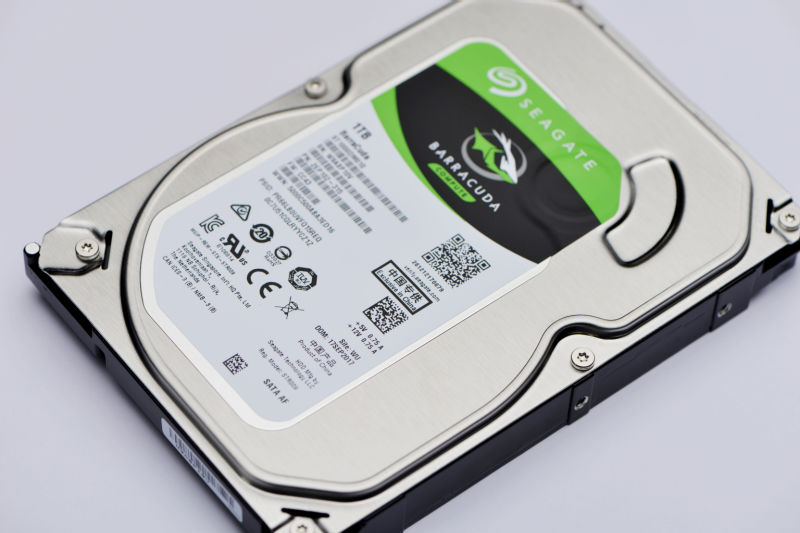
BofA Securities raised its Seagate price target to $900 from $840 while keeping a Buy rating, citing stronger demand, improving margins, and confidence in HAMR-related pricing power. Seagate has also qualified Mozaic 3 at all planned cloud service providers and has two customers qualified on Mozaic 4, supporting the bullish long-term outlook. The stock has already surged 630% over the past year and currently trades at $812.73, near the revised target range.
The key second-order readthrough is not just “better Seagate,” but a sharper signal that AI/storage capex is migrating from a pure compute bottleneck to an exabyte bottleneck. If hyperscalers and enterprise buyers are simultaneously qualifying next-gen HDD capacity, the pricing curve for high-capacity drives can stay tighter for longer, and that should improve gross margin leverage across the storage stack without needing unit growth to re-accelerate. The market may still be underestimating how durable this is because storage is one of the few infrastructure categories where demand can compound even when cloud capex moderates, as data retention requirements are more recurrent than discretionary.
The larger winner is likely not just STX but adjacent beneficiaries with exposure to higher capacity, enterprise refresh, and data-protection spend. The incremental spend on snapshots, redundancy, and checkpointing should support software and systems vendors that monetize data gravity, while also pressuring lower-end storage substitutes and older product cycles. Conversely, any supplier relying on commoditized capacity or legacy pricing power should see less benefit, because the industry is shifting toward differentiated performance/format transitions where qualification status becomes a barrier to entry.
Consensus is probably too linear on the multiple expansion: higher confidence in demand sustainability can justify a richer valuation, but it also raises the bar for execution. The stock’s move already discounts several quarters of upside, so the next failure mode is not demand collapse but any sign of qualification slippage, mix dilution, or a pause in cloud ordering that forces inventory correction. The exchangeable note deal is also a subtle positive for float management, but it can cap upside if supply is absorbed into strength over the next few months.
For EVR, there is no direct fundamental catalyst in the text, so the cleanest interpretation is as a data artifact rather than a tradable signal. The better trade is to express the storage thesis directly, while watching whether the rest of the hardware/semi complex confirms improved pricing power over the next 1-2 earnings cycles.
AI-powered research, real-time alerts, and portfolio analytics for institutional investors.
Request DemoOverall Sentiment
moderately positive
Sentiment Score
0.60
Ticker Sentiment
