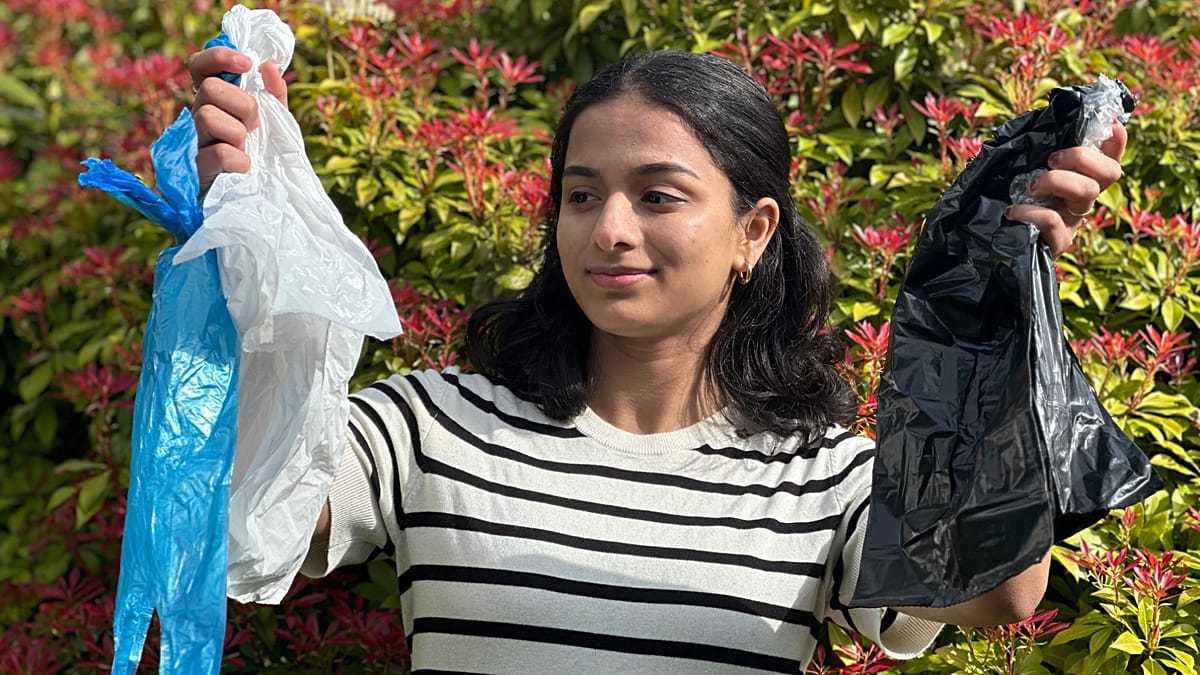
18-year-old Irish student Ayra Satheesh was named the 2026 European winner of the Earth Prize for Eco Purge, a biodegradable plastic designed to break down safely while releasing catalysts that remove microplastics. She won $12,500 and plans to use half the prize to test enzyme production in modified E. coli before scaling production for packaging and compost bags. The story is primarily an ESG and innovation profile with limited direct market impact.
This is a signals story for the commercialization of biomaterials, not a near-term macro trade. The first-order takeaway is that the market still underestimates how quickly “green chemistry” can shift from niche R&D to procurement standards once regulatory pressure, brand risk, and waste-cost economics line up. The winners are likely to be enabling inputs and scale partners rather than the inventors themselves: enzyme producers, fermentation platform providers, and specialty bioprocess equipment names should see a longer-duration demand tail if biodegradable packaging moves from pilot to specification.
The second-order effect is on incumbents with exposed packaging mix and petrochemical-linked packaging supply chains. If antimicrobial/enzymatic biodegradable plastics become credible at scale, the competitive threat is not just substitution in consumer packaging; it is also margin pressure on conventional resin suppliers as large buyers begin to dual-source and force price concessions. The timeline matters: the science risk is high over the next 6-18 months, but if real-world durability and cost curves improve over 2-5 years, the re-rating can start well before full adoption because procurement teams price optionality early.
The contrarian angle is that the narrative may currently overstate immediacy and understate manufacturing bottlenecks. The biggest failure mode is not scientific plausibility but unit economics and QA at scale: if performance degrades in humid/heat-heavy logistics, the addressable market stays limited to short-life applications. On the other hand, even partial success can be valuable because it creates a premium sustainability SKU that large consumer brands can use to defend pricing and ESG claims, which is often enough to unlock pilot volumes and strategic partnerships.
AI-powered research, real-time alerts, and portfolio analytics for institutional investors.
Request DemoOverall Sentiment
mildly positive
Sentiment Score
0.35
