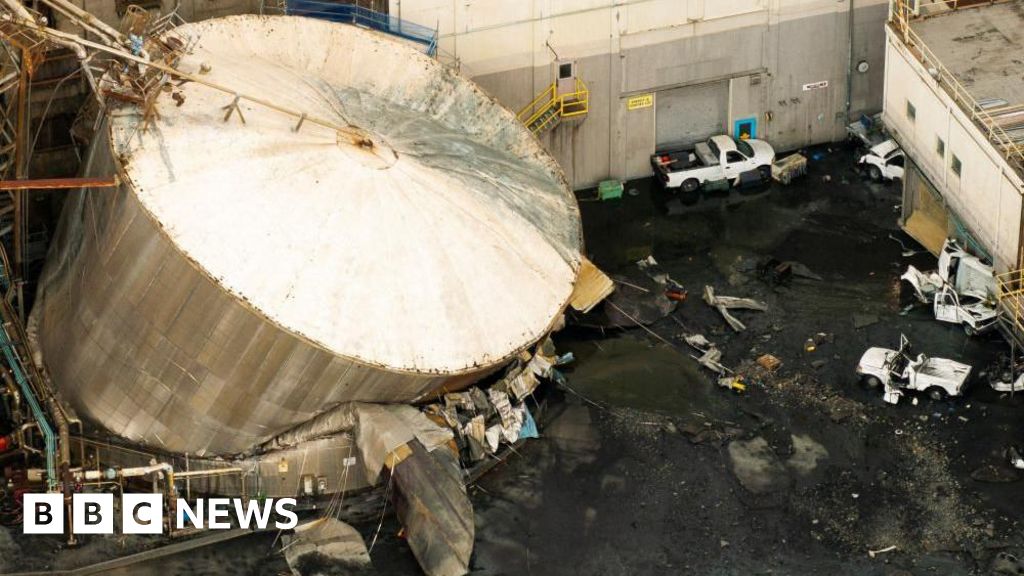
A chemical explosion at Nippon Dynawave Packaging’s Longview, Washington paper mill killed 1 person, left 9 missing, and injured 9 others, including 8 employees and 1 firefighter. Officials later said the damaged tank held about 900,000 gallons of white liquor, with roughly 90,000 gallons possibly remaining, and recovery remains complex because the tank is unstable. The incident is a major operational and safety shock for the plant, though officials say there is no broader community evacuation order.
This is less a one-off industrial accident than a reminder that concentrated process-chemical risk can create asymmetric liability for mature, low-margin manufacturers. The immediate equity damage should be limited to a single asset, but the second-order hit is broader: higher insurance premiums, tighter environmental oversight, and a likely re-rating of any operator with aging mill infrastructure, especially those carrying elevated turnaround and maintenance backlogs. In this setup, the market often underprices the lagged cash cost of remediation relative to the headline earnings impact.
The more interesting medium-term effect is supply-chain friction in paper-based packaging. Even if the physical interruption is localized, customers tend to dual-source after incidents that signal safety or uptime risk, which can shift volume toward better-capitalized peers with cleaner operating histories and more modern plants. That dynamic is usually measured in months, not days, and can persist through contract renewals if the incident becomes a recurring compliance narrative.
The downside tail is regulatory escalation: state ecology involvement raises the probability of recordkeeping scrutiny, plant modifications, and potentially expensive capex tied to tanks, containment, and emergency response systems. If the site has prior fire history, insurers and lenders may start treating this as a structural risk event rather than an isolated loss, which can pressure terms on working capital and project financing. The contrarian point is that the stock reaction in diversified paper names could be overdone if investors extrapolate to sector-wide demand destruction rather than a localized asset impairment; the real loser is likely the operator with the specific facility exposure, not the category.
Watch for two catalysts over the next 2-8 weeks: preliminary investigation findings and any indication of extended downtime. If the company is forced into material capex or a prolonged outage, the market will likely reprice 2025-26 free cash flow downward; if containment is achieved quickly and no systemic control failures are found, the damage should fade into a one-time reserve build and temporary reputational discount.
AI-powered research, real-time alerts, and portfolio analytics for institutional investors.
Request DemoOverall Sentiment
extremely negative
Sentiment Score
-0.85
