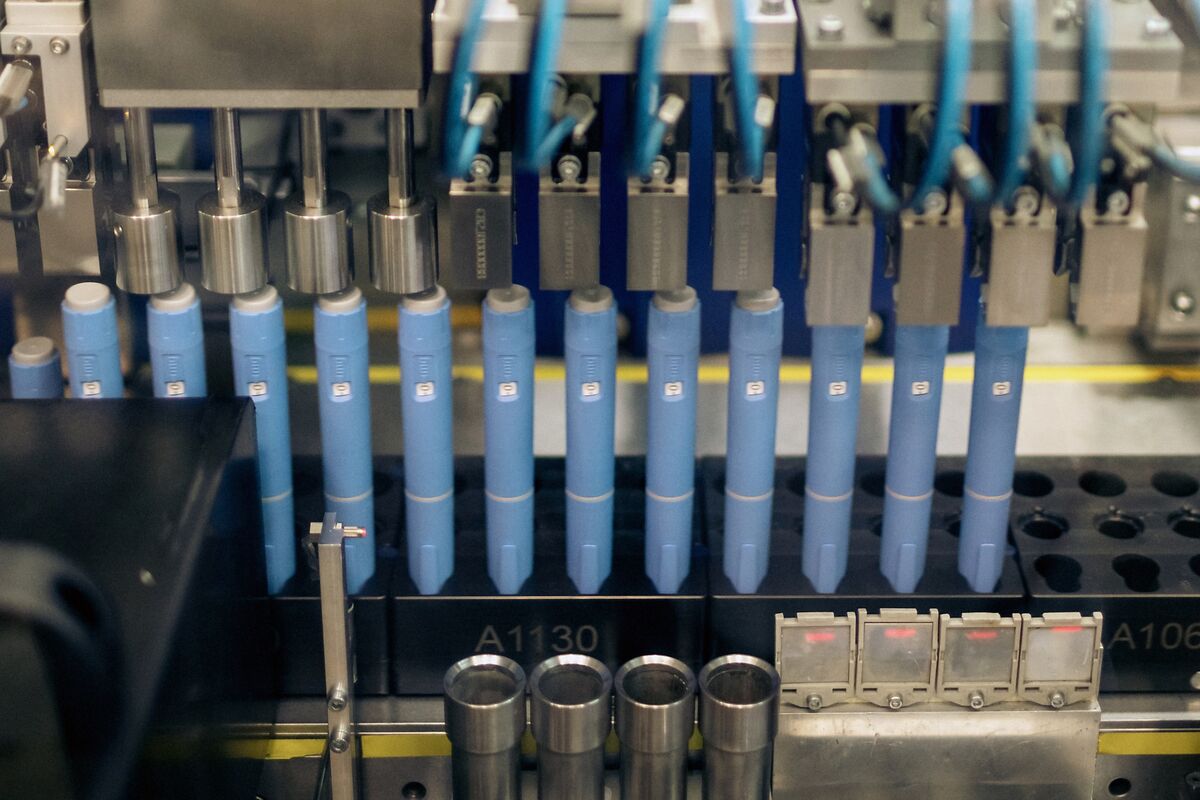
The FDA approved Novo Nordisk's high-dose Wegovy for the US, and Novo will begin US sales in April via a single-dose pen available through cash-pay and pharmacy channels. Approval came through a national priority voucher for accelerated review and heightens competition with Eli Lilly's Zepbound, likely supporting Novo's obesity franchise and providing near-term revenue upside.
The competitive map shifts from product differentiation to distribution and net-price economics. With an incremental high-efficacy option now in-market, payors and pharmacy benefit managers will accelerate formulary negotiations; expect 6–12 month skirmishes that compress realized price (gross-to-net) by mid-single-digit to low-double-digit percentage points for winners as rebate intensity rises. This will amplify where the true margin accrual happens: cash-pay and specialty pharmacy channels, not list-price announcements.
Manufacturing and packaging are the overlooked bottlenecks. Single‑use prefilled-pen demand strains elastomer, cartridge and contract-fill capacity — a 6–9 month lag in scale-up can create supply scarcity that preserves list-price power while capping volume growth. That dichotomy creates a near-term supply scarcity premium for component suppliers and creates arbitrage opportunities for distributors who can secure allocation.
Key reversal risks sit at the reimbursement and safety surveillance layers. Broad commercial coverage is likely 6–18 months out and is the single biggest revenue multiplier; conversely, noisy safety signals or aggressive payer step edits would materially slow adoption. Antitrust or cross-company co-promotion negotiations are lower-probability but high-impact over 12–36 months and could alter margin capture dynamics.
Second-order winners include pen/component suppliers and large specialty pharmacy chains; losers are smaller regional compounding providers and non-differentiated competitors who rely on off-label or lower-dose mixes. For investors the read-through is timing-sensitive: earnings beats can come from ASP/cash-pay in quarters 1–3 while durable scale and net revenue growth will be decided over 3–8 quarters as payors and supply chains reprice and reallocate.
AI-powered research, real-time alerts, and portfolio analytics for institutional investors.
Request DemoOverall Sentiment
moderately positive
Sentiment Score
0.40
Ticker Sentiment
