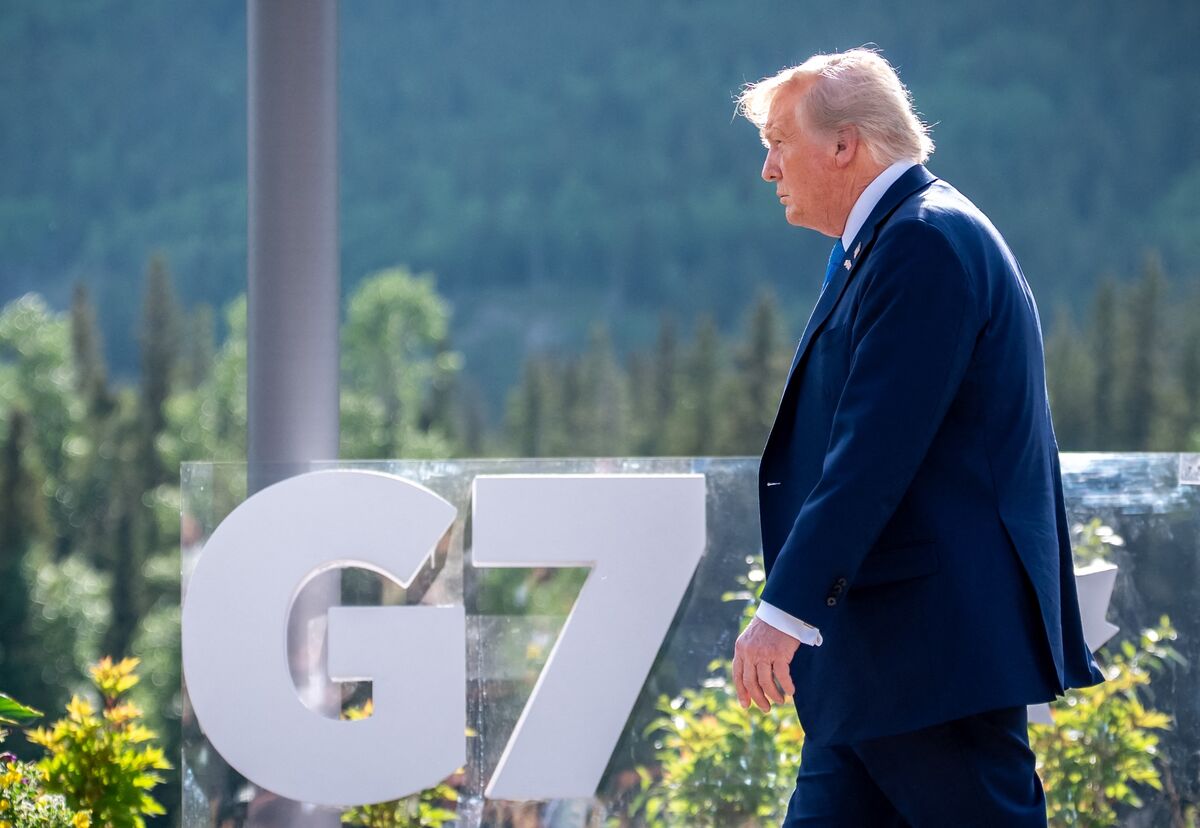
President Trump departed the G-7 summit early, citing escalating tensions in the Middle East, specifically Israel's strikes on Iranian nuclear and military sites. This move has intensified concerns regarding Trump's commitment to international diplomacy and fueled speculation about potential US involvement in the conflict.
President Trump's premature departure from the G-7 summit, attributed to escalating tensions in the Middle East involving Israeli strikes on Iranian nuclear and military sites, signifies a notable increase in geopolitical instability. This development intensifies concerns regarding the US administration's commitment to established international diplomatic frameworks and has fueled speculation about potential direct US military involvement in the Middle East conflict. The associated strongly negative sentiment score of -0.7 and a high market impact score of 0.75 underscore the market's perception of heightened risk and prevailing uncertainty. The dominant themes of "Geopolitics & War," alongside "Trade Policy & Supply Chain" and "Elections & Domestic Politics," suggest far-reaching implications for global markets, international relations, and economic stability, potentially impacting investor confidence and asset valuations.
AI-powered research, real-time alerts, and portfolio analytics for institutional investors.
Request DemoOverall Sentiment
strongly negative
Sentiment Score
-0.70
