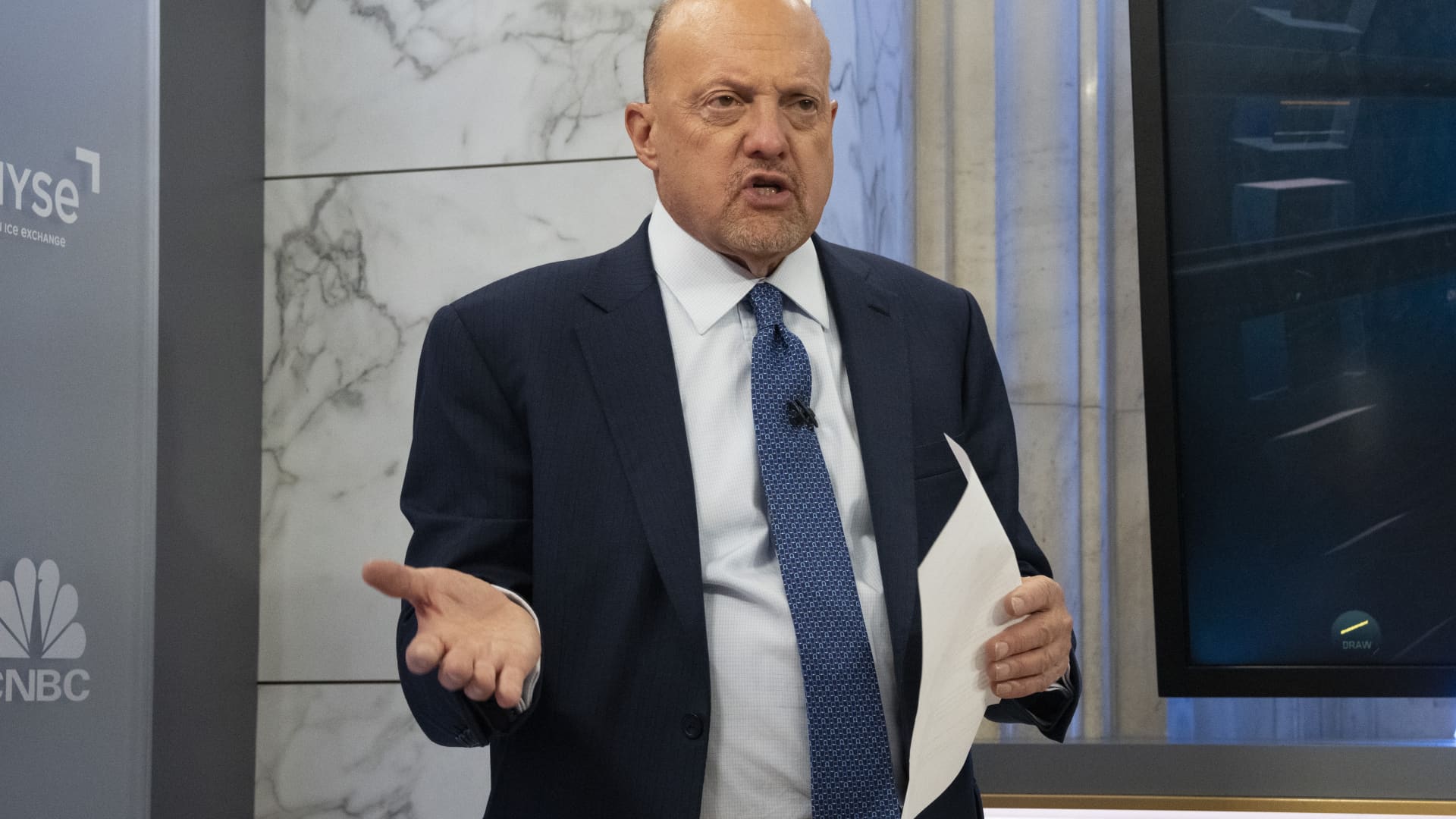
CNBC Investing Club’s monthly portfolio review was broadly constructive, with bullish commentary on AI leaders like Nvidia, Alphabet, Meta, Microsoft, and related infrastructure names such as GE Vernova, Eaton, and Corning. The article also highlighted selective portfolio actions: trimming Broadcom, maintaining conviction in Apple, Amazon, Cardinal Health, and Johnson & Johnson, and potential future selling of Palo Alto Networks. Several names face execution or timing risks, including Nike, Dover, Wells Fargo, and Home Depot, but the overall tone remained patient and risk-on.
The market is implicitly rewarding companies that can translate AI demand into either scarce infrastructure or near-term monetization. That creates a clear winner set: power, cooling, optics, and semis with pricing power, while software names that are still mostly story-based will likely face a higher evidentiary bar. The second-order effect is that the AI supply chain is broadening from chips into electrical gear, thermal management, and materials, which should keep capital rotating downstream even if the megacap AI leaders pause.
A more interesting read-through is that several of these winners are now self-funding their own competition. As data-center spending expands, hyperscalers will keep investing in in-house silicon and software, which caps upside for vendors whose value prop is easily commoditized. That argues for preferring the picks-and-shovels names with physical bottlenecks and replacement cycles over platform/software names where returns on incremental AI spend may be harder to prove quarter by quarter.
The consumer and healthcare names look more defensive than the headlines suggest, but the market is likely underestimating how much of that defensiveness is actually a quality-growth trade. Retail winners with format expansion and value positioning should outperform if macro weakens, while underperformers exposed to housing or discretionary spend need rate relief plus tangible operating execution to re-rate. In healthcare, the key distinction is between firms with manufacturing scale or distribution leverage and those relying on single-product narratives; that gap should widen over the next 6-12 months.
The main risk is that this is a crowded “quality + AI infrastructure” factor trade, so any earnings miss or guidance haircut could trigger sharp multiple compression. The reversal catalyst would be a delay in data-center capex, a pause in AI spend from hyperscalers, or better-than-expected rate-sensitive recovery that rotates attention back to cyclicals and homebuilders. Near term, the more attractive setup is to own names with visible catalysts in the next two quarters and fade software names where improvement is still aspirational.
AI-powered research, real-time alerts, and portfolio analytics for institutional investors.
Request DemoOverall Sentiment
mildly positive
Sentiment Score
0.35
Ticker Sentiment
