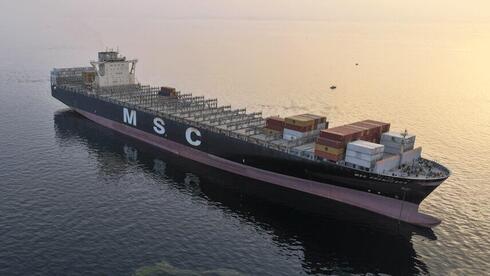
MSC is launching a workaround service via the Suez Canal, Saudi overland trucking, and feeder ships to bypass the blocked Strait of Hormuz, reflecting a 1,300-kilometer land bridge between Jeddah and Dammam. The disruption has forced shipping lines to adopt longer, more expensive routes after Iran’s near-closure of Hormuz, with traffic still not resumed despite the ceasefire. The move underscores elevated geopolitical risk for global freight and regional supply chains, especially for Gulf industrial hubs such as Abu Dhabi and Jebel Ali.
This is less a simple reroute than a partial re-pricing of global freight economics. The important second-order effect is that capacity is being fragmented into a three-leg network, which raises dwell time, handling losses, and working-capital needs even if nominal sailing miles only rise moderately; that typically benefits asset-heavy operators with routing scale while pressuring spot-linked margins for everyone else. In practice, the market will likely underappreciate how much of the cost increase can be passed through to shippers in the first 1-2 months versus how quickly industrial customers in the Gulf begin to negotiate duplicate supply chains.
The biggest medium-term loser is regional inventory efficiency, not just a single carrier: Dubai/Abu Dhabi industrial tenants may face higher landed costs, longer replenishment cycles, and more safety stock, which is mildly inflationary for the GCC and can slow non-oil capex decisions over the next quarter or two. For competitors, the advantage shifts toward carriers and logistics firms that can combine sea, road, and feeder capacity at scale; smaller players without inland trucking rights or coordination depth will likely see margin leakage as they compete on reliability rather than price.
The setup is also a geopolitical volatility trade, not a pure logistics trade. If Hormuz remains shut for months, the rerouting becomes normalized and pricing power accrues to the new network; if there is any partial reopening, the market will quickly reverse the “permanent reroute” premium and the fastest unwind will be in freight-linked equities rather than broader equities. The consensus likely underestimates how quickly customers will absorb higher logistics costs in the short run, but overestimates how durable those costs are if diplomatic pressure creates even a narrow shipping corridor or inspection regime.
ZIM appears neutral in the data, but that itself is a signal: the obvious trade is not a single-name earnings pop, it is a relative-value spread on firms exposed to Asia-Middle East routing versus those with more diversified lanes. The cleanest expression is to own the beneficiaries of dislocation while using shipping-beta shorts as a hedge against a rapid normalization headline.
AI-powered research, real-time alerts, and portfolio analytics for institutional investors.
Request DemoOverall Sentiment
mildly negative
Sentiment Score
-0.25
Ticker Sentiment
