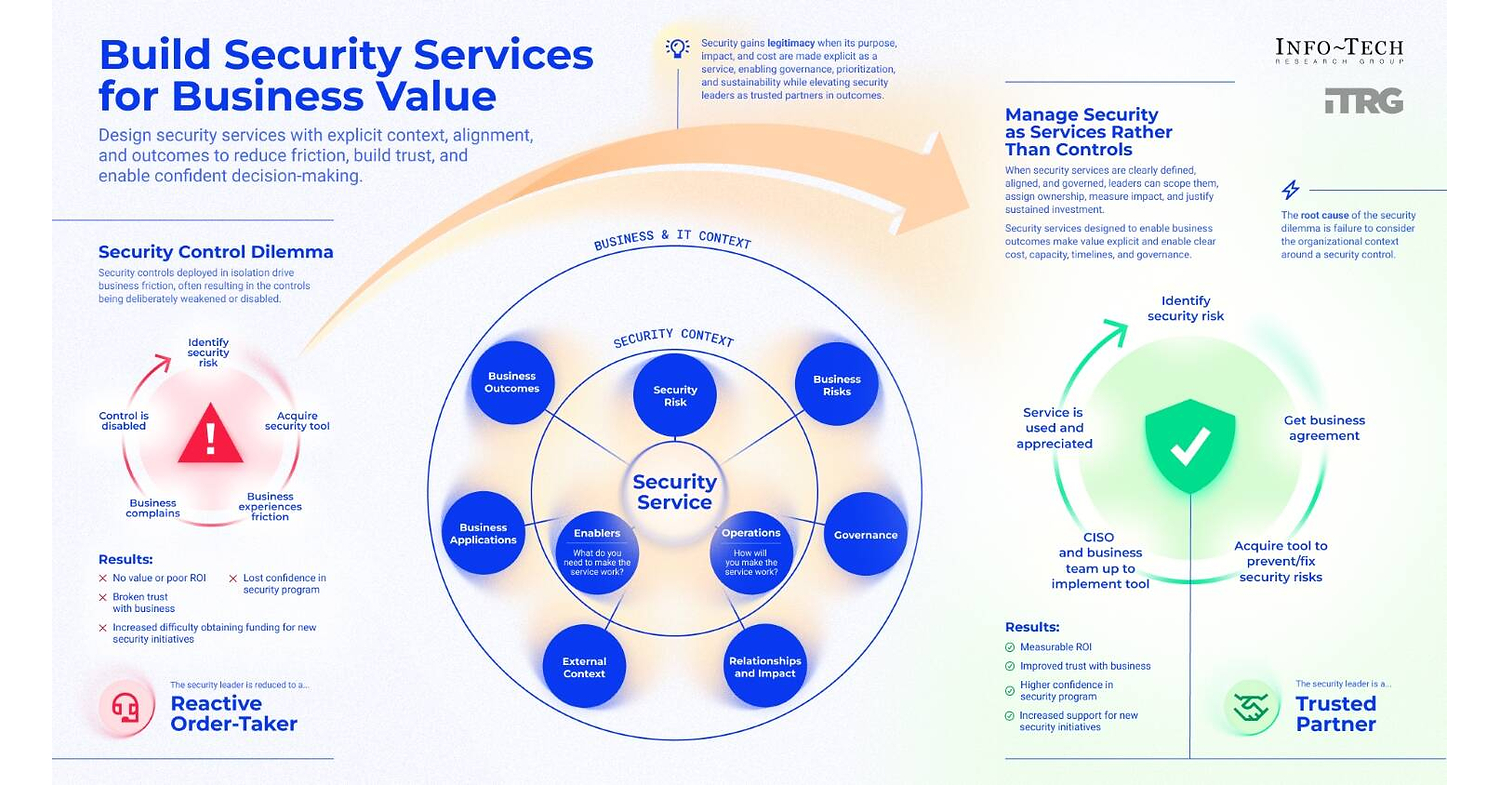
Info-Tech Research Group says many security programs fail because they are control-first and lack alignment to the business services they are meant to enable. The firm’s “Build Security Services for Business Value” blueprint proposes a three-phase framework—map security service context, align security to business services, and finalize a fundable outcomes-based plan—to improve traction and justify investment. The article is advisory/product-focused with no direct financial metrics, so likely limited near-term market impact.
This is more procurement philosophy than near-term earnings catalyst. The tradable implication is that security budgets may get reallocated from fragmented point tools toward platforms and advisory-led implementation, which favors vendors that can sell an outcome and a roadmap, not just a control. Over 6-18 months that argues for better revenue durability at large platform names, while smaller single-feature vendors face more pricing pressure and higher churn risk as buyers rationalize stacks.
The second-order effect is on services, not just software: firms that can translate security into business-process language should capture more consulting, integration, and managed-service spend as CISOs try to defend budgets. That is constructive for large integrators and security-adjacent services, but it also means some spend is effectively delayed while customers redesign operating models; the first-order impact could be a temporary pause in tool purchases over the next 1-2 quarters rather than an immediate spend surge.
Contrarian view: the market may overestimate how quickly an abstract framework becomes actual budget. Most enterprises lack clean service-level data, so adoption can stall in pilots and workshops, leaving vendor revenues unchanged. The thesis is falsified if upcoming earnings from platform vendors do not show better net retention, multi-product attach, or lower discounting, or if tool counts keep rising despite the service-language shift.
AI-powered research, real-time alerts, and portfolio analytics for institutional investors.
Overall Sentiment
neutral
Sentiment Score
0.05
Ticker Sentiment
