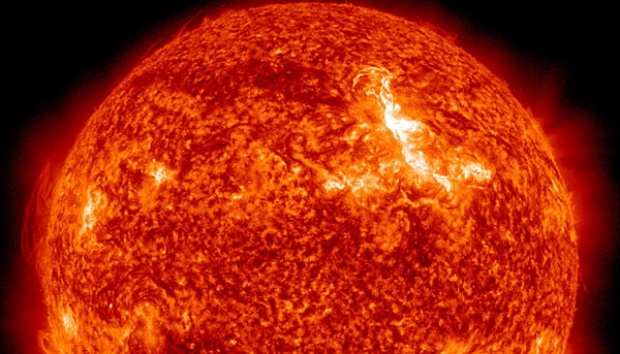
A May 10 solar flare classified as M5.7 triggered temporary high-frequency radio blackouts across the Atlantic and may produce minor G1 geomagnetic storm conditions around May 13. The CME could enhance Northern Lights visibility across Scotland, northern England, and parts of the northern United States, while also posing intermittent disruption risk to aviation, maritime, and amateur radio communications. The event is being monitored by NOAA and the UK Met Office as AR4436 remains active.
This is a short-duration operational shock, not a macro event, but the second-order effects matter. The immediate losers are asset-light, schedule-sensitive transport names and any operator whose contingency procedures still rely on HF radio fallback rather than satellite redundancy; the market usually underestimates how quickly a localized comms issue can cascade into rerouting, delay buffers, and insurance scrutiny across transatlantic air and maritime lanes. The bigger opportunity is in service providers with resilient satcom, navigation, and mission-critical connectivity layers, because every reminder of space-weather fragility pushes budgets toward redundancy rather than new capacity.
The key timing distinction is days versus quarters. Aurora headlines fade fast, but if geomagnetic activity disrupts HF-dependent operations even briefly, airlines, ship operators, and offshore energy users will likely accelerate capex into backup comms and monitoring systems over the next 1-3 quarters. That is constructive for names exposed to aviation connectivity, maritime software, and defense-grade satellite services; the benefit is not from the flare itself, but from procurement decisions that follow near-misses.
Consensus is likely overestimating the “nice optics” angle and underestimating the tail risk of a larger follow-on eruption while the active region rotates earthward. The market should treat this as a low-probability/high-impact warning shot: a repeat M/X-class event inside the next 1-2 weeks would matter more than the current event, because it could stress navigation, timing, and grid stability simultaneously. The asymmetric setup is therefore in optionality rather than outright beta — pay a small premium for downside convexity in the most exposed operational chains and let the winner be the infrastructure layer that sells resilience.
A contrarian point: the presence of visible auroras is not bullish for the real economy, but it can mask the true signal, which is that shortwave disruption is already sufficient to create economic noise. If the event stays mild, the trade is not to chase disaster hedges; it is to fade any overreaction in broad transport equities after the first headline shock and rotate into vendors selling comms redundancy, where the spend is sticky and multi-year.
AI-powered research, real-time alerts, and portfolio analytics for institutional investors.
Request DemoOverall Sentiment
neutral
Sentiment Score
-0.05
