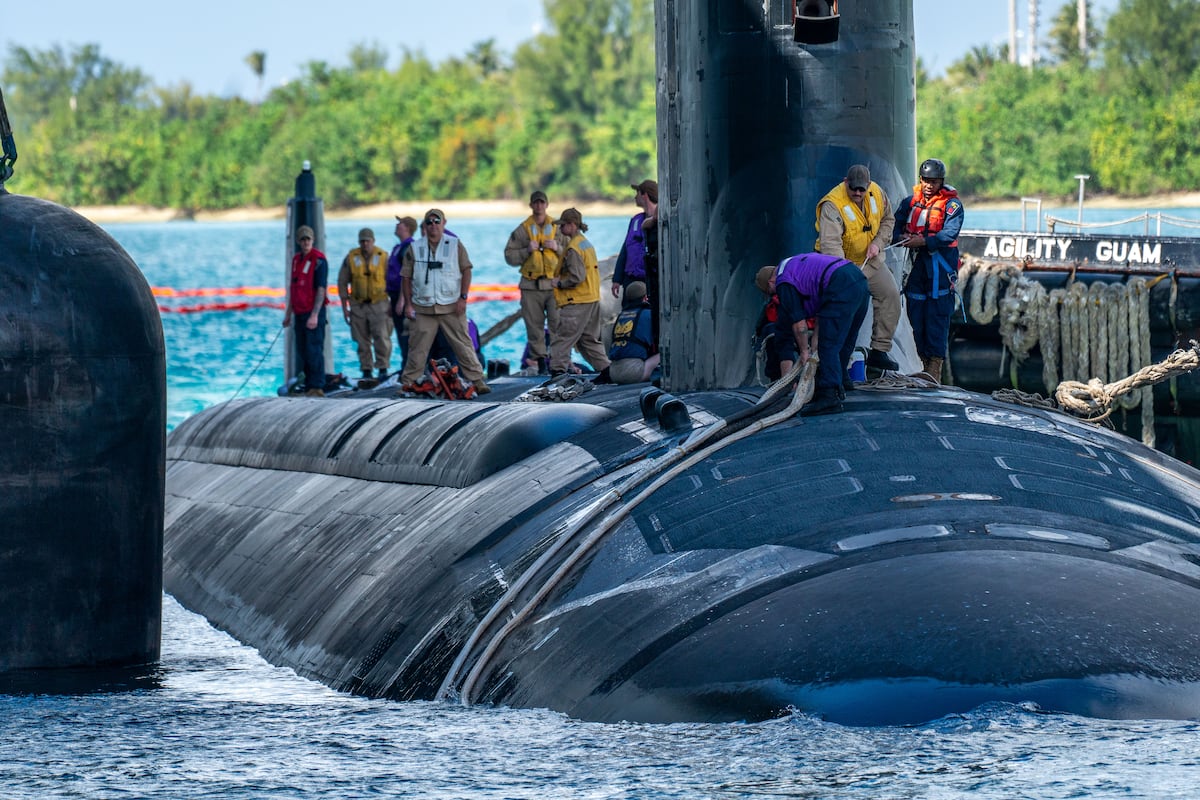
Three Australian sailors were aboard the U.S. submarine that torpedoed and sank the Iranian frigate IRIS Dena on March 4—the first U.S. submarine torpedo attack since WWII—and Canberra says those personnel did not take part in offensive action. More than 50 Australian sailors were serving on U.S. SSNs as of last October and roughly 160–200 Australians were in U.S./U.K. training pipelines, highlighting accelerated AUKUS integration as Australia prepares to receive second‑hand Virginia‑class subs while retaining six Collins-class boats.
The operational integration of allied crews onto U.S. nuclear attack submarines creates concentrated, multi-year demand for shipyard throughput, nuclear component manufacturing and shore-side infrastructure upgrades. Expect backlog-driven pricing power for the handful of U.S. yards and vendors that can scale SSN work — a structural revenue upcycle measured in years rather than quarters, with contract durations commonly 3–7 years and visible margin expansion as utilization approaches capacity.
A second-order beneficiary is the training and logistics ecosystem: simulation vendors, maintenance contractors, and systems integrators will capture recurring service revenue as foreign crews cycle through pipelines. Conversely, naval platforms that remain conventionally powered face relative underinvestment risk; governments will prioritize financing and skilled labor toward nuclear-capable assets, pressuring capex allocation across defense shipbuilding suppliers over a multi-year horizon.
Key tail risks are political backlash and program shocks that can pause or slow transfers: a high-profile legal or diplomatic dispute, a safety incident, or domestic political shifts could impose delays measured in quarters-to-years and trigger rapid revenue re-phasing. Watch for leading indicators — tender awards, yard hiring plans, and long-lead supplier purchase orders — which will be the earliest confirmation that backlog has firmed and justify forward positions.
The market consensus appears to price this as a steady, linear ramp; the real path is lumpy and asymmetric. That creates opportunities to harvest convex upside into discrete catalysts (award announcements, FY budget commits) while protecting against stop-start political risk through hedged option structures and relative-value ideas tying contractors to program execution metrics.
AI-powered research, real-time alerts, and portfolio analytics for institutional investors.
Request DemoOverall Sentiment
neutral
Sentiment Score
0.00
