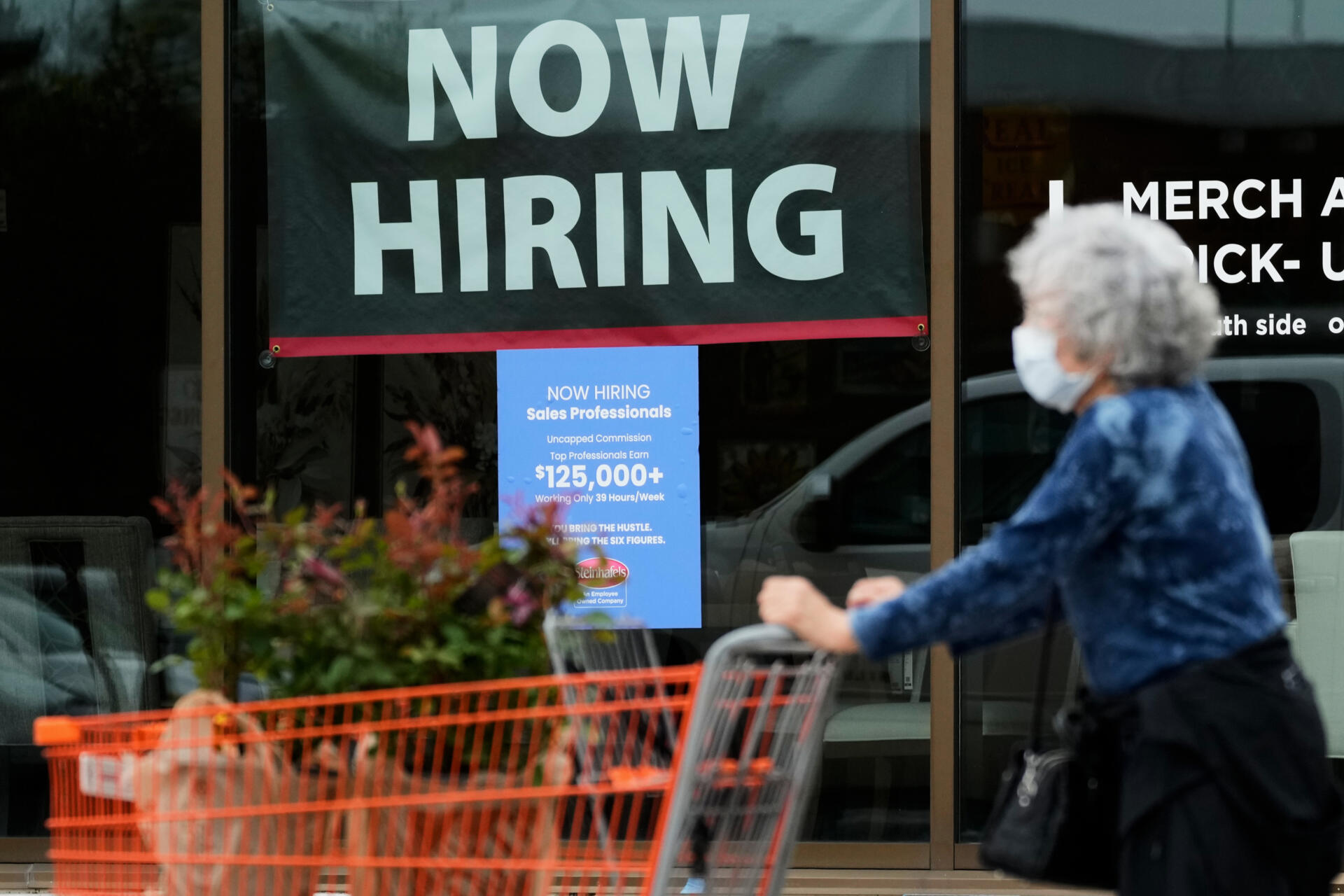
The U.S. added 115,000 jobs in April, roughly double economists' expectations, signaling a stronger-than-anticipated labor market. The report is favorable for growth sentiment and could influence expectations around monetary policy, but the article itself is primarily a factual jobs update rather than a direct policy decision.
The signal is not just that labor demand held up; it is that the economy is still generating enough income growth to delay the usual late-cycle deterioration in credit and consumption. That tends to favor domestically levered cyclicals over defensives in the near term, but it also raises the odds that rates stay higher for longer, which is a headwind for long-duration assets even if the headline reaction is positive.
The second-order effect is on policy path expectations. A stronger labor print reduces the probability of near-term easing, which can steepen the pain trade in rate-sensitive sectors: housing, small-cap growth, utilities, and high-multiple software. The market may initially read the data as risk-on, but if wages and hours also firm in the next one to two releases, the real loser is valuation compression in equities rather than the macro tape itself.
The key contrarian point is that a good jobs number is not uniformly bullish: it is bullish for earnings near term, but potentially bearish for multiple expansion and duration. If the labor market remains resilient for another 2-3 months, the more durable trade is not broad beta but selective exposure to companies with pricing power and low refinancing risk. The risk to that view is a rapid deceleration in leading indicators, which would quickly turn this into a lagging indicator and reprice recession-sensitive names sharply lower.
AI-powered research, real-time alerts, and portfolio analytics for institutional investors.
Request DemoOverall Sentiment
mildly positive
Sentiment Score
0.25
