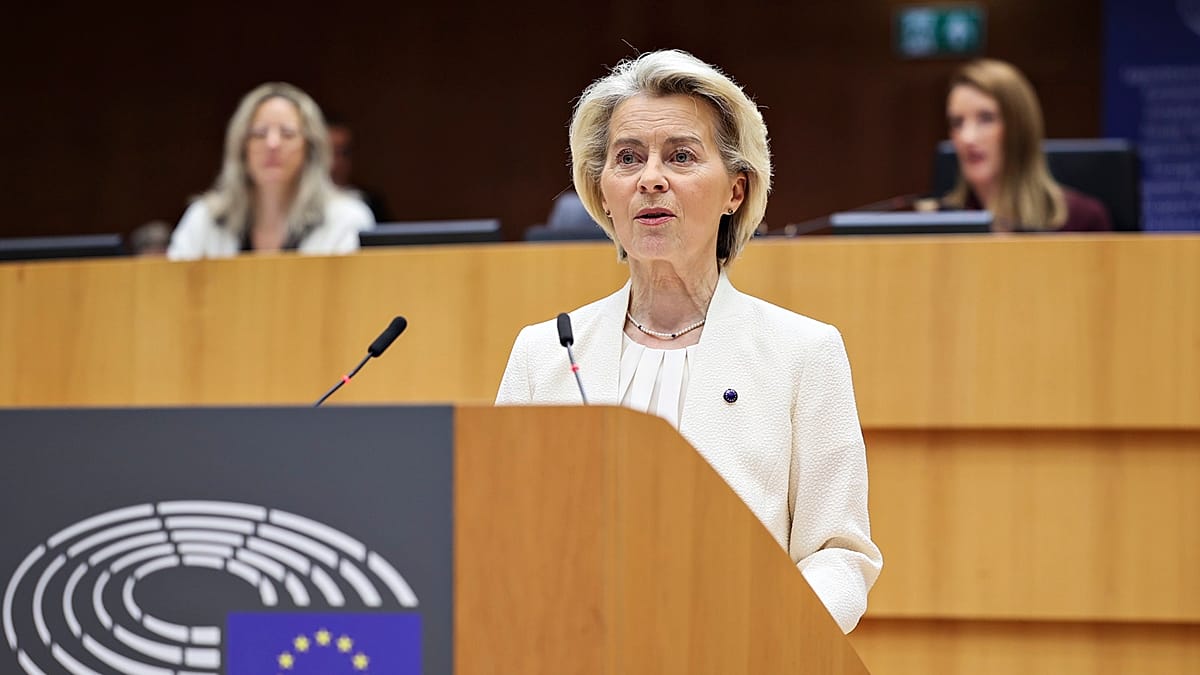
Ursula von der Leyen has presented alternative funding strategies for Ukraine, including EU-backed debt and bilateral national agreements, as the primary proposal for a €140 billion reparations loan utilizing frozen Russian assets faces strong opposition from Belgium. Belgium, hosting Euroclear, cites concerns over legal risks and potential Russian retaliation, demanding full risk mutualization. This development highlights the EU's urgent need to secure long-term financial support for Ukraine, especially given the uncertain future of US aid, and underscores the internal challenges in solidifying a unified funding mechanism.
The European Union faces significant hurdles in securing long-term financial aid for Ukraine, with the primary proposal for a €140 billion reparations loan, backed by frozen Russian assets, encountering strong resistance. This plan, championed by Ursula von der Leyen as the "most effective way," is stalled by Belgium's concerns over legal risks and potential Russian retaliation, particularly given its role as host of Euroclear. Belgian Prime Minister Bart De Wever demands "maximum" legal certainty and full risk mutualization, citing a Soviet-era investment treaty and fear of paying €140 billion if the plan fails.
In response to the deadlock, von der Leyen has outlined alternative funding strategies, including EU-backed debt issuance and bilateral national borrowing agreements. However, these alternatives face their own challenges, with EU officials privately acknowledging the reparations loan as the only politically viable path and some member states, like Nordic nations, already ruling out fresh borrowing. This internal disunity underscores the difficulty in establishing a unified and sustainable funding mechanism.
The urgency for a resolution is heightened by Ukraine's need for fresh foreign aid by Q2 2026 and the anticipated cut-off of US assistance under a potential Donald Trump presidency, shifting the financial burden squarely onto Europe. The "moderately negative" sentiment and "uncertain" tone surrounding these developments reflect the significant geopolitical and fiscal risks. The ongoing debate highlights the EU's struggle to project long-term commitment and stability in supporting Ukraine against Russian aggression.
AI-powered research, real-time alerts, and portfolio analytics for institutional investors.
Request DemoOverall Sentiment
moderately negative
Sentiment Score
-0.40
