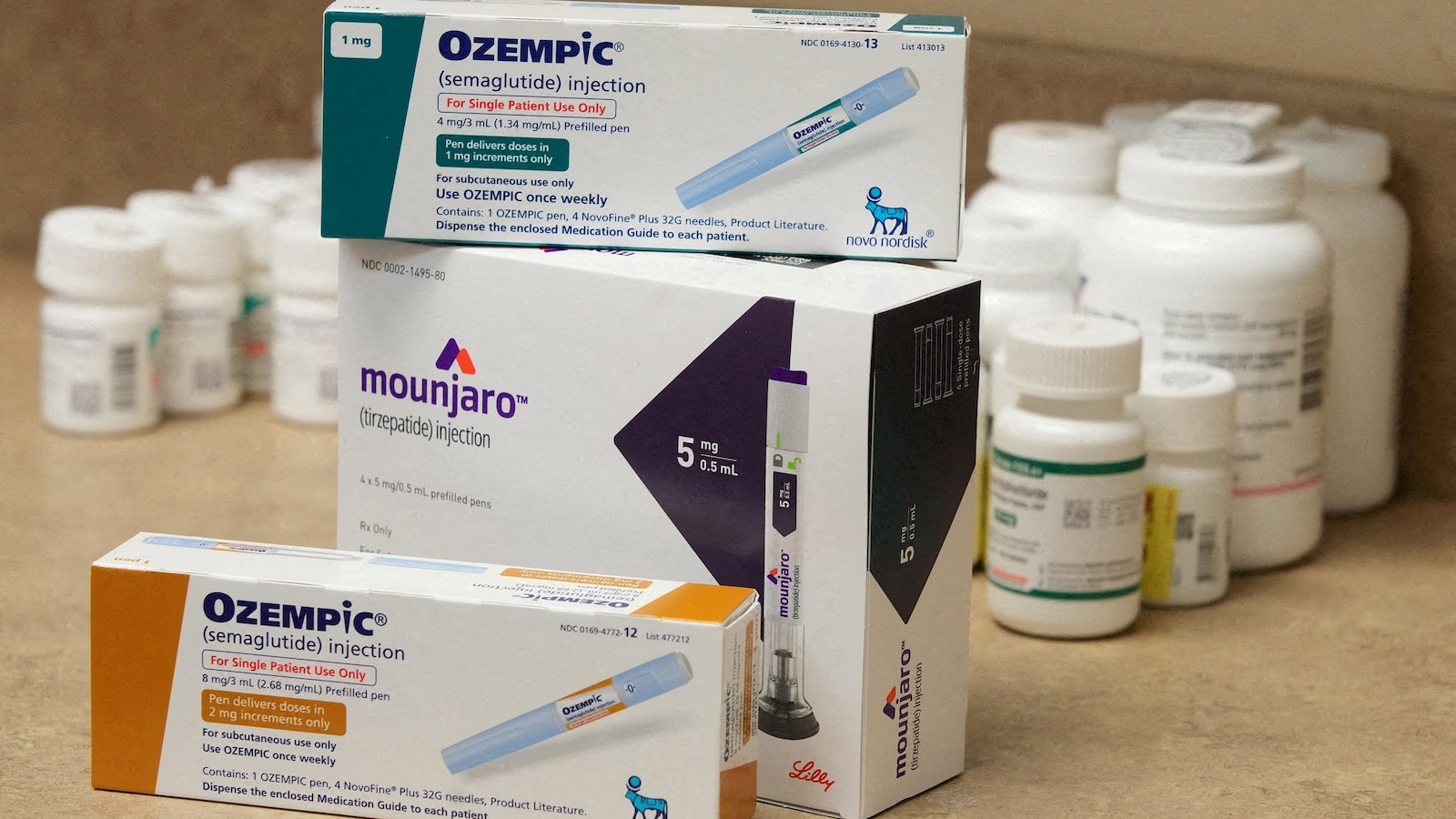
A systematic review of 48 studies in eClinicalMedicine found that patients who stopped GLP-1 therapies (liraglutide, semaglutide, tirzepatide) regained roughly 60% of lost weight within a year, with modeling projecting about 75% regain after more than a year off treatment. The analysis also notes an average maintained reduction of ~4–5% of baseline weight for some patients and highlights heterogeneity across populations and the potential role of dose-tapering or ongoing therapy. For investors, the findings underscore durability risks to one-time treatment narratives and support the economic case for continuous or tapered treatment strategies, which could influence long-term prescribing, payer coverage decisions, and revenue visibility for manufacturers.
Market structure: Winners are large GLP‑1 makers (Novo Nordisk NVO, Eli Lilly LLY) and CDMOs supplying biologics; losers include bariatric surgery exposure (Intuitive Surgical ISRG) and low‑value weight‑management retail (WW). The finding that patients typically regain ~60% at 1 year and ~75% after >1 year implies many will require chronic or repeat therapy — model an incremental recurring revenue tail equal to 30–50% of initial uptake over 2–5 years, supporting pricing power absent payer pushback.
Risk assessment: Immediate risk (days–weeks) is muted newsflow; short term (weeks–months) hinge on payer coverage announcements and supply constraints; medium/long term (6–36 months) tail risks include regulatory price controls, adverse safety signals, or manufacturing disruptions that could knock 20–40% off consensus EPS. Hidden dependencies: utilization driven by insurance reimbursement and out‑of‑pocket affordability; a CMS/payer restriction within 90–180 days would materially re‑rate multiples.
Trade implications: Tactical: establish 2–3% long positions in NVO and LLY (each ticker) with 6–12 month horizons; fund via selling short‑dated call spreads or using 12‑month LEAPS (buy 2027 jan 25–30% OTM calls). Relative: pair long LLY vs short ISRG (1:1 dollar) to express drug adoption vs surgery decline over 12–36 months. Risk control: buy 12–18 month 25–30% OTM puts (tail hedge) sized to 25–50% of equity position cost.
Contrarian angles: Consensus underweights chronic demand economics — many will need maintenance dosing, benefiting incumbent makers and CDMOs; conversely the market underestimates political/payer backlash risk which could produce abrupt 20%+ drawdowns. Historical parallel: rapid statin adoption followed by pricing pressure; set hard triggers (e.g., CMS draft policy or major safety alert) to cut positions >15% to avoid regime shifts.
AI-powered research, real-time alerts, and portfolio analytics for institutional investors.
Request TrialOverall Sentiment
neutral
Sentiment Score
-0.10
