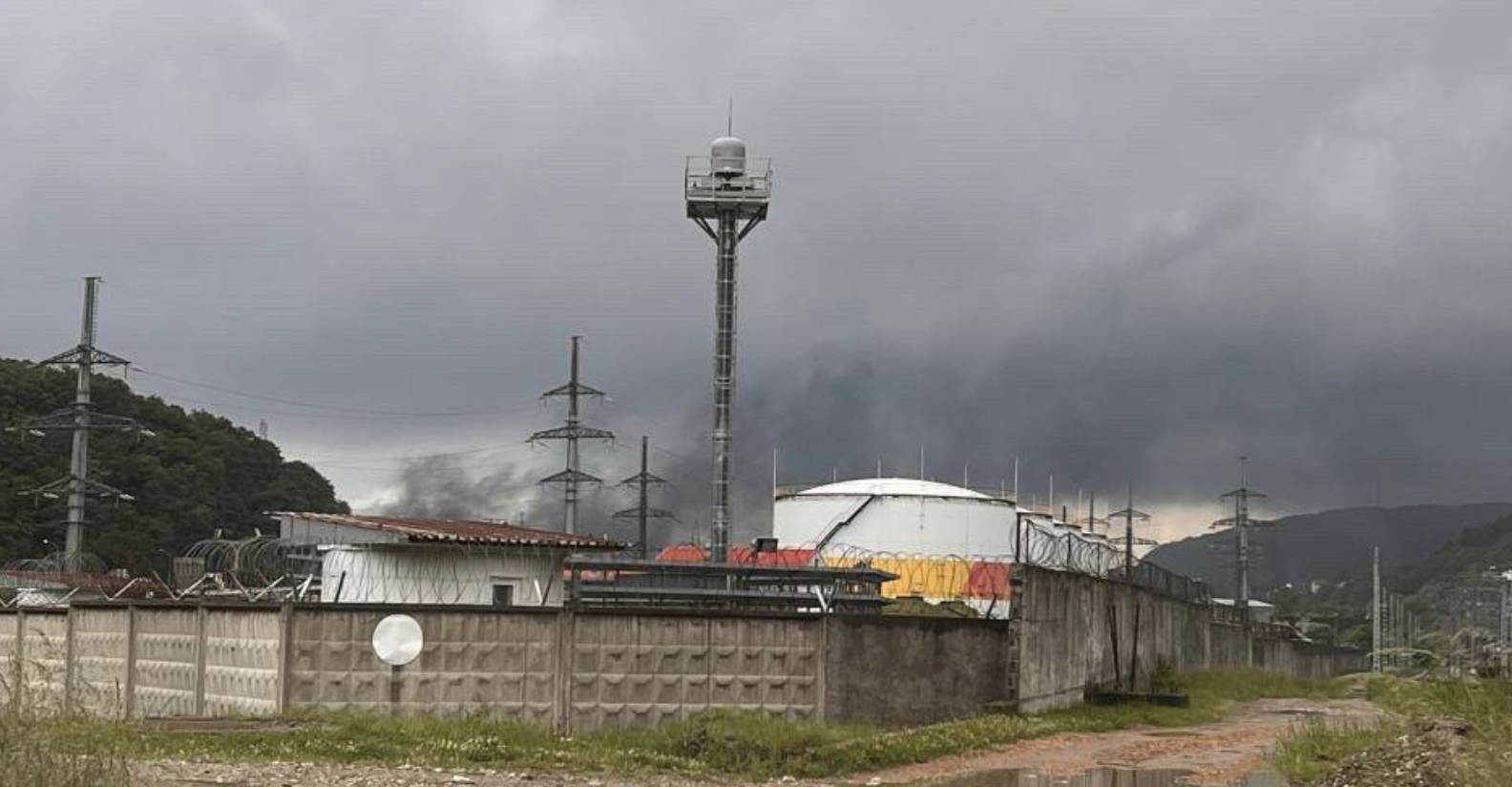
Ukraine struck Russia's Tuapse oil refinery again overnight on May 27, triggering a fire and heavy smoke, while also hitting multiple Russian command, radar, and reconnaissance targets. Tuapse processes about 12 million tons of oil annually and supplies fuel used partly by the Russian military, making repeated attacks a risk to southern Russia's fuel infrastructure and Black Sea export flows. The escalation underscores Ukraine's ongoing long-range strike campaign against Russia's energy and military-industrial assets.
The market should treat this less as a one-off refinery headline and more as a slow-burn degradation of Russia’s internal logistics premium. Repeated hits on southern refining and Black Sea-linked infrastructure raise the odds of localized product shortages, rerouting costs, and higher domestic diesel/jet spreads before headline crude supply is visibly impaired. That matters because Russia can usually absorb isolated damage, but it is much harder to defend dispersed, long-lead assets against a recurring strike pattern that forces capex diversion into air defense rather than throughput maintenance.
Second-order effects are more interesting than the immediate fire damage. If the operating environment for coastal Russian assets keeps deteriorating, exporters will increasingly favor longer-haul routing, higher insurance, and inventory buffers, which effectively taxes every barrel moving through the system. That is mildly bullish for seaborne product pricing in the Mediterranean/Black Sea complex and for non-Russian refiners with spare conversion capacity, while being only moderately supportive for crude itself unless outages become persistent rather than episodic.
The contrarian risk is that the market may overstate the durability of the impact. Ukraine’s campaign is strategically real but tactically intermittent; unless strikes translate into sustained downtime or a larger logistics bottleneck, the price response can fade in days rather than weeks. The bigger catalyst would be evidence of forced shutdowns, export disruptions, or Russia prioritizing military fuel allocation over civilian supply, which would widen regional cracks and could matter for 1-3 month forward product spreads more than front-month Brent.
From a defense angle, this is another reminder that air defense and counter-UAS demand is not a one-off Ukraine story but a structural procurement trend for exposed infrastructure globally. The incremental lesson is that refinery hardening, distributed storage, and mobile command-and-control are becoming investable security spend categories, while long, centralized energy assets face rising optionality discount as a result of geopolitical tail risk.
AI-powered research, real-time alerts, and portfolio analytics for institutional investors.
Request DemoOverall Sentiment
moderately negative
Sentiment Score
-0.45
