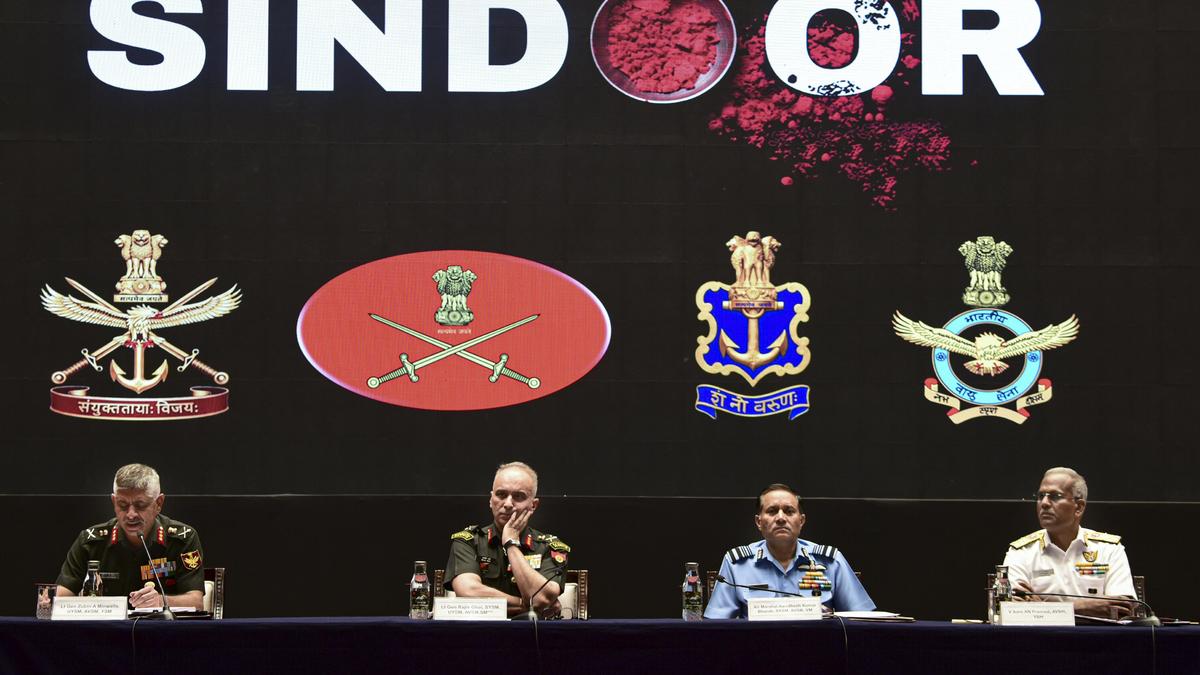
India said Operation Sindoor targeted nine terror infrastructures in Pakistan and Pakistan-occupied Kashmir in response to the April 22 Pahalgam attack that killed 26 people. The military described the campaign as a multi-domain operation executed with precision and said it signalled that no terror sanctuary in Pakistan is safe. The article is primarily a retrospective military statement, but it underscores ongoing India-Pakistan geopolitical risk and defense relevance.
The market implication is not the headline strike itself but the durability of a higher geopolitical risk premium around India–Pakistan airspace. That should support discretionary defense procurement, ISR, electronic warfare, drones, and layered air-defense budgets over the next 12-36 months, even if near-term equity reaction is muted. The second-order effect is a faster shift in procurement toward systems that compress kill chains and reduce pilot exposure, which tends to favor platform-agnostic sensors, software, and munitions over legacy manned-aircraft exposure.
For Indian equities, the more interesting read-through is not broad “defense up” beta but relative performance inside the ecosystem. Domestic primes with production backlogs, missile inventories, and air-defense content should see the cleanest order-flow tailwind, while names dependent on imported components or slower certification cycles could lag because conflict validation raises customer expectations for delivery speed and local content. Over time, this kind of operation usually benefits suppliers with sovereign manufacturing capacity and punishes firms that cannot scale under wartime quality-control requirements.
The main risk is that the escalation premium fades quickly if the deterrence message is viewed as credible and no follow-on incident occurs. That makes this a catalyst-driven trade with a 1-3 month window rather than a permanent re-rating unless new procurement announcements follow. The contrarian angle: the market may be overpricing the probability of sustained kinetic escalation and underpricing the chance that this becomes a budgeting event rather than a shooting-event, which would cap upside in the broad defense basket but still support selective winners tied to actual replenishment demand.
AI-powered research, real-time alerts, and portfolio analytics for institutional investors.
Request DemoOverall Sentiment
neutral
Sentiment Score
-0.10
