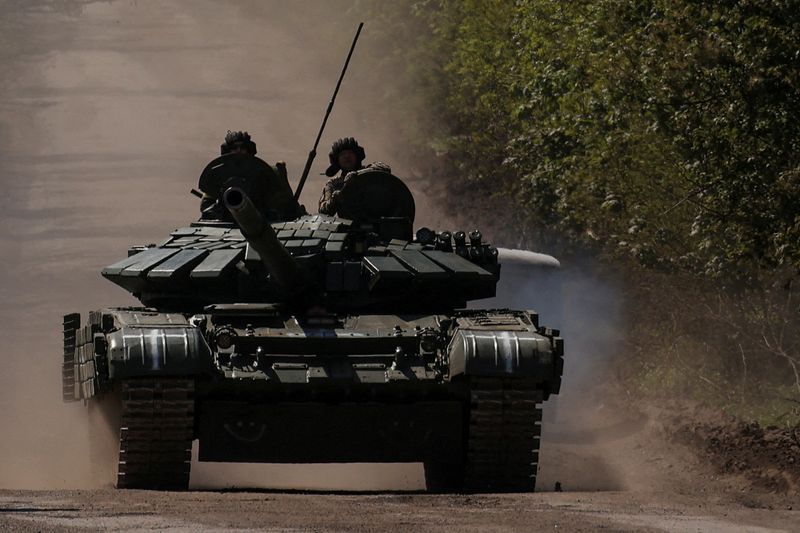
Russia launched more than 660 drones and missiles overnight in a large aerial barrage against Ukraine, killing at least four people and wounding more than 30. Ukraine says it intercepted 580 drones and 30 missiles, but major damage hit Dnipro and Chernihiv, reinforcing elevated geopolitical risk and pressure on defense and logistics-related assets. The article also frames the conflict as a continuing risk premium for companies operating in Ukraine.
The market message is less about one headline and more about regime confirmation: geopolitical escalation keeps the “risk-off / real assets / defense infrastructure” bid alive, while AI hardware leadership is getting repriced around who captures the next bottleneck. The key second-order effect is that a larger war-footprint in Europe tends to strengthen demand for resilient compute, edge inference, and domestic infrastructure capex, which indirectly supports the high-multiple AI buildout names even if broad equities wobble.
INTC looks like the most vulnerable expression here because the market is no longer paying for strategic optionality alone; it wants evidence of execution in a capital-intensive CPU comeback. If AI workloads keep broadening from pure GPU training toward inference, networking, and CPU-heavy orchestration, then Intel’s narrative improves structurally—but that benefit is slow-moving, likely measured in quarters rather than days, and highly sensitive to product cadence and foundry credibility. In the near term, this is a classic “story stock underperforms while the category leader absorbs the demand” setup.
NVDA remains the cleaner long despite the article’s CPU framing, because any CPU-led expansion in AI spend still pulls through accelerators, systems, and networking attach. The relative winner may actually be SMCI if investors continue rewarding the fastest levered exposure to rack-level AI deployment; it benefits both from spend concentration and from the market’s willingness to pay up for shipping capacity into urgency-driven demand. APP is more sentiment-sensitive and less directly tied to the theme, but it can still catch a speculative bid if broader AI beta stays strong.
The contrarian risk is that the market is over-interpreting “CPU pivot” as a threat to GPUs when it is more likely an expansion of total AI compute budgets. The better tell is not whether training slows, but whether inference and enterprise deployment accelerate enough to sustain multi-quarter capex at hyperscalers. If that happens, the near-term loser may be Intel on execution skepticism, while the medium-term winners are the infrastructure sellers that monetize volume immediately.
AI-powered research, real-time alerts, and portfolio analytics for institutional investors.
Request DemoOverall Sentiment
strongly negative
Sentiment Score
-0.62
Ticker Sentiment
