

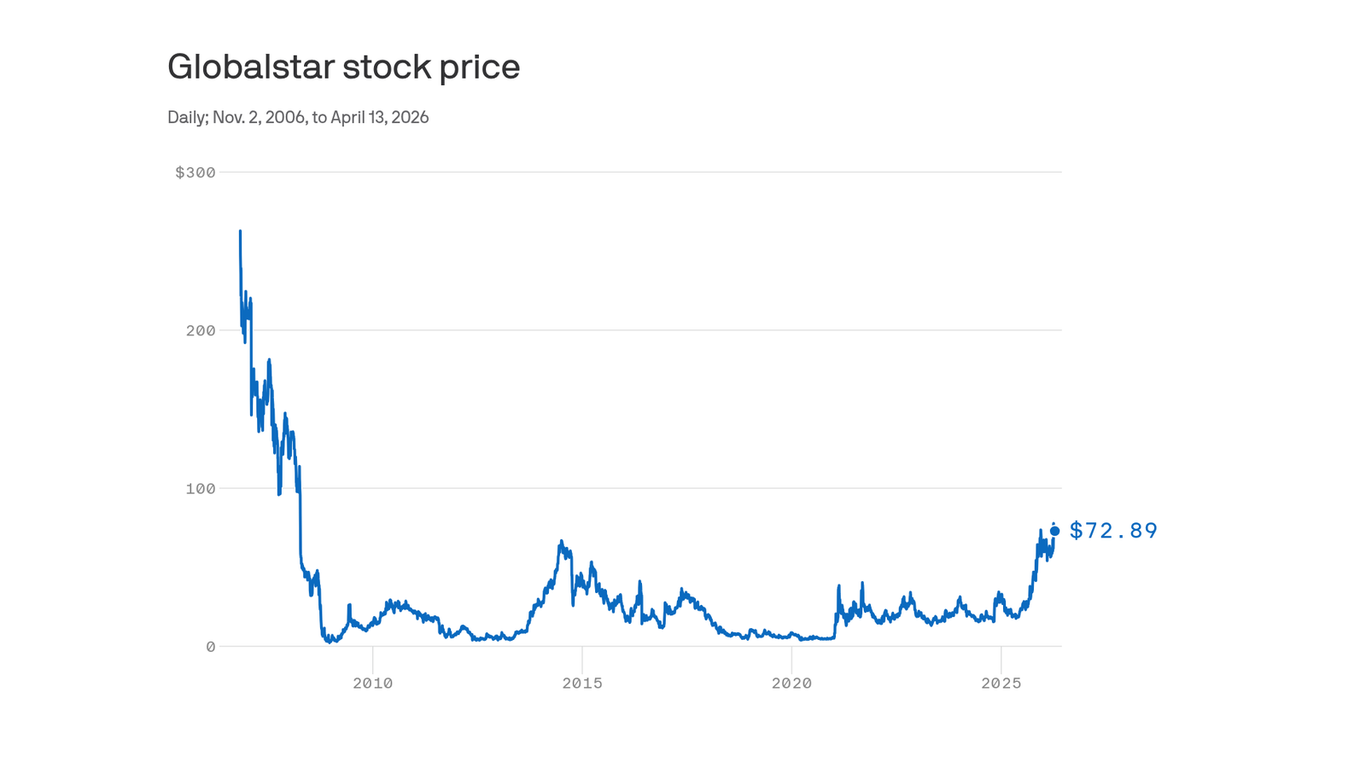
Amazon agreed to buy satellite telecom company Globalstar for around $11.6 billion, with shareholders offered either $90 per share in cash or Amazon stock capped at the same value. The deal deepens Amazon's push into space communications and positions it to compete more directly with SpaceX's Starlink. The transaction is strategically significant and could reshape competition in satellite connectivity.
This is less about one acquisition and more about Amazon signaling it wants control points in the satcom stack before Starlink becomes a public-market asset with a larger war chest. The second-order winner is likely the broader LEO ecosystem: launch providers, terminal manufacturers, and network integrators should see a better funding backdrop as hyperscalers and defense buyers treat connectivity as a strategic layer rather than a niche telecom service. For AMZN, the strategic option value is meaningful because it can bundle connectivity into AWS, logistics, and government contracts, creating a cross-sell moat that a standalone satellite operator could not match.
The market may be underestimating integration risk and capex creep. Satellite telecom is notoriously capital intensive with long payback periods, so even a “small” acquisition can expand into a multiyear investment cycle that competes with AI infrastructure spend; that matters because investors are already sensitive to any drift in AMZN’s cash return profile. GSAT holders get a clear monetization event, but the real spread trade is whether the deal price becomes a reference point for other distressed or subscale satellite assets, which could pull capital into an otherwise fragmented subsector over the next 6-18 months.
The biggest competitive implication is for Starlink: this raises the strategic value of its moat while also making a future IPO more complex if public investors start pricing in regulatory scrutiny and capex intensity rather than pure growth. On the downside, antitrust and national-security review could slow close timing, and any delay keeps GSAT exposed to execution risk while limiting AMZN’s ability to turn the asset into a near-term revenue contributor. If the deal is approved cleanly, the key catalyst is not closing but whether Amazon announces bundled enterprise or defense offerings within two quarters; if that doesn’t happen, the market may fade the strategic premium.
AI-powered research, real-time alerts, and portfolio analytics for institutional investors.
Request TrialOverall Sentiment
mildly positive
Sentiment Score
0.45
Ticker Sentiment
