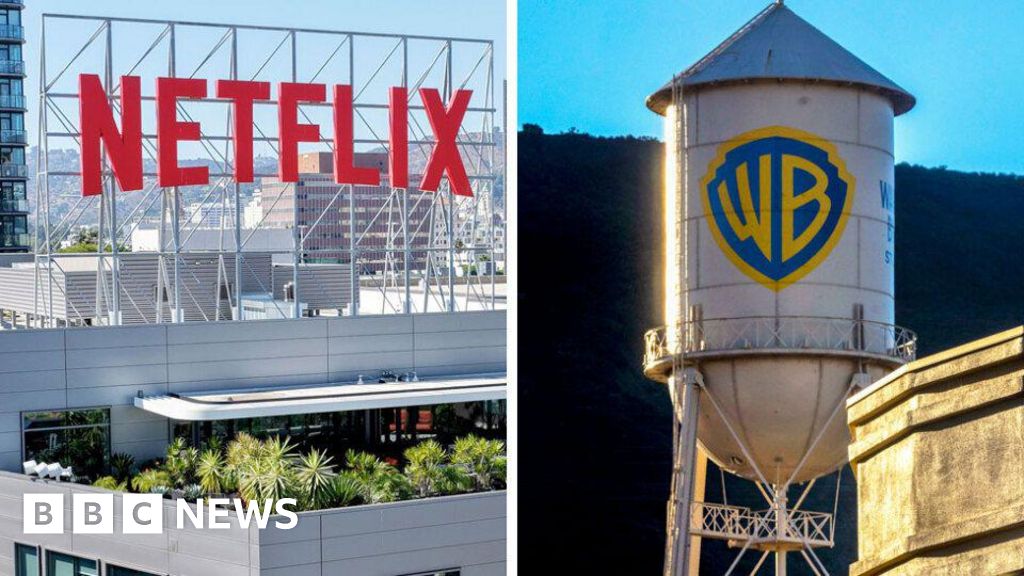
Netflix has agreed to buy Warner Bros Discovery's film and streaming businesses in a cash-and-stock transaction valuing Warner Bros equity at $72bn ($27.75 per share) and an enterprise value of ~$82.7bn; Netflix expects $2–3bn of cost synergies largely from support and technology overlap. The deal—unanimously approved by both boards and including HBO Max and major franchises—faces material regulatory and union opposition and could materially alter streaming economics, theatrical distribution and pricing power if approved, posing execution and antitrust risk for investors.
Market structure: Netflix (NFLX) becomes the primary winner — the $72bn equity deal and $82.7bn enterprise valuation create scale that can capture licensing rents, with management flagging $2–3bn run-rate cost synergies (likely 3–6% of combined revenue). Direct losers include rival streamers and cable bundle owners (CMCSA) and theatrical exhibitors; expect increased pricing power that could lift Netflix ARPU by 5–15% over 24–36 months if cross-selling and tiering are executed. The deal also centralizes premium IP, reducing content suppliers’ bargaining leverage and compressing third‑party licensing revenue pools.
Risk assessment: Antitrust/regulatory risk is material — assign ~25–35% probability of significant remedies (divestiture, forced licensing, or delays) within a 3–12 month review window; a full block is low but tail‑risk relevant. Operational risks include culture/tech integration and dilution from equity issuance or $20–40bn incremental leverage that could widen NFLX credit spreads by 50–200bps over 12 months. Hidden dependencies: WBD’s linear networks (kept separate) and international licensing contracts could create carve‑out complexity and unexpected churn in subscribers or rights litigation 6–18 months post-close.
Trade implications: Tactical: establish a modest 2–3% long position in NFLX via a 12‑18 month call spread to capture synergy realization while capping downside; hedge with 0.5–1% position short CMCSA (expect rights erosion) and buy 6–12 month CMCSA OTM calls (protection). Arb/merger: small 1–1.5% event‑driven short on theatrical exhibitors (e.g., CINEMA basket) and selective long on studio services vendors that benefit from consolidation (post‑regulatory clarity, 6–12 months). Fixed income: avoid long NFLX or WBD unsecured bonds until post‑deal capital structure disclosed; consider buying protection (CDS) if available.
Contrarian angles: Consensus underestimates integration complexity and union/legal pushback — output cuts could shrink content supply and raise prices, paradoxically creating opportunity for smaller, cheap streamers to niche up. The market may underprice regulatory delay risk; if regulators force behavioral remedies (non‑exclusive licensing), Netflix upside compresses — consider option structures that pay off if volatility spikes around 3–12 month approval milestones. Historical parallel: big studio consolidations (e.g., Disney/Fox) delivered long regulatory drag but eventual scale benefits; this suggests staging exposure and sizing for binary regulatory outcomes.
AI-powered research, real-time alerts, and portfolio analytics for institutional investors.
Request DemoOverall Sentiment
mixed
Sentiment Score
0.05
Ticker Sentiment
