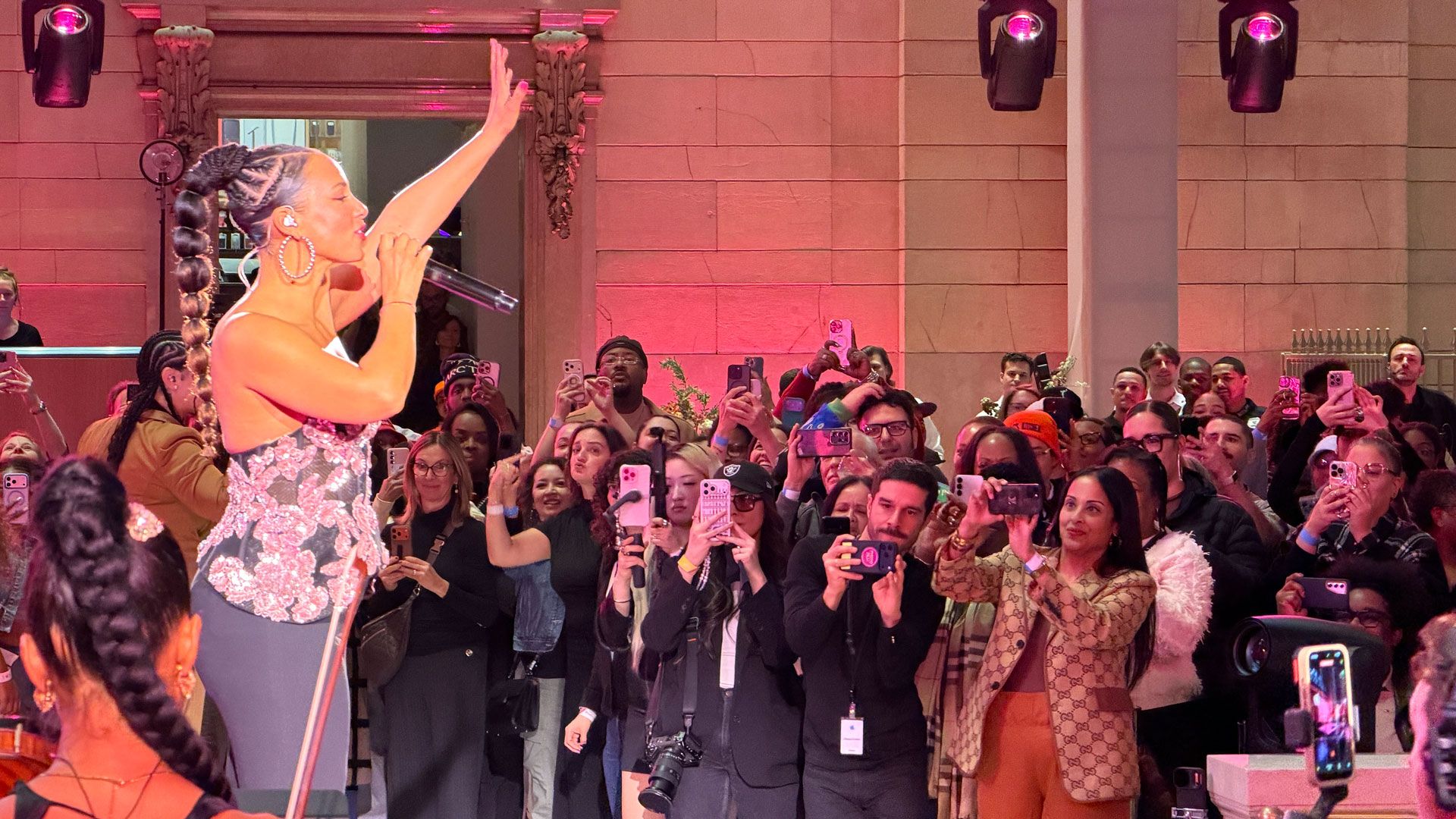
Apple held a low-key 50th anniversary kickoff event featuring Alicia Keys at Grand Central, attended by CEO Tim Cook; the company said it has "developed a new muscle" to celebrate its history while remaining focused on the future. No product launches, financial guidance, or material corporate announcements were made, so there is minimal near-term revenue or earnings implication. The event is chiefly a branding/consumer-engagement play that could modestly support sentiment and Apple Music usage but is unlikely to move the stock. The article also notes informal speculation about Cook’s eventual transition over the next ~5 years, a governance consideration for long-term investors.
Brand-focused moments from a market leader are low-cost signal events that temporarily reprice investor sentiment and consumer engagement without changing unit economics. Expect a short-lived retail foot-traffic and services-usage bump concentrated in the 2–8 week window after coordinated campaigns, which can lift quarterly services revenue by low single-digit percentages even if hardware volumes remain unchanged. That creates asymmetric optionality for the company: small marketing spend can produce measurable services churn/increase that compounds over subsequent quarters.
Second-order winners are vendors and channels that monetize attention (in-store partners, music/streaming royalties, experiential agencies, accessory makers) while traditional publishers and ad-dependent media see only marginal spill. Competitors with enterprise-first narratives (e.g., Microsoft) are less exposed to consumer-brand rallies but stand to capture reallocation of marketing dollars if platform owners monetize attention efficiently; this favors businesses with scalable ad/entertainment distribution. On the governance side, staged brand work often precedes consolidation of capital-allocation plans — expect a closer focus from investors on buyback cadence and succession timelines over 6–24 months.
Tail risks: macro sell-offs or a high-profile governance misstep would unwind the sentiment premium quickly; conversely, a sustained pivot that couples brand moments to measurable ARPU lifts (services + subscriptions) over 2–4 quarters would justify a re-rating. Watch monthly services revenue and retail net promoter scores as leading indicators of whether the PR lift translates to persistent financials rather than being a transitory goodwill effect.
AI-powered research, real-time alerts, and portfolio analytics for institutional investors.
Request DemoOverall Sentiment
mildly positive
Sentiment Score
0.20
Ticker Sentiment
