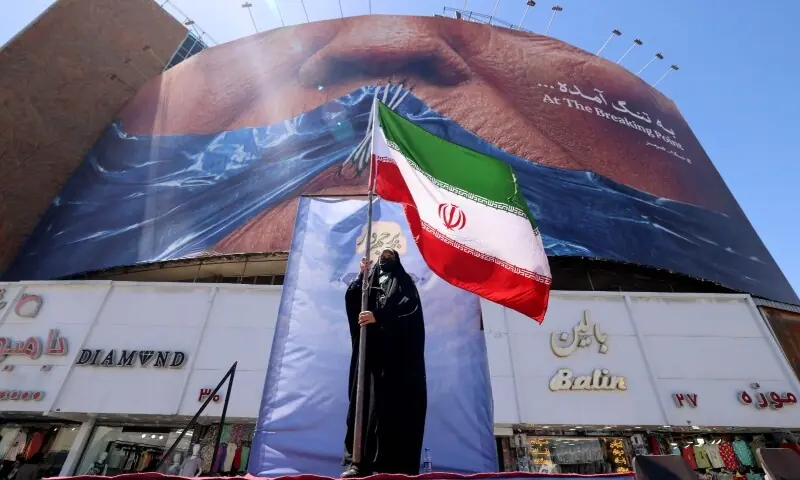
The article argues that the US-Israel war on Iran has failed to topple the Iranian regime, while exposing limits to American power and the fragility of US security guarantees in the Middle East. It highlights a potential regional realignment involving Iran, Pakistan, Saudi Arabia and Turkiye, alongside a diminished role for the US and Israel. The piece is geopolitically significant and could influence defense, energy and emerging-markets risk premia, though it offers no direct company- or market-specific data.
The market implication is not just higher geopolitical risk premia; it is a reassessment of the credible range of U.S. coercive power. That matters for risk assets because the old “deterrence by overwhelming force” framework kept a lid on persistent regional volatility; if that deterrence looks less reliable, the Middle East starts to price more like a chronic instability regime, not a one-off event. The first-order hedge is energy, but the second-order effect is broader: capex repricing for shipping, airlines, insurers, and frontier EMs exposed to import bills and FX stress.
The more interesting medium-term winner is regional strategic autonomy. If local actors increasingly hedge with each other rather than through Washington, that supports intra-regional trade, infrastructure spending, and localized defense procurement, while reducing the marginal value of U.S.-anchored security assets. That’s negative for traditional U.S. defense primes only if the market expects a de-escalation; in practice, a fragmented security architecture usually lifts demand for missiles, air defense, EW, and ISR across multiple buyers over several years.
Consensus may be underestimating how quickly sovereign balance sheets can transmit this shock. For Gulf importers and highly dollarized EMs, even a modest oil spike can widen current-account deficits, pressure pegs, and force tighter policy within 1-2 quarters. The tactical setup is therefore asymmetric: near-term headlines can fade, but each failed diplomatic cycle increases the probability of a broader shipping or infrastructure incident that resets pricing higher.
The contrarian point is that the market may be overpricing a linear escalation path and underpricing normalization through backchannel diplomacy. If talks resume and air-defense confidence improves, risk premia could compress fast, especially in energy and defense hedges that have been crowded into the same macro trade. The key is to avoid outright directional exposure and use structures that monetize volatility rather than a single outcome.
AI-powered research, real-time alerts, and portfolio analytics for institutional investors.
Request DemoOverall Sentiment
mildly negative
Sentiment Score
-0.15
Ticker Sentiment
