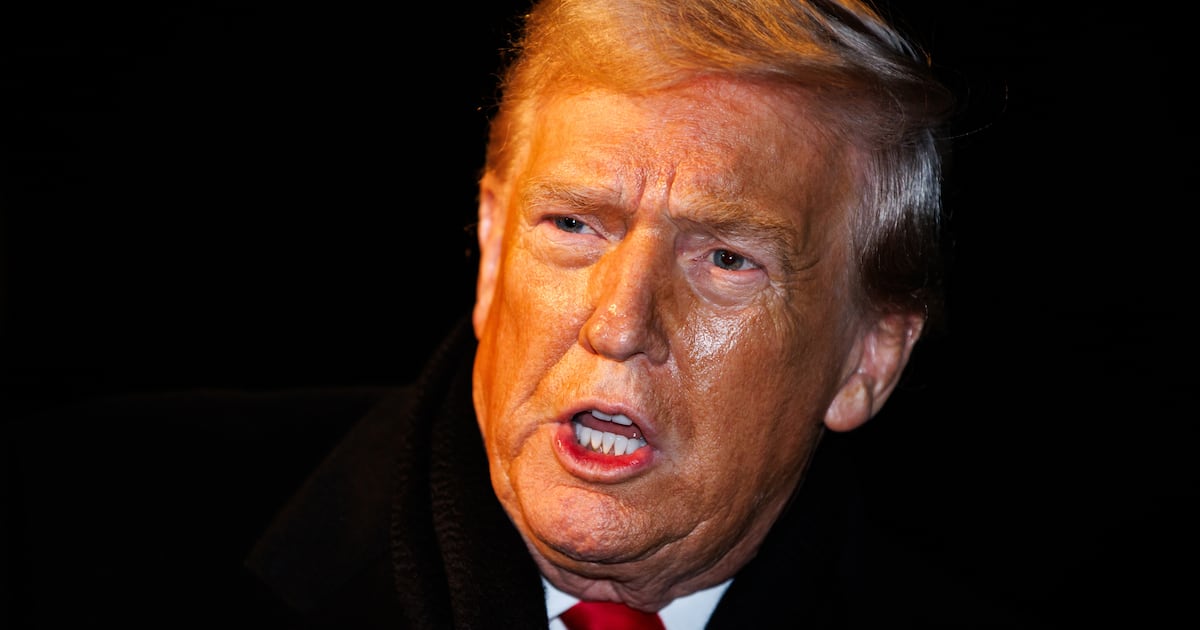
Former President Donald Trump said he would have no problem invoking the 1807 Insurrection Act to deploy federal forces amid unrest around ICE activity in Minneapolis, asserting the law has been used frequently by past presidents. The claim overstated usage—15 presidents invoked the law 30 times, per the Brennan Center, with the last use in 1992—while Trump has publicly threatened the measure following an ICE agent-involved killing and has previously weighed invoking it during 2020 protests and late‑year National Guard deployment talks. The statements raise domestic political and policy risk but, given the rarity of invocation, present limited immediate market-moving implications beyond localized political risk pricing.
Market structure: A move toward invoking the Insurrection Act increases demand for homeland-security goods/services (large primes LMT, RTX, NOC; comms/surveillance MSI; analytics PLTR) and private detention/security providers (GEO, CXW) while pressuring consumer-facing businesses in large cities, regional retail, and municipal credit. Pricing power will tilt to prime contractors and surveillance vendors because procurement cycles can be accelerated; small integrators and local retail landlords will face margin compression and occupancy risk.
Risk assessment: Immediate risk (days) is headline-driven volatility and localized economic disruption; short-term (weeks–months) risk is widening muni spreads and higher risk premia for city-focused equities; long-term (quarters–years) depends on federal budget shifts toward DHS/ICE and legal/constitutional countermeasures. Tail scenarios include prolonged civil unrest or a constitutional crisis that knocks 5–15% off cyclical equities and widens muni-Treasury spreads by 30–100bps; hidden dependencies include the timing of contract awards and state-court injunctions.
Trade implications: Expect VIX spikes and safe-haven flows (Treasuries, USD, gold) on renewals of unrest; tactical plays include buying short-dated volatility and selective long exposure to primes and security SaaS, while trimming muni/regional-exposure. Price-action triggers: add on 20–30% moves in VIX or a 25–50bp widening in MUB-Treasury spread; horizon 1–6 months for trades.
Contrarian angle: The consensus of durable wins for defense may be overdone — domestic deployments rarely translate to multi-year revenue for primes (1992 LA riots were transient). If muni spreads breach +50bps, that may be a buying opportunity; conversely, a failure to invoke the Act would create a short squeeze in defense names. Historical parallels suggest most market damage is front-loaded (days–weeks), offering re-entry points within 1–3 months.
AI-powered research, real-time alerts, and portfolio analytics for institutional investors.
Request DemoOverall Sentiment
mildly negative
Sentiment Score
-0.25
